News · 19 August 2026
Why Cannabinoids Need Fat, and What That Changes About How You Take Them
Cannabinoids are fat soluble and not water soluble, and that single chemical property explains most of how these products are built. It is why a tincture is an oil rather than a liquid you could mix into a glass of water. It is why coconut oil and shea butter appear in our sticks. It is why a hemp drink is a harder manufacturing problem than a hemp gummy, and why the ones that exist take an extra engineering step to get there.
We want to be precise about the boundary of this article before we start. Everything below is about chemistry and formulation, meaning how the material dissolves, what carries it, and what stays mixed with what. None of it is a statement about what happens in a body, and we are not going to make one.
Soluble is a statement about what mixes with what
Solubility is not a property a substance has on its own. It describes a pair. Salt is soluble in water and not in olive oil. Butter is soluble in oil and not in water. Asking whether something is soluble without naming the other half of the pair is an incomplete question.
The rough rule chemists teach first is that like dissolves like. Molecules that carry electrical charge unevenly across their structure mix well with other molecules that do the same, and water is the standard example. Molecules with no charge separation to speak of mix well with fats and oils, which are similarly uncharged along most of their length.
When two liquids will not dissolve into each other, they separate by density and sit in layers. Oil and vinegar in a bottle is the everyday version. Nothing is broken in that bottle. The two materials simply have no chemical reason to mix and every reason to stay apart.
Where cannabinoids land on that scale
Cannabinoid molecules are large, mostly carbon and hydrogen, and built around ring structures with long uncharged tails. There is very little in that shape for water to hold onto. In practical terms they behave like the fatty end of the spectrum, and lab chemists work with them in oils and organic solvents rather than in water for exactly that reason.
You can see the same property upstream in how extract is made in the first place. Extraction runs on solvents that are chemically friendly to fats, whether carbon dioxide under pressure, ethanol or a hydrocarbon. Nobody extracts cannabinoids by boiling plant material in water, because the water would not take much of anything with it.
Terpenes, which come out of the same resin, sit on the same side of the line. They are volatile aromatic oils. That shared property is part of why a whole plant extract holds together as a single oily material rather than needing to be assembled from parts that do not want to mix.
This is why a tincture is oil
A tincture in this category is a cannabinoid extract dissolved into a carrier oil and filled into a dropper bottle. The oil is not there for texture or for taste. It is there because it is the medium that will hold the extract in an even, stable solution and keep it there for the life of the product.
Put the same extract into water and you would not have a product. You would have a bottle with resin clinging to the glass and a cloudy layer that separates within minutes. Every drop out of the dropper would carry a different and unknowable amount of material, which defeats the entire purpose of measuring anything.
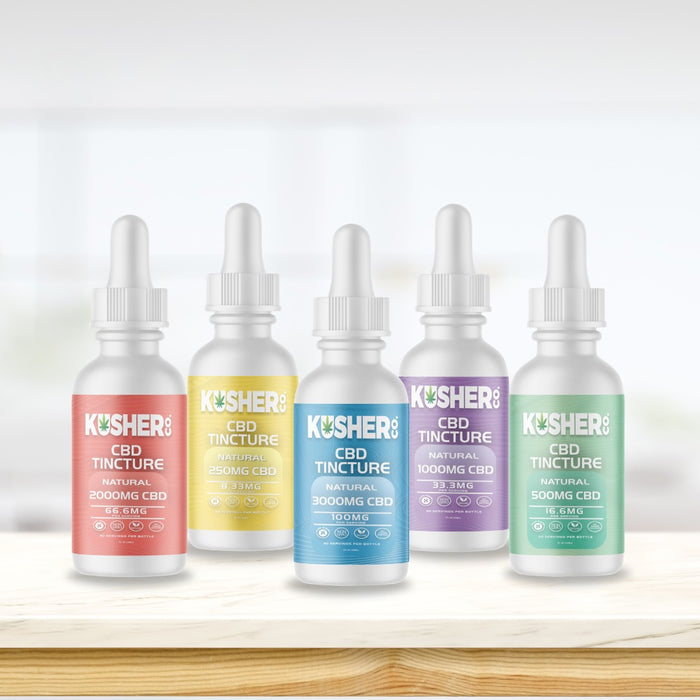
Because the extract truly dissolves in oil, the concentration is uniform through the bottle. That is what makes a milligram figure mean something. Our tincture running from 250mg at $20.00 up to 3000mg at $40.00 is a statement about concentration in a solution, and it only holds because the solvent and the solute are chemically compatible.
What the carrier oil is doing
The carrier has three jobs and none of them are cosmetic. It dissolves the extract. It dilutes a concentrated material down to a workable strength. It gives you a volume large enough that a dropper can portion it out with any precision at all.
That last job is easy to overlook. Raw extract at high cannabinoid concentration is a thick material measured in fractions of a gram. You cannot meaningfully portion that by hand. Dissolving it into an oil turns a sticky concentrate into a liquid where a full dropper is a repeatable quantity.
Different carriers behave differently in the bottle. Some stay liquid at room temperature, some thicken when it gets cold, and some carry a taste of their own that shows up in the finished product. Those are real formulation tradeoffs, and a maker picking one is choosing between texture, shelf stability, taste and cost.
Why food with fat in it changes the picture
Once a fat soluble material leaves the bottle, the same rule keeps applying. In a stomach containing a fatty meal, an oil based material has something chemically similar to stay mixed with. In a stomach containing water and not much else, it has nothing to dissolve into and behaves the way oil behaves in water, which is to say it separates.
That is a description of how the material is carried, and it is where we stop. What happens downstream involves the digestive tract, individual biology and a body of research we are not going to summarize into a promise. Plenty of sellers cross that line. We would rather tell you the chemistry and let you read the research yourself.
The practical version, stated as narrowly as we can state it, is that a fat soluble material behaves more predictably in a fatty medium than in a watery one. Taking a tincture around a meal rather than on an empty stomach is a decision about that predictability. It is not a claim about anything else.
A gummy solves the problem differently
A gummy has a water based structure. Pectin or gelatin, sugar, water and flavoring make a matrix that is nothing like an oil. Dropping a fat soluble extract into that mixture is a formulation problem before it is anything else, because the extract does not want to be there.
The way it gets solved is by pre dissolving the cannabinoid material into a small quantity of oil or into an emulsified form before it is blended into the batch. By the time the extract meets the gummy base it is already carried in something, and the job becomes distributing that carrier evenly rather than dissolving a resin into sugar water.
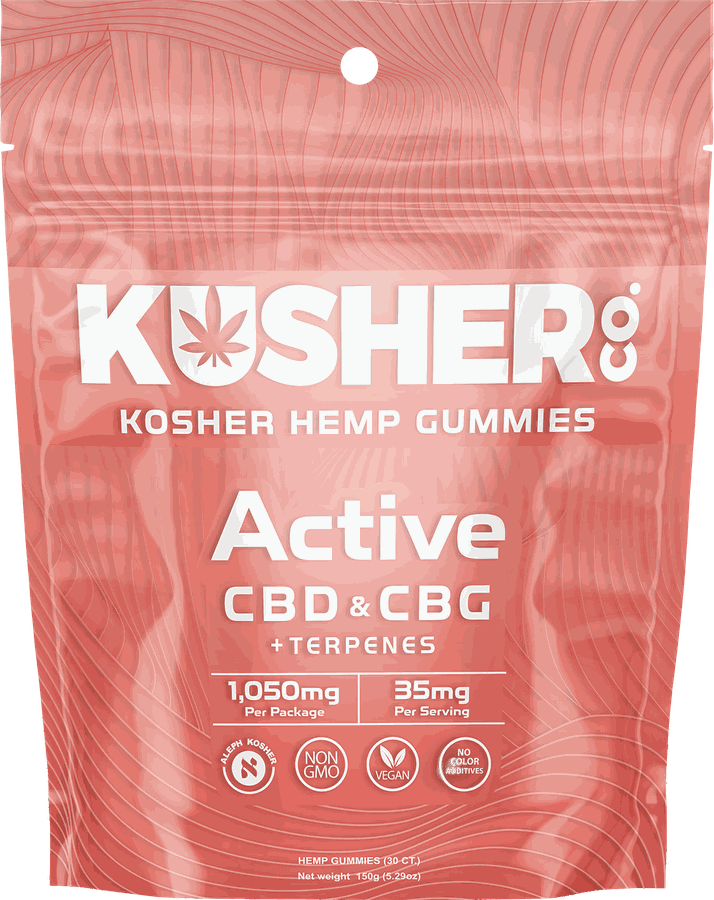
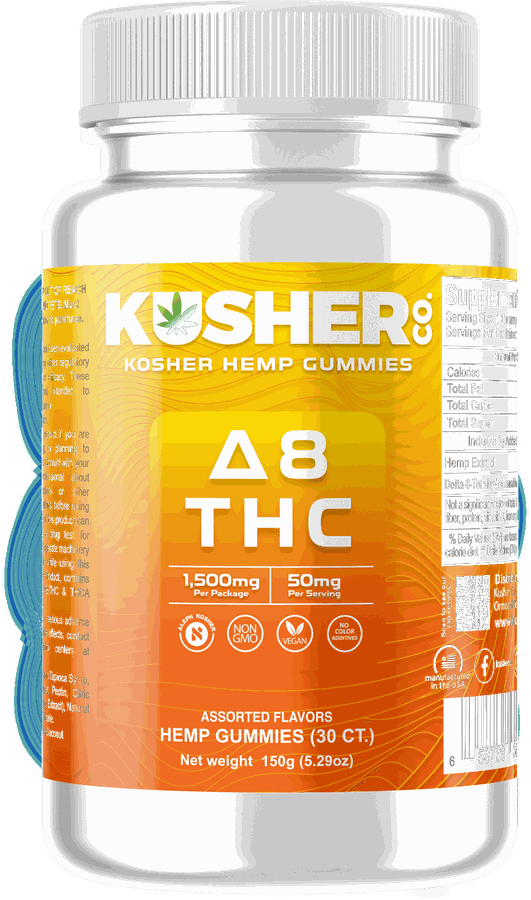
Even distribution is the whole ballgame in a gummy. A batch where the material pooled in one part of the mix would produce pieces that vary wildly against each other, and every milligram figure printed on the jar would be a fiction. Our Active, Wellness, Night Time and Happy Hour gummies are all $29.99 with the D8 jar at $39.99, and the number on each of them assumes the blend was uniform.
Why coconut oil and shea butter are in our sticks
The Cooling Relief Stick and the Heating Relief Stick both carry 500mg of CBD at $20.00, and both are built on coconut oil and shea butter. Those two ingredients are there because a solid stick has to be a fat, and because a cannabinoid needs a fat around it to stay dissolved and evenly spread.
Coconut oil and shea butter are both solid or semi solid at room temperature and both soften with warmth. That is the physical property that makes a stick format possible at all. It holds its shape in a pocket and turns spreadable under a bit of pressure and skin temperature, which is a purely mechanical description of what those fats do.
They are also doing the same carrying job the tincture's oil does. The CBD in that stick is dissolved into the fat phase rather than suspended in it, which is what keeps the concentration even from the first use to the last. A stick where the material had settled would be strong at one end and weak at the other.
Skin is a fatty barrier, and that is a formulation fact
The outer layer of skin is built from cells packed in a lipid matrix. It is, chemically speaking, a fatty structure. That is a plain anatomical description and it is the reason topical formulators think in terms of oils and butters rather than water when they are deciding what to put a material into.
Our gel formats work differently and are worth naming for the contrast. The Cooling Pain Relief Gel at $25.00 carries 500mg of CBD with rosemary and thyme extract, tea tree and mint. The Joint and Muscle Roll on Relief and the Pain Relief Gel Roll On are both $20.00 with 350mg. A gel has a water phase in it, which means the formulation has to bridge two materials that do not naturally mix.
Bridging them is what emulsifiers do, and it is why a gel has a longer ingredient list than a stick. Neither approach is better in the abstract. A stick is simpler and greasier, a gel is lighter and more complicated to build, and both are answers to the same chemical constraint.
Why a water based hemp product is a harder problem
Making a hemp beverage is not a matter of stirring extract into liquid. Left alone, the cannabinoid material would separate out, cling to the inside of the container, and leave whatever is left dosed at random. The problem is not difficult because the industry is immature. It is difficult because of what the molecule is.
The engineering answer is emulsification, which means breaking the oil phase into droplets small enough that they stay suspended in water rather than coalescing and floating. Nanoemulsion is the term you see on labels, and what it describes is droplet size. Smaller droplets stay dispersed longer, which is a physics statement about surface area and buoyancy.
Getting there takes surfactants, specialized equipment and process control, and the result has its own shelf life questions, because an emulsion is a suspension held in a state it did not choose. Water soluble on a hemp label almost never means the molecule was changed. It means it was wrapped and dispersed well enough to behave as though it mixed.
Fat solubility shows up in how you store things
Fats go rancid. That is oxidation of the carrier, not degradation of the cannabinoid, and it is the reason storage advice in this category sounds like storage advice for cooking oil. Heat, light and air are what drive it, and a bottle left on a sunny windowsill is getting all three.
Amber glass is a formulation response to the light half of that. A tightly closed cap is a response to the air half. Keeping a bottle out of a hot car is a response to the heat half. None of this is special to hemp. It is what any oil based product asks for.
The sticks have a different version of the same issue. Coconut oil and shea butter both soften and melt at temperatures a car interior reaches easily in summer, and a stick that melted and reset will have a different texture even if nothing chemically went wrong. Fats are temperature sensitive by nature, and a fat based product inherits that.
What this does not tell you
Solubility describes what dissolves in what. It does not describe what a compound does once it is inside a person, and we are not going to let one fact stand in for the other. The chemistry above is settled and uncontroversial. The downstream questions are neither, and they are the ones a seller has the least business answering.
We bring this up because fat solubility is used as a hook for claims constantly in this category, usually in the form of a promise about how much more of something you get by doing a particular thing. Those promises tend to be built on a real chemical fact stretched several steps past what it supports.
The fact is real. The stretch is where it goes wrong. We would rather give you the fact, tell you plainly where our knowledge ends, and let you decide what to do with the rest.
What this changes about how you read a label
Once you know cannabinoids are fat soluble, several things on an ingredient list stop looking arbitrary. The carrier oil in a tincture is the working part of the formula rather than filler. The fats in a topical are structural rather than cosmetic. An emulsifier in a gel is doing chemical work that a stick does not need done.
It also gives you a question to ask about any product that claims to be water compatible. What is holding the material in suspension, and how long does that suspension last. A seller who can answer that is describing their process. A seller who treats water soluble as a self explanatory feature is describing their marketing.
And it explains why a bottle needs shaking or does not. A true solution is uniform and stays that way. A suspension is not, and the instruction on the label tells you which one you bought.
Bottom line
Cannabinoids dissolve in fat and not in water, and that one property drives the shape of nearly every product in this category. The carrier oil in our tincture is there to dissolve and dilute the extract so that a 250mg bottle at $20.00 and a 3000mg bottle at $40.00 both mean what they say. The coconut oil and shea butter in our $20.00 sticks are there to hold 500mg of CBD in even distribution through a solid fat.
Take a tincture around food containing fat if you want the material to have something chemically similar to stay mixed with. That is the whole of what we will tell you, because that is the whole of what solubility describes. Anyone selling you a bigger conclusion off the same fact has walked past the end of the chemistry.
Frequently Asked Questions
What does fat soluble actually mean?
It means the substance dissolves into fats and oils rather than into water. Solubility always describes a pair of materials, not one on its own, so the useful phrasing is that cannabinoids are soluble in oil and poorly soluble in water. The reason comes down to molecular shape. Cannabinoid molecules are large, mostly carbon and hydrogen, and carry very little electrical charge separation across their structure, which is what water needs in order to hold onto something. Fats have the same uncharged character along most of their length, so the two mix readily and stay mixed.
Why is there so much oil in a CBD tincture?
The carrier oil is the working part of the formula rather than filler. It does three jobs. It dissolves the extract into a true solution so the concentration is even from the top of the bottle to the bottom. It dilutes a highly concentrated material down to a strength that can be portioned. And it provides enough volume that a dropper can measure a repeatable amount, which raw extract at full concentration cannot offer since it is a thick material measured in fractions of a gram. Without the oil there is no way to make a milligram figure mean anything.
Should I take a tincture with food?
Taking it around a meal that contains fat means the oil based material has something chemically similar to stay mixed with rather than separating the way oil separates in water. That is a description of how the material is carried, and it is as far as we will take it. What happens after that involves the digestive tract, individual biology and research we are not going to compress into a promise on a product page. Plenty of sellers in this category turn that chemical fact into a much larger claim. We would rather give you the chemistry and leave the rest to you and your own reading.
Why do your sticks use coconut oil and shea butter?
Because a solid stick format has to be built from fats, and because a cannabinoid needs a fat around it to stay dissolved and evenly spread. Coconut oil and shea butter are both solid or semi solid at room temperature and both soften with warmth and pressure, which is the physical property that lets a stick hold its shape in a pocket and still spread when used. They are also carrying the 500mg of CBD in both the Cooling Relief Stick and the Heating Relief Stick, holding it in even distribution from the first use to the last.
Is water soluble CBD a real thing?
The phrase almost never means the molecule itself was changed. What it usually describes is an emulsion, where the oil phase has been broken into droplets small enough to stay dispersed in water instead of coalescing and floating to the top. Nanoemulsion is the technical term you see on labels and it is a statement about droplet size. Getting there takes surfactants, specialized equipment and careful process control, and the resulting product has its own shelf life questions, because an emulsion is a suspension being held in a state it would not adopt on its own.
Does fat solubility affect how I store these products?
Yes, and it is why the storage advice sounds like advice for cooking oil. Fats oxidize when exposed to heat, light and air, which is a change in the carrier rather than in the cannabinoid, but it affects the product either way. Amber glass addresses the light, a tightly closed cap addresses the air, and keeping the bottle out of a hot car addresses the heat. The sticks have their own version of this, since coconut oil and shea butter both soften and melt at temperatures a parked car reaches easily in summer, and a stick that melted and reset will have a different texture.