News · 09 September 2026
Is CBD Kosher? A Guide To Cannabinoid Kashrut Certification

CBD can be kosher, but the certification is never a single blanket approval. Each cannabinoid profile, each product format, and each additive in the formula requires its own kashrut compliance pathway. A Wellness CBD gummy, a Delta-8 gummy, and a CBD+CBN+melatonin sleep gummy do not share one certification even if they come from the same brand. Live resin formulations and terpene-inclusive blends introduce processing variables that standard kosher CBD guidance has never formally addressed. The short version: format determines how hard certification actually is, and most of what you read online treats all hemp products as one category. They are not.
Why Format Matters More Than Cannabinoid Source
The cannabinoid itself is rarely where kashrut gets complicated. Hemp extract, whether CBD, CBG, Delta-8, or a D8+D9 blend, is derived from plant material, and plant-derived ingredients carry a lighter compliance burden than animal-derived ones. The friction starts when you ask what else is in the product and how it was processed.
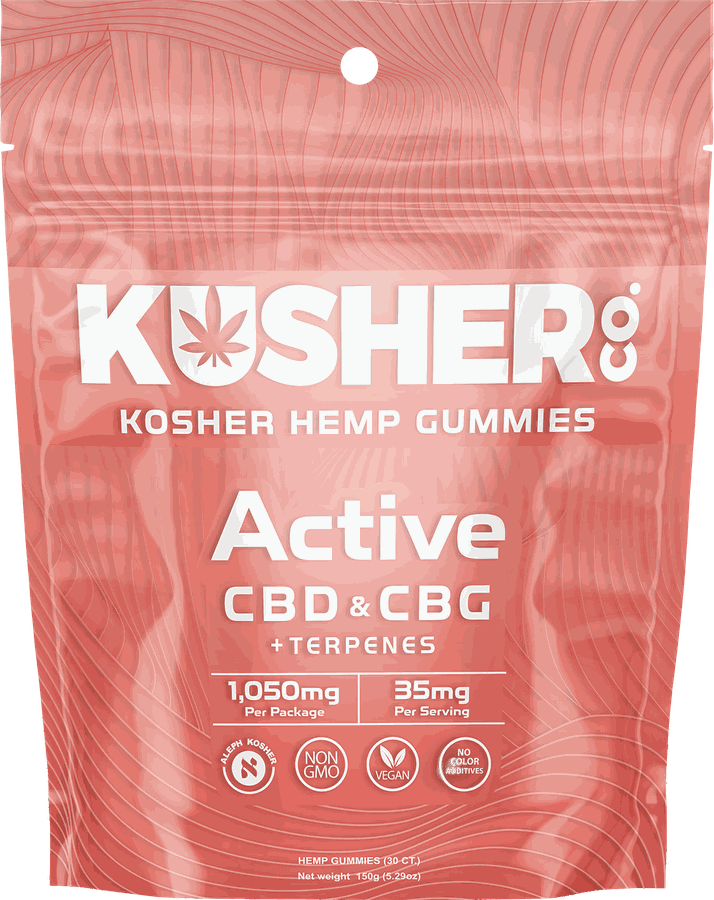
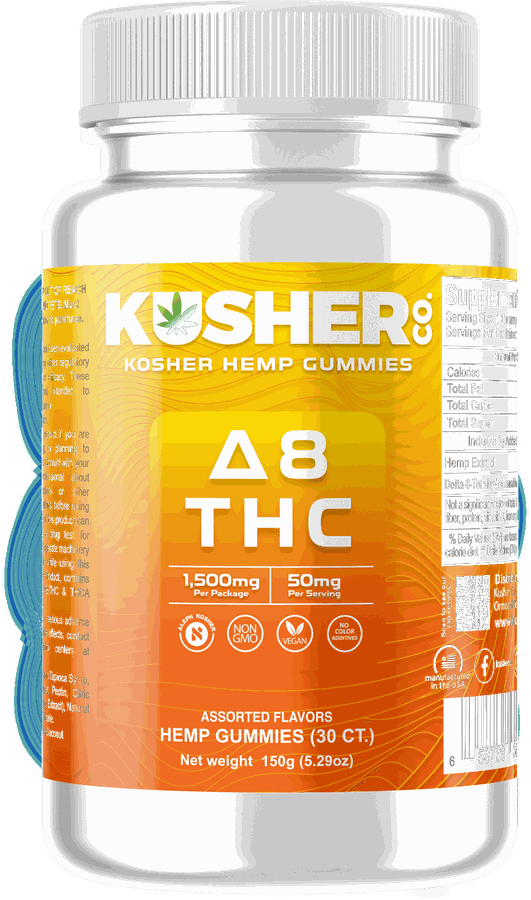
A gummy carries the heaviest certification burden of any hemp format. Gelling agents are the most obvious fault line. Gelatin, which is still the default in most mass-market gummies, is derived from animal collagen and requires its own certification pathway based on the animal source and slaughter method. Plant-based pectin sidesteps that specific issue, but it does not end the compliance review. Binders, colorants, and flavor compounds each need to be traced to their origin, and synthetic vs. plant-derived matters at every step. A single gummy formula can contain a dozen ingredients that each require individual review before the product as a whole can be certified.
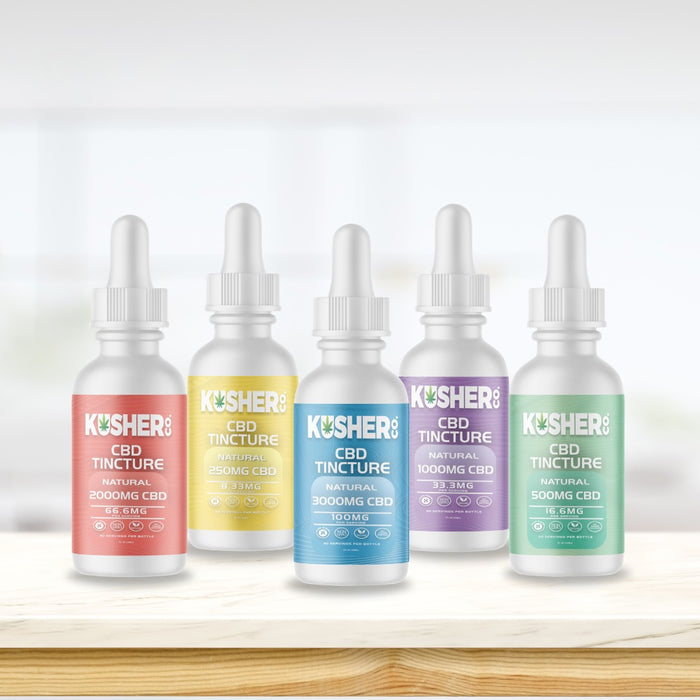
Compare that to a tincture. Our Full Spectrum Kosher Hemp Extract CBD Tincture has a shorter ingredient list than any gummy in our lineup, but full-spectrum formulation still adds complexity. Residual plant materials and carrier oils both need to be reviewed, which is a burden isolate-based tinctures do not face. Even so, the total number of compliance checkpoints is meaningfully lower than a gummy with multiple additives.
This product-type hierarchy, gummies at the top of the friction scale, tinctures in the middle, topicals at the lower end, is completely absent from most articles on kosher CBD. They treat certification as a single yes-or-no question when it is actually a layered process that varies by format before you even get to the specific cannabinoid profile.
Each Cannabinoid Profile Is a Separate Certification
This is the part that surprises most people who are familiar with kosher food certification in other categories. A single approval does not cover a product line. Each distinct formula requires its own review.
The reasons are practical. A certifying body is not just reviewing the cannabinoid. It is reviewing every ingredient, every processing step, and every piece of equipment involved in making that specific product. When the formula changes, the ingredient list changes, the processing may change, and the certification has to follow.
The CBN in our Night Time gummies is a good example of where this gets specific. Melatonin is widely used in sleep supplements, but its source matters for kashrut purposes. Synthetic melatonin and plant-derived melatonin follow different compliance paths. CBN itself, a minor cannabinoid, requires its own sourcing review. A formula that combines CBD, CBN, and melatonin is not just a "CBD gummy with extras" from a certification standpoint. It is three distinct ingredients, each with its own compliance pathway, combined in a single product that then needs to be reviewed as a whole.
Live Resin and the Limits of Standard Guidance
Live resin is where the standard kosher CBD playbook runs out entirely.
Most kosher CBD guidance was written with dried, cured hemp extract in mind. Live resin starts from fresh-frozen plant material rather than dried biomass, and the extraction process is different enough that it introduces variables the standard guidance does not address. The flavor compounds retained in live resin extraction are more complex than those in a standard distillate, and the processing equipment and methods used in live resin production each become their own review points.
Our Happy Hour gummies use a D8+D9 blend with live resin. That formula required certification that covered not just the cannabinoid profile but the live resin extraction process and the resulting flavor profile. There is no template for that in the general kosher CBD conversation, because the general kosher CBD conversation has not caught up to where formulation has gone.
This is not a criticism of certifying organizations. It reflects the pace of innovation in hemp formulation. The category has moved faster than the guidance has, and live resin is the clearest example of a formulation type that requires a certifying body to do original compliance work rather than apply an existing framework.
The practical implication for a consumer is straightforward. If you see a live resin hemp product with a kosher certification, that certification required more scrutiny and more original review than a standard CBD gummy certification. It is a signal that the certifying body actually engaged with the specific formulation rather than applying a generic approval.
What Kashrut Certification Actually Tells You as a Buyer
Here is where we want to be direct about what certification does and does not cover, because conflating the two is the fastest way to mislead a careful buyer.
Kosher certification is a process-integrity layer. It tells you that every ingredient was reviewed for compliance, that the formulation was audited, and that the production process met the standards of the certifying body. It is renewed on a schedule, not issued once and forgotten. Every batch, every ingredient change, every new formula goes back through review.
Most CBD brands have one without the other. A brand might publish COAs for every product but use uncertified ingredients. Another might carry a kosher certification but not publish batch-specific lab results. We built this store around having both, because the fitness and wellness buyers who are our core customers already demand ingredient transparency. Kosher certification fits that demand naturally. It is not a dietary badge layered on top of a product. It is a third-party audit of the process, and that audit has to be earned separately for each formula in the lineup.
If you are buying kosher hemp products and the seller cannot tell you which certifying body approved each specific SKU, that is worth asking about. A blanket "we are kosher certified" claim on a multi-formula lineup is not the same as per-product certification. The difference matters, and it is the difference that most of the conversation around kosher CBD still does not explain clearly.
The bottom line: kosher CBD is real, but it is not simple. Format matters, formula matters, and every distinct product in a lineup earns its certification independently. That is the standard we hold ourselves to, and it is the standard worth asking any hemp seller to meet.
Still have questions about how certification works across our lineup? Here are the ones we hear most often.
Frequently Asked Questions
Does one kosher certification cover an entire hemp product line?
No. Each distinct formula requires its own certification review. A Wellness CBD gummy, a Delta-8 gummy, and a CBD+CBN+melatonin sleep gummy each have different ingredient lists and processing steps, which means each one goes through a separate compliance pathway. A brand-level kosher claim is not the same as per-product certification, and it is worth asking any seller to clarify which specific SKUs are covered.
Why are gummies harder to certify as kosher than tinctures or topicals?
Gummies contain more ingredients that each require individual review. Gelling agents, binders, colorants, and flavor compounds all need to be traced to their origin, and the distinction between synthetic and plant-derived matters at every step. A tincture has a shorter ingredient list. A topical is not ingested at all, so it faces fewer restrictions. The cannabinoid source may be identical across all three formats, but the certification burden is not.
What makes live resin hemp products more complex to certify?
Live resin is made from fresh-frozen plant material rather than dried biomass, and the extraction process retains a broader range of flavor compounds than standard distillate. That processing complexity introduces variables that standard kosher CBD guidance was not written to address. A certifying body reviewing a live resin formula has to do original compliance work rather than apply an existing framework, which is why a kosher-certified live resin product represents a more rigorous review than a standard CBD gummy certification.
Does melatonin in a sleep gummy affect its kosher status?
It can, depending on the source. Melatonin can be derived synthetically or from plant sources, and the distinction matters for kashrut compliance. A formula combining CBD, CBN, and melatonin is not reviewed as a simple CBD product with extras. Each ingredient follows its own compliance pathway, and the combined formula then gets reviewed as a whole. This is why the Night Time gummy required its own separate certification rather than sharing an approval with the other CBD formulas in our lineup.
How often does a kosher hemp certification need to be renewed?
Certification is not a one-time approval. It is renewed on a schedule, and any ingredient change or formula update triggers a new review. This is one of the meaningful differences between kosher certification and a one-time audit. The ongoing renewal requirement means the certifying body stays engaged with what is actually being produced, not just what was approved at launch. Timeline and frequency vary by certifying organization and product complexity, so one-size-fits-all guidance on renewal schedules is not reliable.
Ready to pick one? Browse Kosher Hemp Gummies.