News · 19 August 2026
What a Serving Actually Is, and Why It Is a Decision Rather Than a Rule
A serving on a hemp label is a portioning convention chosen by the manufacturer. It is a decision about how to divide a container, not a finding derived from evidence about you. Nobody studied you, nobody measured you, and no regulator set the figure. Somebody at the company picked a unit that made the math clean and printed it.
We are saying that about our own labels as much as anyone's. We have written separately about how to approach a first tincture, so this piece is not about starting. It is about what the word serving actually means when you read it, because the word carries more authority in most people's heads than it has earned.
Where the number on a label comes from
Manufacturers pick a serving for a mix of practical reasons. A gummy has an obvious physical unit, so one piece becomes the serving because splitting a gummy is nobody's idea of a good time. A tincture has no natural unit, so the dropper defines one, usually a full dropper or a milliliter.
Then the arithmetic gets tidied. A serving that divides the container into a round number of servings is easier to print and easier to talk about, so figures get nudged toward numbers that produce thirty servings rather than twenty-eight. That is a packaging decision working backward from convenience.
Cost per serving is also a factor, because it is the figure shoppers compare across products. A maker who wants an attractive cost per serving can move the serving size to get one. None of this is dishonest and all of it is normal. It is simply not the same thing as a recommendation.
Serving size, serving suggestion and dose are three different words
These get used interchangeably and they should not be. A serving size is a unit of measurement, and it answers the question of how the container has been divided. A serving suggestion is advice about how many of those units to take. A dose is a quantity of an active compound, which is a clinical concept.
Most hemp labels give you the first and imply the second without saying it out loud. The layout does the persuading. A number in a box under the words serving size reads like an instruction even when the words themselves are purely descriptive.
The third one is the one nobody in this category is in a position to give you. A dose in the medical sense would need to account for the person, and no label knows anything about the person holding it. Reading a serving as a dose is the specific mistake this article exists to head off.
A gummy has an obvious unit and a tincture does not
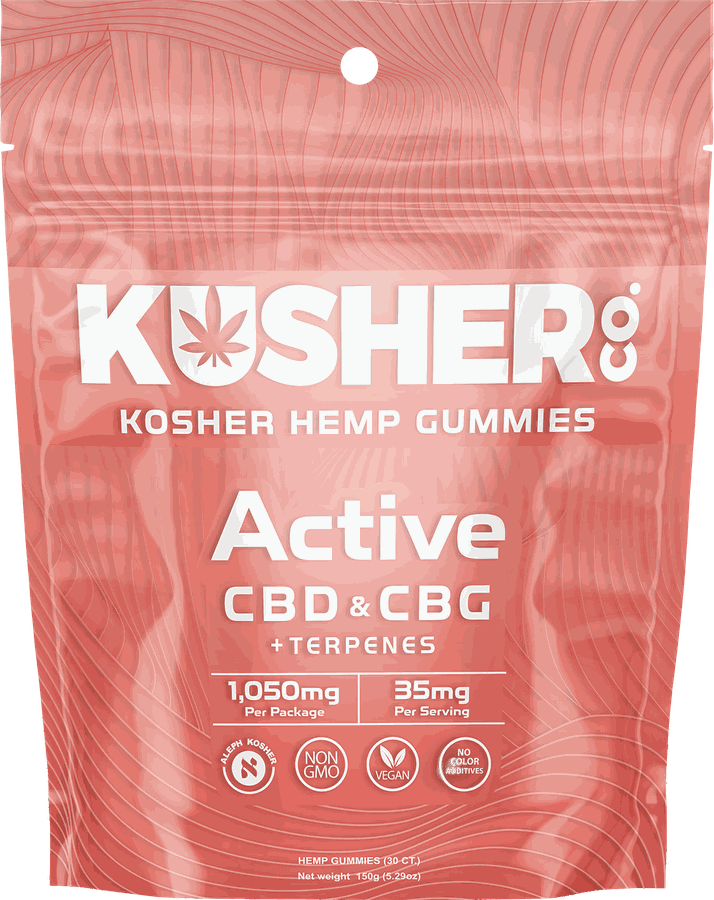
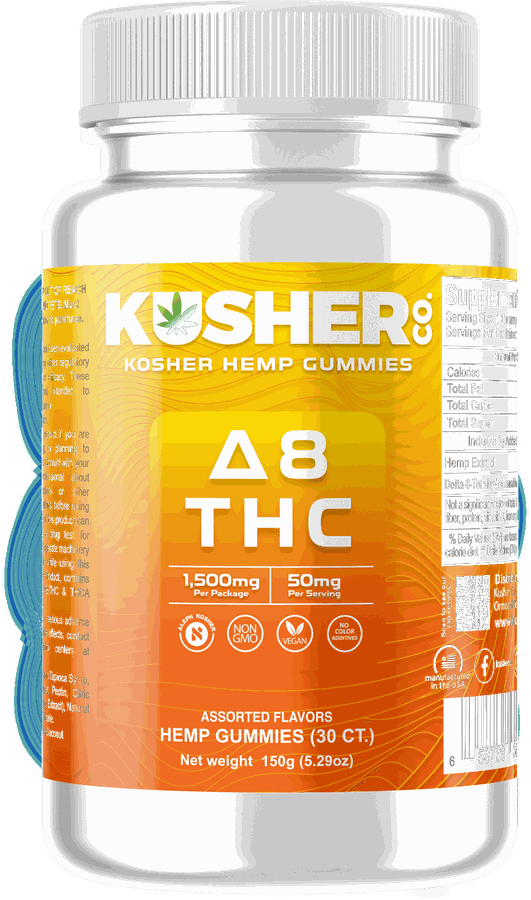
This asymmetry explains a lot of the confusion. With our gummies, the physical piece is the unit and the label can state a milligram figure per piece with no ambiguity. One gummy is one gummy. The manufacturer's portioning decision was made back when the mold was chosen.
A tincture is a continuous liquid, so somebody has to draw a line across it. The dropper is that line, and the graduations on its glass stem are a measuring tool. It could have been half a dropper. It could have been a milliliter or a quarter of one. The tool defines the convention and the convention is arbitrary in a way a gummy is not.
That arbitrariness is exactly why the tincture is where the word serving deserves the most scrutiny. On a jar of gummies, a serving is a description of a physical object. On a bottle of oil, it is a line somebody drew.
The dropper is an instrument, not an instruction
A dropper is a piece of glass with markings on it, and the markings measure volume. That is the whole of its function. It tells you how much liquid you have drawn up, which is genuinely useful, and it does not tell you how much to draw up.
Most droppers in this category hold about a milliliter when filled to the top mark, and most tincture bottles are 30 milliliters. That is where the familiar thirty servings figure comes from. It is a container size divided by a dropper size, which is arithmetic rather than guidance.
Worth knowing as a practical matter, a dropper rarely fills all the way to the top under normal squeeze pressure. If you are working from the marked graduations rather than from a visual guess, you are measuring the actual volume rather than the assumed one, and those two are frequently different.
Total milligrams and milligrams per serving are separate numbers
The single most useful habit in reading a hemp label is checking which of these two numbers you are looking at. The large figure on the front of a tincture is almost always the total in the container. The per serving figure is smaller and lives on the back if it is stated at all.
Our 1000mg bottle at $30.00 has 1000mg of cannabinoid material in the whole bottle. If you divide that bottle into thirty portions, each portion carries roughly 33mg. Both numbers are true, they describe different things, and a shopper comparing a front label total against another product's per serving figure is comparing nothing at all.
Gummies are usually the reverse, with the per piece figure prominent and the container total in the fine print. So the same shopper reading a tincture front label and a gummy front label side by side is reading two different kinds of number without being warned.
Our 250mg to 3000mg ladder makes this question sharper
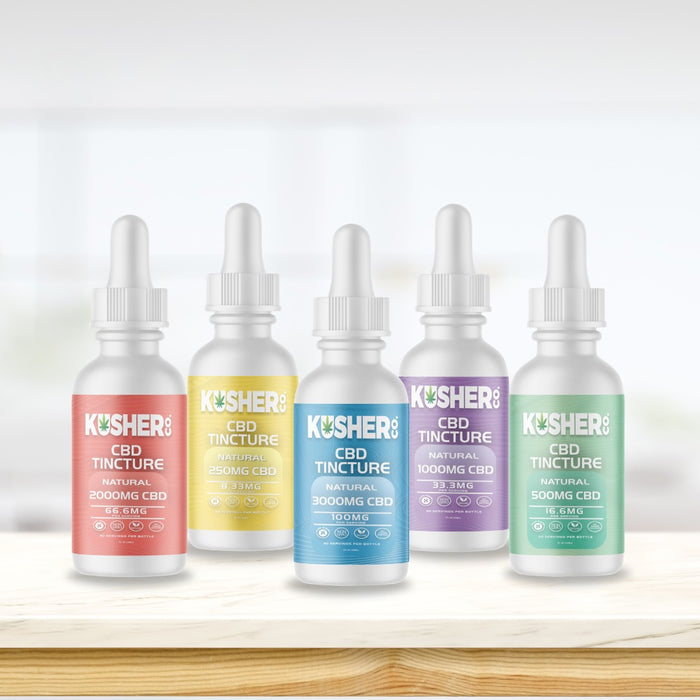
The tincture runs 250mg at $20.00, 500mg at $25.00, 1000mg at $30.00, 2000mg at $35.00 and 3000mg at $40.00. Those bottles are the same physical size. What changes is the concentration of the liquid in them.
That means one full dropper carries twelve times as much cannabinoid material from the 3000mg bottle as it does from the 250mg bottle. The gesture is identical. The measuring tool is identical. The number attached to that gesture changes by a factor of twelve depending on which box you took off the shelf.
This is the practical reason a serving convention gets less trustworthy as strength goes up. A portioning habit built on the 250mg bottle transfers physically to the 3000mg bottle without transferring numerically, and nothing about the act of using it flags the difference. At the top of a ladder, the volume you are used to and the quantity you are taking come apart.
Servings per container is a division problem
When a label says a container holds thirty servings, that is the total divided by whatever the maker decided a serving is. Change the serving definition and the number changes without a single thing about the product changing.
The same bottle is thirty servings at one milliliter, sixty servings at half a milliliter, and fifteen servings at two. All three statements are equally true. None of them says anything about how much anyone should use, and none of them describes a property of the liquid.
This is worth remembering when comparing value between products. Cost per serving is only comparable when both products define a serving the same way, and there is no rule requiring them to. Cost per milligram of cannabinoid is the comparison that survives the difference, because a milligram is a milligram everywhere.
Why we do not print a recommended dose
We do not print one because we cannot honestly derive one. A recommendation would need to account for the person taking it, and we have no information about that person. Anything we printed would be a guess wearing the clothes of a specification.
There is a regulatory dimension too and we would rather be straightforward about it. This is a category where sellers are not in a position to give people dosing directions, and we think that restriction is basically correct even where it is inconvenient for us commercially.
What we can tell you is exactly what is in the container and how it was divided. Total milligrams, milligrams per portion if you want to do the arithmetic, and what the dropper measures. Those are facts about a product. Anything past that is a fact about a person, and we do not have it.
What a serving figure does tell you
We are not arguing the number is useless. It is useful for a specific set of things and it is worth being clear about which.
- How long a container will last at a given rate of use, which is a real budgeting question.
- How to compare two products from the same maker, since they usually share a serving convention.
- What quantity a measuring tool actually delivers, which is the dropper's genuine job.
- A repeatable unit for you to keep track of your own use against.
All four of those are arithmetic and logistics. None of them require the number to have any authority about what is appropriate for a body, which is the meaning the layout of a label quietly implies.
Comparing two products when the servings differ
The reliable move is to convert everything to cost per milligram of cannabinoid and ignore servings entirely during the comparison. Divide the price by the total milligrams in the container and you have a figure that is comparable across any two products regardless of how either one carved itself up.
Run it on our ladder and it tells you something plain. The 250mg bottle at $20.00 works out to a much higher cost per milligram than the 3000mg bottle at $40.00, which is the usual pattern in concentration ladders and is why the top of a ladder is where the value sits for anyone who knows they will use it.
That last clause is the whole caveat. Cost per milligram only favors the big bottle if the bottle gets used, and a 3000mg bottle bought by someone who was never going to finish it is not a bargain. Value per milligram and value per purchase are different calculations.
Reading a serving line honestly
Here is what we would want a shopper to think when they see a serving line on any product in this category, including ours. First, that it is a division of a container rather than a statement about a body. Second, that the arithmetic behind it is checkable and worth checking.
Then look at what it lets you compute. Total in the container, quantity in the portion, portions available, cost per milligram. Those four numbers describe the purchase completely, and once you have them the serving line has given you everything it has to give.
What we would not want is for the number to feel like permission or like a limit. It is neither. It is a manufacturer dividing a package, and the fact that it is printed in a box with a border around it does not make it a finding.
The label cannot know what it would need to know
Consider what an actual recommendation would require. It would need to account for body size, individual biology, what else a person is taking, what they are trying to accomplish, their prior experience with the category, and how their particular physiology handles the compound in question.
A printed label has access to none of that. It is a static piece of paper attached to a container that will be bought by thousands of different people. Even a maker who genuinely wanted to give useful guidance is limited to the average of a population they have never met.
That gap is not solvable by better label design. It is structural, and it is the reason a serving figure is a portioning decision and cannot be anything else. The right party to talk to about what is appropriate for an individual is a physician who knows that individual, and that is a conversation no packaging can substitute for.
Bottom line
A serving is the manufacturer's decision about how to divide a container. It is arithmetic and packaging convenience, not a finding about you, and the box it is printed in gives it an authority it does not have. Read it as a unit of measurement and it is genuinely useful. Read it as advice and you have accepted a recommendation nobody made.
On our tincture the point is sharpest at the top of the ladder, where one dropper from the 3000mg bottle at $40.00 carries twelve times what the same dropper carries from the 250mg at $20.00. Same bottle, same gesture, twelve times the material. We will tell you exactly what is in the container and exactly what the dropper measures. What to do with that belongs to you and to a professional who knows your situation, and we are not going to print a number that pretends otherwise.
Frequently Asked Questions
Who decides what a serving size is?
The manufacturer does, and the decision is made for practical reasons rather than derived from evidence about any individual. A gummy has an obvious physical unit, so one piece becomes the serving because splitting a gummy is impractical. A tincture is a continuous liquid with no natural unit, so the dropper defines one. Then the arithmetic gets tidied, because a serving that divides the container into a round number is easier to print and easier to talk about. Cost per serving is a factor too, since that is the figure shoppers compare. None of this is dishonest, but none of it is a recommendation either.
Is the number on the front of a tincture bottle the amount per dropper?
Almost never. The large figure on the front of a tincture is the total cannabinoid content of the whole container. Our 1000mg bottle at $30.00 holds 1000mg across the entire bottle, and if you divide it into thirty portions each one carries roughly 33mg. Gummies usually work the opposite way, with the per piece figure prominent and the container total in the fine print. That means a shopper comparing a tincture front label against a gummy front label is reading two completely different kinds of number without any warning that they are.
Why is the serving question sharper on a stronger bottle?
Because the bottles are the same physical size and only the concentration changes. Our ladder runs 250mg at $20.00 up to 3000mg at $40.00 in the same container, which means one full dropper carries twelve times as much cannabinoid material at the top of that range as it does at the bottom. The gesture is identical, the measuring tool is identical, and nothing about the act of using it signals the difference. A portioning habit built on the smallest bottle transfers physically to the largest without transferring numerically.
Why does your store not print a recommended dose?
Because we cannot honestly derive one. A real recommendation would need to account for body size, individual biology, what else someone is taking, their prior experience and their particular physiology, and a printed label has access to none of that. It is a static piece of paper on a container that thousands of different people will buy. There is a regulatory dimension as well, since sellers in this category are not in a position to give dosing directions, and we think that restriction is broadly correct even where it costs us. What we can tell you is what is in the container and how it was divided.
How do I compare value between two products with different servings?
Ignore servings entirely and convert both to cost per milligram of cannabinoid. Divide the price by the total milligrams in the container and you get a figure that is comparable across any two products no matter how each one carved itself up. Cost per serving only works as a comparison when both products define a serving the same way, and nothing requires them to. Run the milligram calculation on our ladder and the pattern is the usual one, with the 3000mg bottle at $40.00 costing far less per milligram than the 250mg at $20.00.
So is the serving figure useless?
No, it is useful for a specific set of things and misleading for one. It tells you how long a container will last at a given rate of use, which is a genuine budgeting question. It lets you compare two products from the same maker, since they usually share a convention. It tells you what a measuring tool actually delivers. And it gives you a repeatable unit to track your own use against. All of those are arithmetic and logistics. What it does not carry is any authority about what is appropriate for a body, which is exactly what the bordered box on a label quietly implies.