News · 19 August 2026
Why the Same Milligram of CBD Costs Different Amounts in Different Formats
A milligram of CBD costs about six times more in our most expensive format than in our cheapest one, and almost none of that gap is the cannabinoid. It is the container, the other ingredients, the applicator and the manufacturing work that turns an extract into something you can actually use. The cannabinoid is a small part of the cost of nearly everything in this category.
Once that clicks, cost per milligram stops looking like a fairness test and starts looking like what it is, which is a useful comparison inside a format and a misleading one across formats. Here is the actual arithmetic across our own lineup, and why each format lands where it does.
The tincture ladder and what it reveals
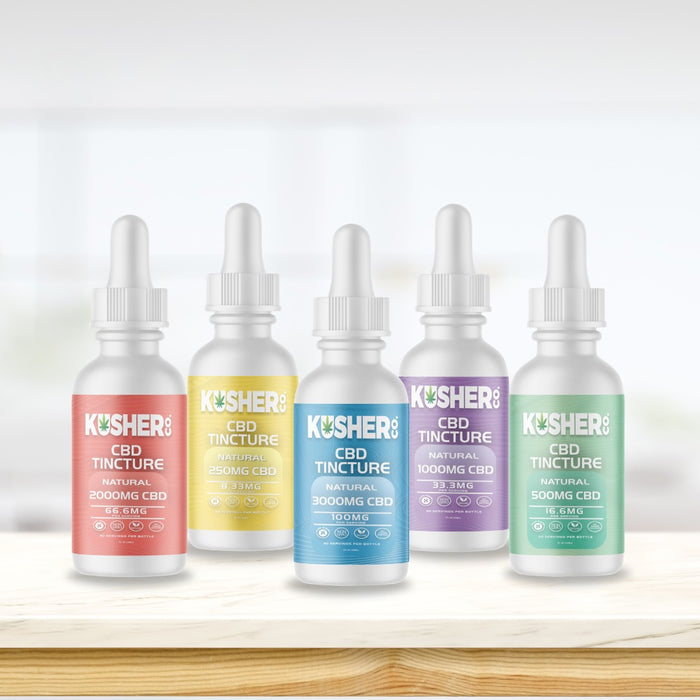
Our Full Spectrum Kosher Hemp Extract CBD Tincture is priced in five steps. 250mg is $20.00, 500mg is $25.00, 1000mg is $30.00, 2000mg is $35.00 and 3000mg is $40.00. Twelve times the cannabinoid for twice the money.
Run the division and the ladder is stark. The 250mg bottle works out to 8 cents per milligram. The 500mg is 5 cents, the 1000mg is 3 cents, the 2000mg is about 1.75 cents, and the 3000mg is about 1.3 cents. The most concentrated bottle is roughly six times cheaper per milligram than the smallest one.
That spread is not a discount for loyalty and it is not a volume deal in the usual sense. It is what happens when a fixed cost is spread across a variable quantity, and it tells you exactly how small the cannabinoid's share of the price really is.
Why the tincture ladder flattens out
Every bottle in that range costs about the same to produce apart from the extract. The glass bottle is the same. The dropper assembly is the same. The label, the carton, the filling run, the batch testing, the compliance work and the shipping weight are all effectively identical from the 250mg to the 3000mg.
Those fixed costs are the entire floor of the $20.00 price. When you buy the 250mg bottle you are mostly buying a bottle, and only a small part of the price is the thing inside it. Adding cannabinoid is comparatively cheap, which is why twelve times more of it only adds $20.00 to the price.
The trade off is real and worth stating. A 3000mg bottle is only better value if you actually use it, and buying more than you will get through in a reasonable period converts a low cost per milligram into a high cost per milligram you consumed. The cheapest bottle on paper is not the cheapest one if half of it sits in a cabinet.
The tincture is the cheapest cannabinoid we sell
Nothing else in our lineup comes close on this measure. A tincture is extract in a carrier oil in a glass bottle, which is the least manufactured way to put a cannabinoid in front of a person. There is no confection to build, no emulsion to stabilize, no applicator to engineer.
That simplicity is the whole reason for the price. Fewer inputs, fewer processing steps, and a format that has been made the same way for a long time. The bottle is doing very little except holding oil and letting you measure it.
If cost per milligram is genuinely your main criterion, the answer in our lineup is the tincture, and specifically the top of the ladder. We would rather say that plainly than let anyone work through five product pages to reach the same conclusion.
Where the topicals sit
Our topicals run from 350mg to 500mg at $20.00 to $25.00. The Cooling Pain Relief Gel is 500mg at $25.00, which is 5 cents per milligram. The Cooling Relief Stick and Heating Relief Stick are each 500mg at $20.00, which is 4 cents. The Joint and Muscle Roll on Relief and the Pain Relief Gel Roll On are each 350mg at $20.00, which is about 5.7 cents.
Line those up against the tincture ladder and the comparison is interesting. A 4 cent stick sits between the 500mg tincture at 5 cents and the 1000mg tincture at 3 cents. On a per milligram basis, our topicals are priced in the same neighborhood as a small tincture rather than at some wild premium.
What makes them look expensive is only that they carry less total cannabinoid than a large bottle. 500mg in a stick against 3000mg in a bottle is a difference in size, and the per milligram numbers are much closer than the headline figures suggest.
You are buying the other ingredients too
A topical is a formulation in a way a tincture is not. The Cooling Relief Stick and Heating Relief Stick are built on coconut oil and shea butter with eucalyptus, mint and tea tree in them. The Cooling Pain Relief Gel carries rosemary and thyme extract, tea tree and mint. The Joint and Muscle Roll on Relief has menthol, tea tree and aloe.
Those ingredients are not filler and they are not free. They are purchased inputs with their own costs and their own supply chains, and in a kosher certified product each of them is a separate item in the certification review. The base of a topical is a real part of what you are paying for.
By weight, the cannabinoid is a small fraction of any of these products. Dividing the whole price by the milligram figure therefore assigns the cost of everything else to the cannabinoid, which is arithmetically fine and conceptually misleading. You did not buy 500mg of CBD. You bought a formulated stick that contains it.
The applicator is a genuine cost
This is the part buyers never count. A twist up stick is a mechanical object with a body, a base, a screw mechanism and a cap that has to hold a semi solid product without leaking or seizing. A roll on head is a ball, a housing and a seal that has to dispense evenly and not dry out.
Those components cost more than a bottle and a dropper, and they are the reason the format exists. They are also why a topical price does not scale with cannabinoid content the way a tincture price does. A stick with double the CBD would still need the same tube.
Look at our own numbers and this shows up directly. The gel at $25.00 and the sticks at $20.00 both carry 500mg, and the roll ons at $20.00 carry 350mg. The prices are clustered because the packaging and the base are clustered, not because the cannabinoid content is.
Gummies carry the cost of being candy
Our gummies are $29.99 across the Active, Wellness, Night Time and Happy Hour formulas, with the D8 gummies at $39.99 in a jar. A gummy is the most manufactured thing we sell, and that is where its cost comes from.
Making one means building a confection. There is a gelling system, sweeteners, a flavor system, coloring, an acidity component, a coating, and a cooking and depositing process with molds and curing time. Then the cannabinoid has to be distributed evenly through that mixture so that every piece carries a comparable amount, which is a real manufacturing problem rather than a stirring problem.
That even distribution is the part worth paying attention to. A tincture is a liquid where uniformity is close to automatic. A batch of individual pieces is not, and getting consistency across thousands of units is a big part of what separates a competent gummy line from a bad one.
Why we are not printing a gummy cost per milligram here
You may notice we have given per milligram math for the tinctures and the topicals and not for the gummies. That is deliberate. The number depends on the count in the package and the strength per piece, and those specifics belong to the individual product and its label rather than to a general article.
Do the division yourself off the product page and the label, and make sure you are dividing by the total in the package rather than by the strength of one piece. That single mistake produces a figure that is off by the entire count of the package and is the most common error in this kind of comparison.
What we can say without any arithmetic is directional. A confection carries manufacturing costs that a bottle of oil does not, and any gummy in any lineup anywhere will look expensive per milligram next to a large tincture. That is the format, not the pricing.
Multi cannabinoid formulas are a different product entirely
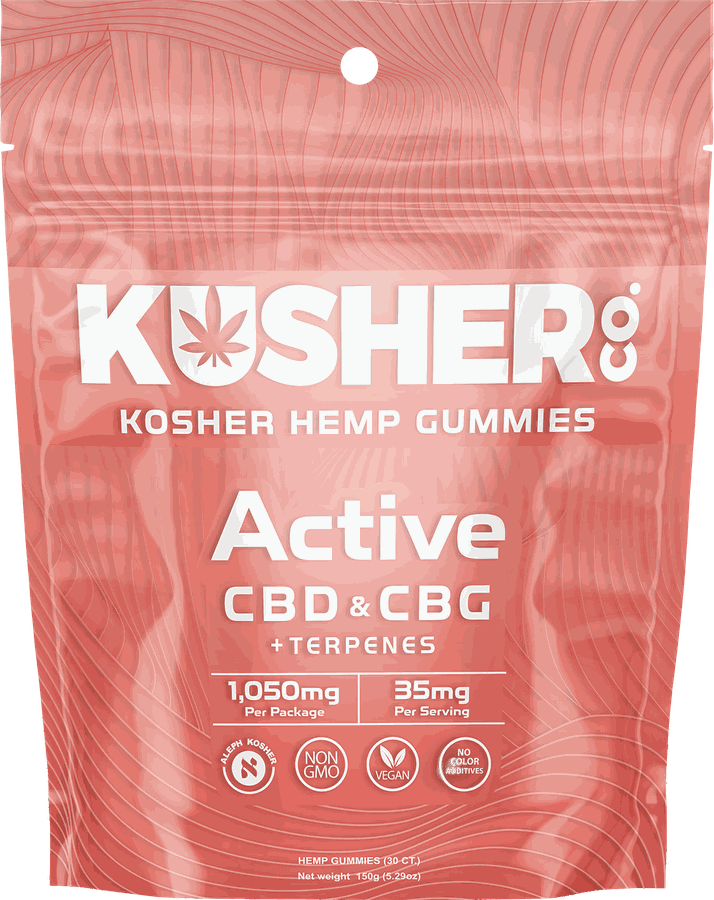
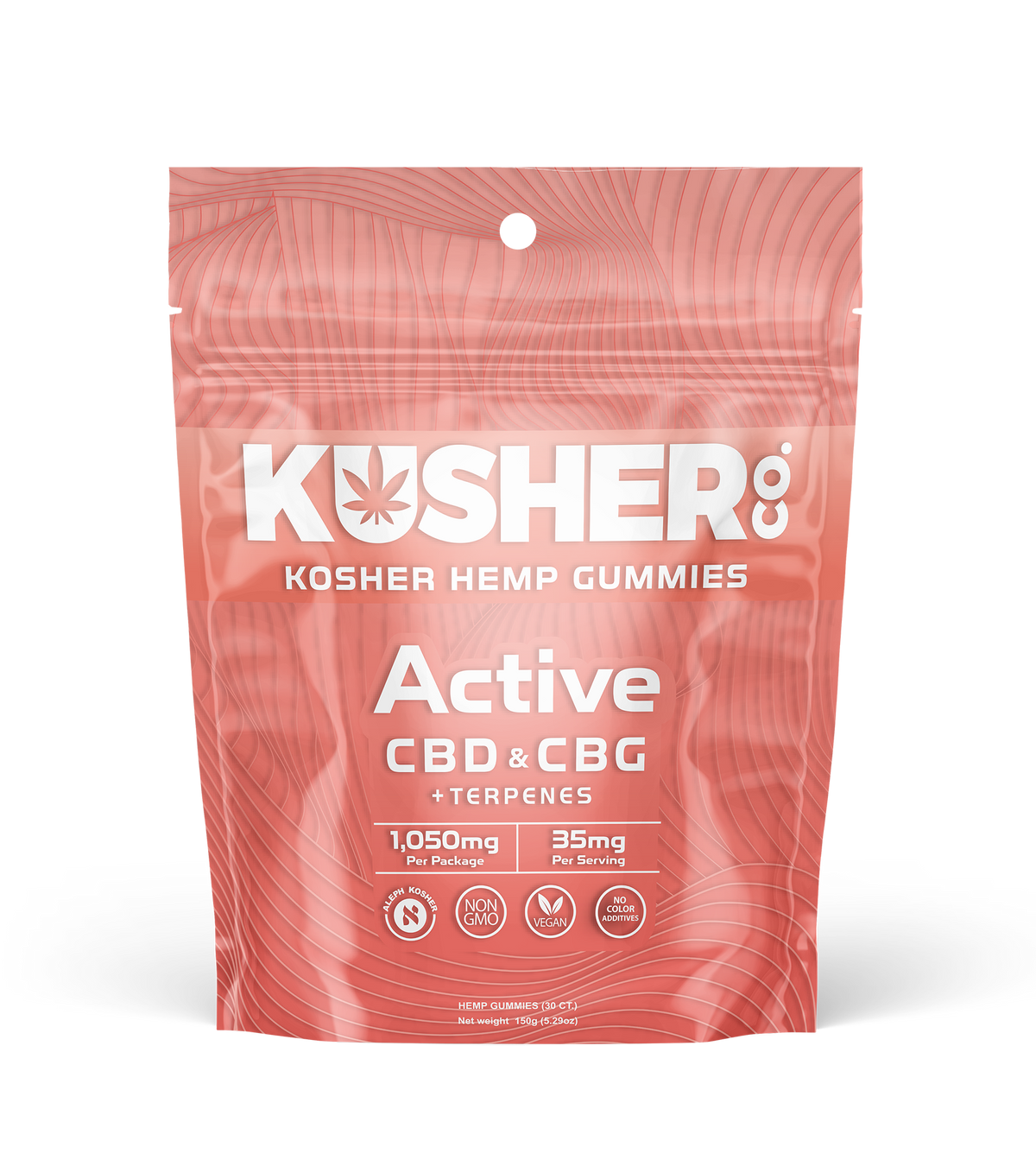
Cost per milligram of CBD gets genuinely misleading once a formula contains more than CBD. Our Active gummies carry CBD with CBG and terpenes. The Night Time gummies carry CBD with CBN and melatonin. The Happy Hour gummies carry delta-8 and delta-9 with live resin, with total THC under 0.3%.
Dividing the price of any of those by a CBD figure alone assigns the whole cost to one of several ingredients and pretends the others are free. They are not. CBG, CBN and live resin have their own input costs, and a formula containing them is a different product from one that does not.
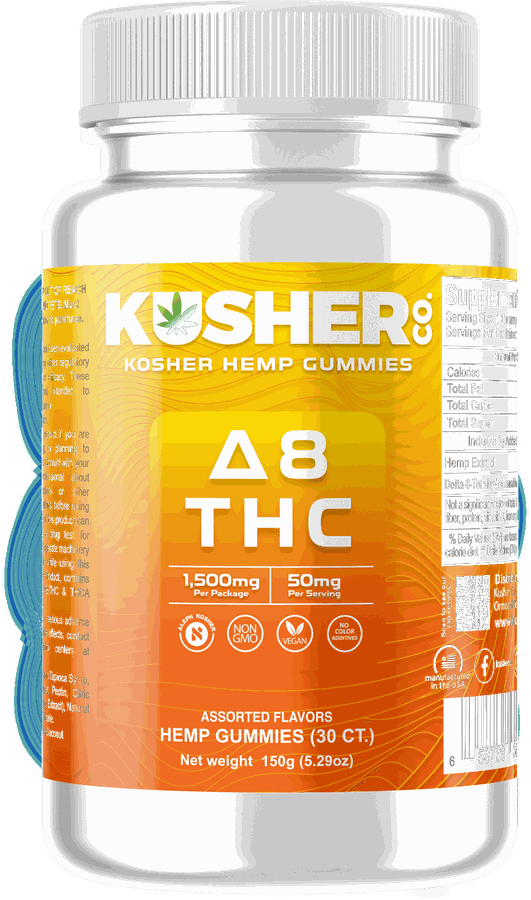
The D8 Kosher Hemp Gummies at $39.99 make the point most cleanly. That is a delta-8 product in a jar format, and running a CBD cost per milligram calculation on it produces a number with no meaning at all.
When the per milligram lens is the right one
This measure earns its keep in one specific situation, which is comparing options inside a single format. Deciding between the 1000mg tincture at $30.00 and the 3000mg at $40.00 is exactly the comparison cost per milligram was built for, because everything else about the two bottles is identical.
It is also the right lens for a repeat purchase. Once you know which format and strength you use, and you are buying the same thing again, the per milligram figure is a straightforward efficiency number and there is no reason to ignore it.
The same applies to the topical range. Comparing a 500mg stick at $20.00 to a 350mg roll on at $20.00 is a fair comparison because they are close enough in kind, though even there the applicator difference is real and the sticks and the roll ons do not go on the same way.
When it is the wrong lens
Comparing a tincture to a topical on cost per milligram is comparing a bottle of oil to a formulated stick, and the number does not carry the information people think it does. One is applied to skin and one is taken by mouth, and no arithmetic reconciles that.
It is equally wrong when the formats do not suit you equally. A tincture at 1.3 cents per milligram is not cheaper than a stick at 4 cents if you will not use a dropper. The cheapest product you do not use has an infinite cost per milligram consumed, and that is the number that actually applies to your household.
And it is the wrong lens whenever the formulas differ. Two products with the same CBD figure and different supporting ingredients are not two prices for the same thing. They are two products, and the cheaper one is only cheaper if you wanted the simpler formula in the first place.
How to do this arithmetic properly
The method is short, and the mistakes are predictable.
- Divide price by the total milligrams in the package, never by the strength of a single serving or piece.
- Compare only within a format. Tincture against tincture, stick against stick.
- Check whether the milligram figure refers to one cannabinoid or to a total across several.
- Estimate how much you will realistically get through before deciding a larger size is better value.
- Treat the applicator and the base as part of what you bought rather than as overhead attached to the cannabinoid.
Do that and the numbers stop being an argument about who is overcharging and start being a straightforward way to choose between two things that are actually alike.
Bottom line
The tincture is far and away the cheapest cannabinoid we sell, running from 8 cents per milligram at 250mg for $20.00 down to about 1.3 cents at 3000mg for $40.00, because the bottle, the dropper and the testing cost the same at every rung and the extract is the only thing that changes. That is the honest recommendation if cost per milligram is what you are optimizing.
The topicals at 4 to 5.7 cents are not overpriced by comparison, they are a different object. You are buying coconut oil and shea butter, menthol, aloe and tea tree, plus a stick or a roll on head that costs real money to make. Gummies carry the cost of the confection around the cannabinoid. Compare within a format, do the division on the package total, and remember that a low cost per milligram on something you never finish is not a saving at all.
Frequently Asked Questions
Which format gives the lowest cost per milligram?
The tincture, by a wide margin, and specifically the top of the ladder. Our Full Spectrum Kosher Hemp Extract CBD Tincture is $20.00 for 250mg, $25.00 for 500mg, $30.00 for 1000mg, $35.00 for 2000mg and $40.00 for 3000mg. That works out to 8 cents per milligram at the bottom and about 1.3 cents at the top, which is roughly a six fold difference. The reason is simple. A tincture is extract in a carrier oil in a glass bottle, which is the least manufactured way to put a cannabinoid in front of someone. No confection to build, no applicator to engineer, and very few processing steps.
Why does a bigger tincture cost so much less per milligram?
Because most of the price is fixed cost that does not change with strength. The glass bottle, the dropper assembly, the label, the carton, the filling run, the batch testing, the compliance work and the shipping weight are effectively identical from the 250mg bottle to the 3000mg one. Those costs are the floor under the $20.00 price, so buying the smallest bottle means mostly buying a bottle. Adding cannabinoid is comparatively cheap, which is why twelve times the content only adds $20.00. The catch is that a larger bottle is only better value if you actually get through it, since unused product has a very high cost per milligram consumed.
Are topicals overpriced compared to tinctures?
The arithmetic says they are closer than they look. The Cooling Pain Relief Gel is 500mg at $25.00, which is 5 cents per milligram. Both relief sticks are 500mg at $20.00, which is 4 cents. The roll ons are 350mg at $20.00, which is about 5.7 cents. That puts our topicals between the 500mg tincture at 5 cents and the 1000mg at 3 cents. They look expensive only because they carry less total cannabinoid than a large bottle, which is a difference in size rather than in price per unit. You are also buying a base, several other ingredients and an applicator.
Why do gummies cost more than a bottle of oil?
Because a gummy is the most manufactured thing in the category. Making one means building a confection with a gelling system, sweeteners, a flavor system, coloring, an acidity component and a coating, then cooking, depositing into molds and curing. On top of that the cannabinoid has to be distributed evenly through the mixture so that every piece carries a comparable amount, which is a real manufacturing problem rather than a matter of stirring. A liquid is close to automatically uniform. Thousands of individual pieces are not. Our gummies are $29.99, with the D8 jar at $39.99, and that price reflects the confection around the cannabinoid.
Why not just compare every product by cost per milligram?
Because across formats you are dividing the price of different objects by the same unit. A tincture is oil in a bottle. A stick is a formulated base of coconut oil and shea butter with eucalyptus, mint and tea tree, packed into a mechanism that has to dispense a semi solid without leaking. Dividing the whole price by a milligram figure assigns the cost of all of that to the cannabinoid. The comparison also breaks when formulas differ, since our Active gummies carry CBG alongside CBD, the Night Time carry CBN and melatonin, and the D8 jar is a delta-8 product where a CBD calculation means nothing.
What is the most common mistake in this calculation?
Dividing by the strength of a single piece or serving rather than by the total in the package. That produces a figure wrong by the entire count of the package, and it is the error we see most often. The second most common is comparing a single cannabinoid figure against a multi cannabinoid formula, which quietly treats the additional ingredients as free. The third is ignoring how much you will realistically get through. A large size with a low number on paper is not a saving if half of it sits in a cabinet, since the number that applies to you is the cost per milligram you actually use.