News · 19 August 2026
What Broad Spectrum Removal Does to the Rest of the Formula
Broad spectrum extract is full spectrum extract with an additional removal step run on it, and that step takes more than THC out. Nothing in a plant extract is separated by a wall. The compounds sit on a continuum of molecular size, weight, polarity and boiling point, and a process aggressive enough to strip one of them out will carry off some of its chemical neighbors on the way through.
We have written elsewhere about what full spectrum, broad spectrum and isolate mean as terms, so this is not a definitions piece. This one is about the removal step itself, what it does to the material it was run on, and why our tincture is full spectrum rather than broad.
Broad spectrum is made, not grown
No plant produces a broad spectrum extract. There is no hemp variety that makes every cannabinoid except THC. What exists in the field is a resin containing a mixture that includes THC, and broad spectrum is what you get after someone has done work to that mixture in a facility.
That framing is the whole point of this article. Broad spectrum is defined by a subtraction. The starting material is full spectrum extract, and the finished material is that extract minus a compound, minus whatever else the subtraction took with it.
So the honest question about any broad spectrum product is not what it contains. It is what was done to it, because the answer to the second question determines the answer to the first in ways the label rarely spells out.
The plant does not organize itself into categories
It helps to picture what an extract actually is before any cleanup. It is a mixture of dozens of cannabinoids, dozens of terpenes, chlorophyll, waxes, lipids and other plant compounds, all dissolved together in one oily material. The categories we use to talk about it are ours, not the plant's.
THC is not a distinct layer sitting on top waiting to be skimmed. It is one molecule among many, and its physical properties overlap heavily with those of the molecules around it. CBD and THC in particular have the same chemical formula and differ only in how the atoms are arranged.
Anything you build to sort that mixture is sorting by a physical property, not by the name of the compound. That is the constraint every separation technology operates under, and it is why precision has limits that no amount of care removes entirely.
How THC actually gets removed
There are a handful of industrial approaches and they share the same underlying logic. Each one exploits a physical difference between THC and the material around it, and each one is imperfect because those differences are small.
- Chromatography, which pushes the extract through a medium that different compounds move through at different speeds, then collects the fractions separately.
- Fractional or short path distillation, which separates by boiling point under vacuum and heat.
- Chemical conversion, which changes THC into another compound rather than removing it.
- Crystallization based approaches, which pull a target compound out as a solid and leave the rest behind.
All of them work. None of them is a filter that recognizes THC as a concept and lifts it out cleanly. They are physical processes with resolution limits, and what falls on either side of a cut is decided by chemistry rather than by intent.
Chromatography does not know what you value
Chromatography is the most common approach and is worth understanding a little, because it makes the tradeoff concrete. The extract moves through a column packed with a medium, and compounds travel at different rates depending on how strongly they interact with that medium.
What comes out the other end is a sequence of fractions, and an operator decides where to cut between them. Compounds that travel at rates close to THC come out in the same window and end up on the same side of the cut, whichever side that is.
An operator who cuts wide to be certain the THC is gone takes more of the surrounding material with it. An operator who cuts narrow to preserve more of the extract risks leaving THC above the threshold. That tension is permanent, it is a property of the technique, and the resolution of the column is what determines how tight a cut can be made at all.
Heat and vacuum drive off the volatile fraction
Distillation based removal has a different failure mode and it lands on terpenes hardest. Terpenes are volatile by definition, which means they evaporate readily at moderate temperatures. Any process that applies heat under vacuum will drive them off before it gets anywhere near the cannabinoids.
This is not a flaw in the equipment. It is what boiling point separation does. The lightest and most volatile compounds leave first, and in a hemp extract those are precisely the aromatic compounds that give whole plant extract its character.
You can taste the result. A heavily distilled extract has lost most of its aromatic fraction and reads as much more neutral than the material it started as. Some makers add terpenes back afterward, which is a legitimate approach and also a different thing from having never removed them.
Minor cannabinoids sit close to THC on the same axis
The compounds most at risk in a THC removal step are the ones chemically closest to THC, and there are a lot of them. Minor cannabinoids like CBC, CBDV, THCV and various acidic forms occur in small quantities and have molecular properties that place them near THC in most separation schemes.
Small quantity is the part that makes this hard to see. A compound present at a fraction of a percent has very little margin. A process that loses a third of it still leaves a number on a certificate of analysis that looks broadly similar, and a process that loses all of it produces a line reading not detected that most shoppers would not think to look for.
The result is that a broad spectrum extract is usually poorer in minor cannabinoids than the full spectrum material it came from, and by more than the THC line alone would suggest. That is the actual cost of the removal step, and it is not printed anywhere on a box.
The word broad describes what remains
Broad spectrum is a fair name in the sense that the extract still contains multiple compounds rather than one. It is not a fair name if you read it as meaning everything except THC was protected. Nothing in the process protects anything.
A separation step has one target and no concept of what else matters. It cuts where the operator told it to cut, and everything on the wrong side of that line is gone regardless of whether anybody wanted it gone. The name describes the survivors.
This is why we think the useful question to ask a seller is about method rather than category. Two products both accurately labeled broad spectrum can differ enormously depending on which technique was used and how tightly it was run.
Yield loss is why this step costs money
Every removal step loses material. Some is the THC that was meant to go. Some is the surrounding fraction that went with it. Some is ordinary process loss from handling, transfer and cleanup between stages.
That loss shows up in price. Broad spectrum extract typically costs more per milligram of cannabinoid than the full spectrum material it was made from, because a producer has to recover the cost of the equipment, the labor, the time and the yield that did not survive.
Which means the higher price of a broad spectrum product is not paying for something added. It is paying for something removed, plus everything that came out alongside it. Whether that trade is worth making depends entirely on why a particular person wants THC out, and for some people it plainly is.
Re-blending is a real practice and worth knowing about
Some producers take remediated extract and blend terpenes or isolated minor cannabinoids back into it to rebuild a profile closer to what the original material had. This is common, it is not deceptive, and it produces a perfectly reasonable product.
It is worth understanding as a distinct thing, though. A profile that was removed and reconstructed is not the same as one that was never disturbed, in the same way that a reassembled object is not an object that was never taken apart. The added terpenes may not even come from hemp.
An ingredient list will usually reveal this if you read carefully. Separately listed terpenes, botanical terpenes, or named individual cannabinoids alongside a hemp extract entry all point at a formula that was built rather than one that came out of a process intact.
What a certificate of analysis will and will not show you
A certificate of analysis on a broad spectrum product will show a THC line at or below the detection threshold, which is the result the removal step was run to achieve. It will also show the cannabinoid panel for whatever else is present.
What it will not show you is the panel of the material before remediation, and that is the comparison that would actually tell you what the step cost. Without a before figure, a small number for a minor cannabinoid and a zero look similar and neither one tells you what was there to begin with.
If a seller can produce both, that is a genuinely informative document set and worth asking for. Most cannot, because the before material was a bulk input from a supplier and nobody kept a matched pair of reports. That is a limit of the paperwork rather than a sign of bad faith.
Why our tincture is full spectrum
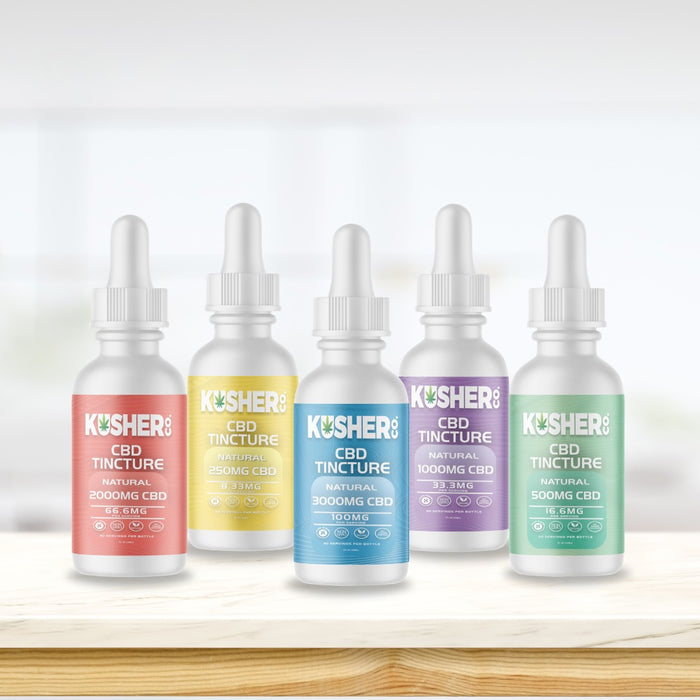
Our Full Spectrum Kosher Hemp Extract CBD Tincture skips the removal step. The extract that goes into it retains the cannabinoid and terpene profile that came out of the original extraction, with THC below the legal limit because the source material was hemp rather than because a step was run to take it out.
That is the reason we chose it. The compounds we would have lost in remediation are the ones that make a full spectrum extract different from an isolate in the first place. Running a step that removes some of them to reach a category name felt like paying to make the product less like itself.
It also keeps the process shorter, which matters for a kosher certified product. Every additional processing stage is another point in the chain where certification has to be maintained, another facility or piece of equipment to account for. A shorter chain is easier to certify and easier to verify.
Who should still choose a THC free product
We are not going to argue people out of a THC free product when they have a real reason for one, and plenty of people do. This is where the tradeoff comes out the other way and we would rather say so plainly than pretend our choice is right for everyone.
- Anyone subject to workplace testing, where the legal limit is not the relevant threshold and the testing policy is.
- Anyone in a regulated profession or safety sensitive role with rules of its own.
- Anyone who has decided for personal, religious or family reasons to keep THC out entirely.
- Anyone whose jurisdiction treats the question differently from the federal standard.
For any of those, the loss of some minor cannabinoids is a small price and the removal step is doing exactly what it needs to do. The tradeoff is only a bad one when someone accepts it without knowing they made it.
What to ask a seller about their removal step
If you are buying broad spectrum, these are the questions that produce real information. A seller who can answer them is describing a process they understand. A seller who cannot is reselling a drum of material they bought on a spec sheet.
- Which technique was used, chromatography, distillation, conversion or something else.
- Whether the terpene profile in the finished product survived the process or was added back afterward.
- Whether they can show a cannabinoid panel from before remediation as well as after.
- What the detection limit on their THC testing actually is, since not detected is a statement about an instrument.
That last one catches more people than it should. Not detected means the lab did not find it at the sensitivity they were testing at, and different labs test at different sensitivities. It is a useful answer and it is not the same as a guarantee of absolute zero.
Bottom line
Broad spectrum is full spectrum that has been through a subtraction, and subtraction in a chemical mixture is never surgical. Chromatography cuts by travel rate, distillation cuts by boiling point, and neither one knows which molecules you were hoping to keep. The minor cannabinoids nearest THC and the volatile terpenes are what pay for the step, and none of that appears on the front of a box.
Our tincture is full spectrum because we would rather keep the profile the extraction produced than spend money and material to reach a category name. If you have a genuine reason to avoid THC entirely, a broad spectrum product is the right call and the losses are worth it. Just make the trade knowingly, ask which technique was used, and treat not detected as a statement about a lab instrument rather than about the universe.
Frequently Asked Questions
Does removing THC take anything else out of the extract?
Yes, and that is the part most labels leave out. Nothing in a plant extract is separated by a wall. Compounds sit on a continuum of molecular size, weight, polarity and boiling point, and every separation technique sorts by one of those physical properties rather than by the name of the compound. Anything that travels near THC through a chromatography column, or boils near it under vacuum, ends up on the same side of the cut. In practice that means minor cannabinoids chemically close to THC and the volatile terpene fraction are what pay for the step.
How is THC actually removed from hemp extract?
There are a few industrial approaches and they share the same logic. Chromatography pushes the extract through a medium that different compounds travel through at different speeds, and an operator collects the fractions separately. Fractional or short path distillation separates by boiling point under heat and vacuum. Chemical conversion changes THC into a different compound rather than removing it. Crystallization pulls a target out as a solid. All of them work, and none of them is a filter that recognizes THC as a concept and lifts it out cleanly. They are physical processes with real resolution limits.
Why do terpenes suffer most in distillation?
Because terpenes are volatile by definition, meaning they evaporate readily at moderate temperatures. Any process that applies heat under vacuum drives them off well before it approaches the cannabinoids. That is not a flaw in the equipment, it is exactly what boiling point separation does, since the lightest and most volatile compounds leave first. In a hemp extract those happen to be the aromatic compounds that give whole plant material its character. You can taste the result, because a heavily distilled extract reads as far more neutral than the material it started as.
Is broad spectrum extract worse than full spectrum?
Not worse, different, and the right choice depends on why someone wants THC out. Broad spectrum is typically poorer in minor cannabinoids than the full spectrum material it was made from, by more than the THC line alone would suggest, and its terpene fraction has usually taken a hit. For anyone subject to workplace testing, working in a regulated or safety sensitive role, keeping THC out for personal or religious reasons, or living somewhere that treats the question differently from the federal standard, that loss is a small price and the removal step is doing necessary work.
What does re-blending mean on a broad spectrum product?
Some producers take remediated extract and blend terpenes or isolated minor cannabinoids back in to rebuild a profile closer to the original. It is common practice, it is not deceptive, and it makes a perfectly reasonable product. It is worth understanding as its own thing though, since a profile that was removed and reconstructed is not the same as one that was never disturbed, and the added terpenes may not even come from hemp. An ingredient list usually reveals it. Separately listed terpenes, botanical terpenes or named individual cannabinoids alongside a hemp extract entry all point at a built formula.
Why is your tincture full spectrum rather than broad spectrum?
Because the removal step would take out some of the compounds that make a full spectrum extract different from an isolate in the first place. Our Full Spectrum Kosher Hemp Extract CBD Tincture keeps the cannabinoid and terpene profile that came out of the original extraction, with THC below the legal limit because the source material is hemp rather than because a step was run to strip it. There is a certification angle too. Every extra processing stage is another point in the chain where kosher certification has to be maintained, and a shorter chain is easier to certify and easier to verify.
What should I ask a seller about their THC removal process?
Four questions produce real information. Which technique was used, chromatography, distillation, conversion or something else. Whether the terpene profile in the finished product survived the process or was added back afterward. Whether they can show a cannabinoid panel from before remediation as well as after, since without a before figure there is no way to see what the step cost. And what the detection limit on their THC testing actually is. That last one catches people, because not detected means the lab did not find it at the sensitivity they tested at, which is a statement about an instrument.