News · 19 August 2026
What Changes When a Cannabinoid Is Converted Rather Than Extracted
Extraction pulls a compound out of a plant that already made it. Conversion chemically rearranges one compound into a different one, in a reactor, using acids or catalysts and heat. Those are two different manufacturing jobs with two different sets of questions attached, and the whole hemp category runs on both of them without usually saying which one produced what you are holding.
This is the manufacturing question underneath every cannabinoid on a label. It is not about which molecule is stronger or which one is legal where. It is about what happened in a facility before the liquid went into a bottle, and what a buyer is entitled to know about it.
What extraction actually does
Extraction is separation. The hemp plant builds cannabinoids in its own tissue, and extraction is the process of getting them out of that tissue and away from everything else. Carbon dioxide under pressure, ethanol, or cold mechanical methods all do the same fundamental job, which is to move a compound from inside plant material into a solution you can work with.
Nothing new is created in that step. Whatever the plant produced is what you end up with, minus the fiber and wax and chlorophyll you did not want. The variables are yield, purity, how much of the surrounding chemistry comes along, and what the solvent leaves behind.
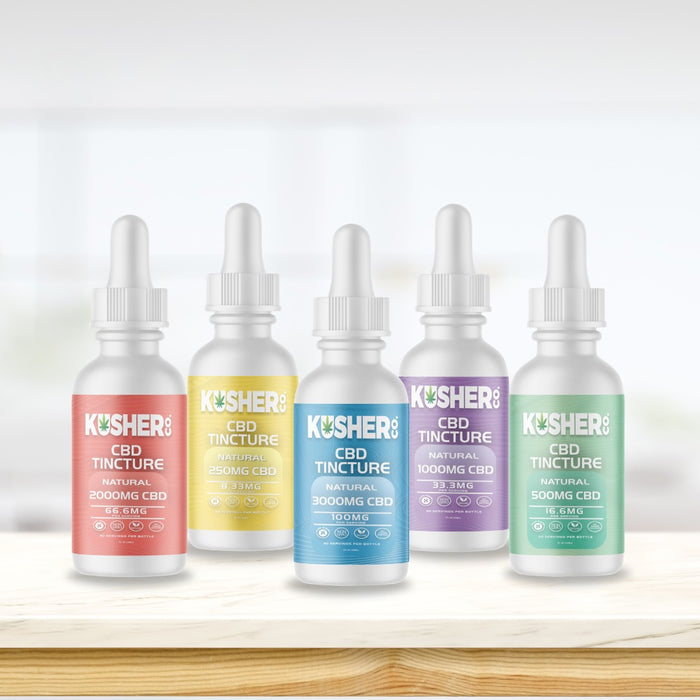
Our Full Spectrum Kosher Hemp Extract CBD Tincture is an extraction product in this sense. Full spectrum means the extract keeps the wider set of plant compounds rather than isolating one, which is a choice about how narrowly to separate rather than a choice to build something new.
What conversion actually does
Conversion is chemistry, not separation. You start with a compound the plant made in quantity, usually CBD, and you put it through a reaction that rearranges its structure into a different cannabinoid. Acid, a solvent, controlled heat and time. The output molecule is not the input molecule.
This is a legitimate industrial process and it is how a great deal of chemistry gets done in every field, from pharmaceuticals to food. Calling it synthetic in a tone of alarm is not useful. What is useful is understanding that a manufacturer running a conversion is operating a reaction, and reactions are controlled or they are not.
The distinction that matters for a buyer is that extraction inherits the plant's own output while conversion produces something whose composition depends entirely on how well the process was run. Two facilities extracting the same biomass get similar results. Two facilities running a conversion can get meaningfully different ones.
Why Delta-8 is a conversion product
Hemp does not make Delta-8 in useful quantity. Trace amounts exist in the plant, far below anything you could economically isolate, which means essentially all Delta-8 on the market is produced by converting CBD rather than by extracting Delta-8 itself. That is not a scandal and it is not hidden. It is simply the only way the compound exists at scale.
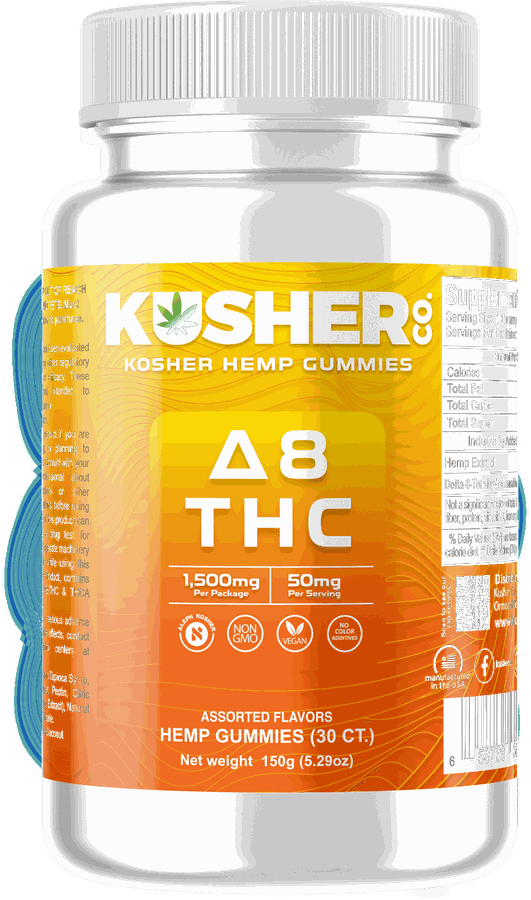
Our D8 Kosher Hemp Gummies at $39.99 contain Delta-8, and our Happy Hour Kosher Hemp Gummies at $29.99 contain Delta-8 alongside Delta-9 and live resin with total THC under 0.3%. Both sit downstream of a conversion step, and we would rather say so than let the word hemp on the front of the jar imply otherwise.
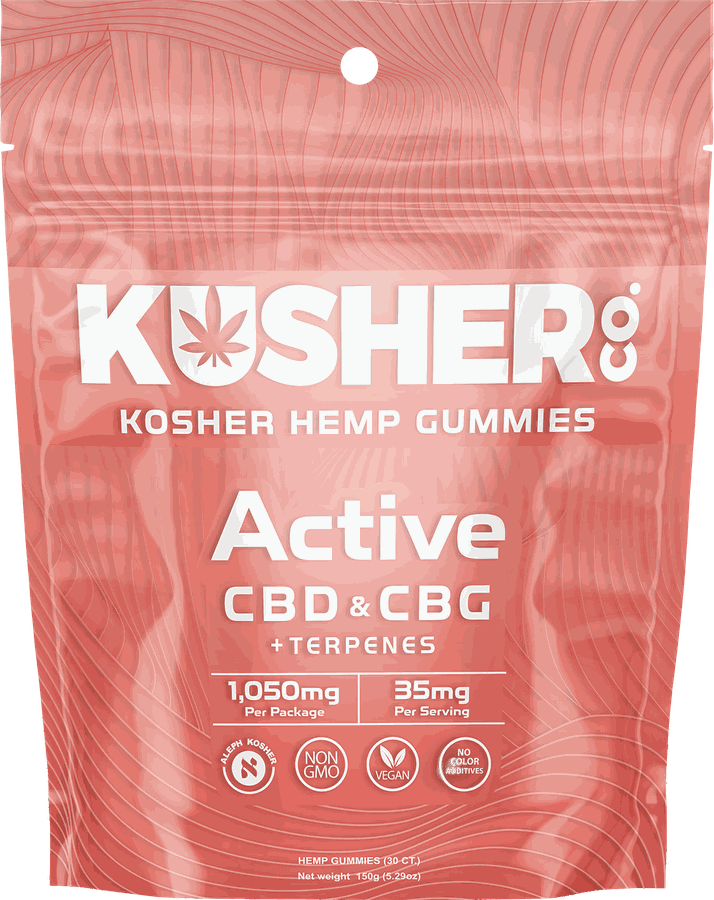
CBD, CBG and CBN occupy different positions on this map. CBD is abundant in hemp and is an extraction product. The picture for the minor cannabinoids is more mixed across the industry, which is exactly why the question of which process produced a given ingredient is worth asking rather than assuming.
The reaction has more than one output
This is the heart of it. A chemical reaction rarely produces one clean product and nothing else. It produces the intended compound plus a set of related structures formed along the way, in proportions that depend on temperature, acid strength, reaction time and how carefully the run was controlled.
Those additional structures are not automatically dangerous and they are not automatically inert. They are unknowns, and unknowns are the reason a converted cannabinoid deserves a closer look than an extracted one. An extraction that went badly gives you a weak or dirty extract of a known compound. A conversion that went badly gives you a mixture whose contents nobody has characterized.
Refinement after the reaction is what separates a controlled process from a careless one. Distillation, chromatography and washing steps exist specifically to remove what the reaction produced but nobody wanted. Whether those steps happened, and how well, is invisible on a label.
Residual reagents are a separate question from potency
Conversions use acids and often catalysts. Those inputs are supposed to be neutralized and removed before anything reaches a consumer product, and in a well run facility they are. But potency testing does not look for them. A certificate that says a product contains a given number of milligrams of Delta-8 has answered a question about strength and said nothing about what else survived the process.
This is why residual solvent testing and heavy metal testing carry different weight for a converted compound than for an extracted one. With an extraction, the contamination risk profile is largely about the plant and the solvent. With a conversion, it also includes everything the reaction itself introduced.
A buyer cannot audit any of this personally. What a buyer can do is check that a seller tested for it and published the result, because the alternative to published testing is not clean product. The alternative is no information.
Why outside verification carries more weight here
A brand testing its own product and reporting the result is asking you to trust the brand. That is a reasonable thing to ask when the process is simple and the failure modes are well understood. It is a much bigger ask when the product came out of a reaction that could have gone several ways.
Independent laboratory testing changes who is making the claim. The laboratory has no stake in the batch passing, and its report exists whether the result was good or not. For a converted cannabinoid, that independence is doing real work, because it is the only mechanism by which a buyer learns anything about a process they were not present for.
The same logic explains why we regard our kosher certification as more than a market label. Certification is an outside body auditing a production process, including inputs and equipment, rather than reading a finished label. It is not a purity test and we would not present it as one. It is an outside set of eyes on the line, which is a category of evidence that self-reporting cannot produce.
What a certificate of analysis should cover
For any hemp product, a useful certificate names the batch, gives the cannabinoid breakdown, and comes from a laboratory that is not the seller. For a converted cannabinoid, a few additional items separate a thorough report from a thin one.
- A full cannabinoid panel rather than a single number, so you can see what else the reaction left behind.
- Residual solvent testing, since conversions run in solvent and the removal step is where sloppiness shows.
- Heavy metals, which can enter through catalysts as well as through soil.
- A batch identifier that matches the code on the package in your hand, not a generic product report.
- A date recent enough that it plausibly refers to the material you bought.
None of that requires chemistry training to check. It requires reading the document and confirming that the numbers on it correspond to the object you are holding, which is a step most buyers skip.
Live resin sits in the extraction column
Live resin is a term about handling rather than about chemistry. It refers to material processed from fresh plant matter rather than dried and cured biomass, with the aim of keeping more of the volatile compounds that drying drives off. It is an extraction approach, and the compounds in it are ones the plant produced.
Our Happy Hour gummies contain live resin alongside Delta-8 and Delta-9, which makes them a product with both stories in one formula. Part of what is in that gummy came out of a plant intact, and part of it came out of a reactor. Both facts are true at once, and neither one cancels the other.
That mixture is normal in this industry. It is also a reason the extraction versus conversion question is better asked ingredient by ingredient than product by product.
Naturalness is the wrong axis
The word natural does almost no work in this conversation and it obscures more than it explains. Ethanol extraction is a chemical process. Distillation is a chemical process. A converted cannabinoid built from plant derived CBD started in a plant just as surely as an extracted one did.
The axis that actually predicts product quality is characterization. Do you know what is in the container, and did someone independent confirm it? A well characterized converted compound is a better purchase than a poorly characterized extract, and the reverse is equally true. Origin story is not the variable.
We would rather a customer ask us what process made an ingredient and what testing covers it than ask whether it is natural. The first question has an answer. The second one mostly produces marketing.
What this means for how a product is priced
Conversion adds manufacturing steps, and manufacturing steps cost money. A reaction has to be run, monitored, quenched, purified and tested, and each of those stages consumes time and materials that a straightforward extraction does not.
Our D8 Kosher Hemp Gummies are $39.99 while our CBD gummies are $29.99, and the difference is not arbitrary positioning. Different ingredient, different production path, different cost base. We would rather explain that than let a customer assume the higher price is a strength claim.
A converted cannabinoid product priced conspicuously below the market is worth a second look, because the savings have to come from somewhere and the purification and testing stages are the easiest places to find them.
Questions worth asking a seller
You do not need technical vocabulary to get useful answers. You need to ask questions that a careless operation cannot answer smoothly.
- Was this cannabinoid extracted or converted, and from what starting material?
- Which laboratory tested this batch, and can I see the report?
- Does the report include residual solvents and heavy metals, or potency alone?
- Does the batch code on the report match the code on my package?
- Who certified the production process, and what does that certification cover?
A seller who knows their supply chain answers these plainly. A seller who does not will change the subject to the compound rather than the process, and that redirection is itself an answer.
The starting material still matters
A conversion does not erase the history of what went into it. The CBD used as feedstock was itself extracted from hemp biomass, grown somewhere, in some soil, under some agricultural regime, and whatever came along with it enters the reaction alongside the intended compound.
Hemp is efficient at drawing metals and residues out of the ground it grows in. That property is useful in remediation work and inconvenient in a supply chain, because contamination in the biomass carries forward into the extract and then into anything built from that extract. A reaction does not clean its inputs. It rearranges them.
This is the part of the story that gets lost when the conversation focuses only on the reaction itself. Two questions are stacked on top of each other. What was the plant material, and what did the process do to it. A seller who can answer only the second has answered half of it.
Why we put this in writing
It would be easier commercially to describe every cannabinoid as plant derived and stop there. It is technically defensible, since a converted compound does originate in plant material, and almost nobody would push back on it.
We think that framing wears out. Customers in this category are getting better informed every year, and a shopper who works out on their own that the product they bought came from a reaction they were never told about does not conclude that they misunderstood. They conclude they were handled.
Writing down what conversion is, and which of our products depend on it, costs us a little mystique and buys a relationship where the next question gets asked out loud. That is a trade we will take every time.
Bottom line
Extraction takes what the plant made. Conversion makes something the plant did not, which is why Delta-8 exists at all as a commercial ingredient. Neither process is disqualifying, and the useful question is never which one sounds more natural.
The useful question is what the reaction left behind and who checked. For an extracted cannabinoid, self-reported testing is thin but survivable. For a converted one, independent laboratory results covering a full cannabinoid panel, residual solvents and heavy metals, tied to the batch code in your hand, is the floor. Anything less and you are buying a process description rather than a verified product.
Frequently Asked Questions
What is the difference between an extracted and a converted cannabinoid?
Extraction is separation. It pulls a compound out of plant tissue where the plant already built it, using pressure, ethanol or cold mechanical methods, and nothing new is created in the process. Conversion is chemistry. It takes a compound the plant made in quantity, usually CBD, and runs it through a reaction with acid, solvent, heat and time that rearranges the molecule into a different cannabinoid. The output is not the input. That is why the two processes carry different questions about what else ended up in the container.
Why is almost all Delta-8 made by conversion?
Because hemp does not build Delta-8 in useful quantity. Trace amounts exist in the plant, far below anything that could be isolated economically, so essentially all commercial Delta-8 is produced by converting CBD instead. That is not hidden and it is not unusual, it is simply the only route to the compound at scale. Our D8 Kosher Hemp Gummies at $39.99 and our Happy Hour Kosher Hemp Gummies at $29.99 both sit downstream of a conversion step, and we would rather state that than let the word hemp imply otherwise.
Does conversion make a product worse?
No, and framing it that way misses what matters. Conversion is a normal industrial process used across pharmaceuticals and food. The real point is that a reaction produces the intended compound plus related structures formed along the way, in proportions set by temperature, acid strength and reaction time. Refinement steps such as distillation and washing exist to remove them. Whether those steps happened, and how carefully, is invisible on a label, which is why the evidence a seller publishes matters more here than it does for an extract.
Why does independent lab testing matter more for a converted compound?
Because self-reported testing asks you to trust the brand, and that is a much larger ask when the product came out of a reaction that could have gone several ways. An independent laboratory has no stake in the batch passing, and its report exists whether the result was good or not. For a converted cannabinoid, that independence is the only mechanism by which a buyer learns anything about a process they were not present for. It is not a formality, it is the entire evidence base.
What should a certificate of analysis include for a converted cannabinoid?
A full cannabinoid panel rather than a single potency number, so you can see what else the reaction left behind. Residual solvent testing, since conversions run in solvent and the removal step is where sloppiness shows. Heavy metals, which can enter through catalysts as well as soil. A batch identifier that matches the code printed on your package rather than a generic product report. And a date recent enough to plausibly describe the material you bought. Checking those does not require chemistry training, only reading the document.
Is live resin extracted or converted?
Extracted. Live resin describes handling rather than chemistry. It means material processed from fresh plant matter instead of dried and cured biomass, so more of the volatile compounds that drying drives off stay in the finished extract. Everything in it is something the plant produced. Our Happy Hour Kosher Hemp Gummies contain live resin alongside Delta-8 and Delta-9, which makes them a formula with both stories in one product. Part came out of a plant intact and part came out of a reactor, and both facts are true at once.
Why is the D8 jar priced higher than the CBD gummies?
Different ingredient, different production path, different cost base. A conversion has to be run, monitored, quenched, purified and tested, and every one of those stages consumes time and materials that a straightforward extraction does not. Our D8 Kosher Hemp Gummies are $39.99 and our CBD gummies are $29.99, and the gap reflects manufacturing rather than positioning. It is also worth noticing when a converted cannabinoid product is priced far below the market, because the savings have to come from somewhere and purification is an easy place to find them.
Does kosher certification tell me anything about the manufacturing process?
It tells you an outside body audited the production line, including inputs and equipment, rather than reading a finished label. That is a different category of evidence from a brand describing its own standards. It is not a purity test and we would not present it as one, since certification and laboratory analysis answer separate questions. What it does provide is independent eyes on the process, which matters more for a converted compound than for a simple extract, because the process is exactly where the uncertainty lives.