News · 19 August 2026
Shelf Life and Potency: What Actually Happens to Hemp Products Over Time
Hemp products change over time because cannabinoids are molecules, and molecules react. The main reaction is oxidation, where oxygen from the air alters a compound into something chemically different. The clearest case in hemp is THC turning into CBN, which is not a weakening of THC but a conversion of one compound into another one. Terpenes, meanwhile, do not convert at all. They evaporate, which is why an aging product smells flatter long before anything else about it has visibly changed.
This is a piece about the chemistry rather than about where to keep a jar. We think the chemistry is the more interesting half, because once you understand what is actually happening to the molecules, the storage advice stops being a list of rules and becomes obvious. Every recommendation anyone gives you about hemp storage is downstream of four things: light, heat, oxygen and time. Here is what each one is doing.
A cannabinoid is a quantity that can change into a different quantity
People tend to picture potency loss as evaporation, as though the CBD in a bottle slowly disappears. That is not what happens. The mass does not vanish. The molecules rearrange into other molecules, and the label stops matching because the thing the label counted has become something else.
That distinction has a practical consequence. A degraded product is not simply a weaker version of the fresh one. It is a different mixture, with a slightly different set of compounds in slightly different proportions. Whether that difference is meaningful depends on how far it has gone, and in most cases over the lifetime of a normally stored product it is small.
Oxidation, in plain language
Oxidation is a reaction where a molecule loses electrons, and in everyday chemistry that usually means oxygen has attacked a vulnerable part of the structure. Cannabinoids have several of these vulnerable points, particularly around the ring structures and any double bonds in the molecule. Oxygen goes for those spots.
Light and heat accelerate the process rather than cause it. Ultraviolet light supplies enough energy to break bonds and start reactions that would otherwise take much longer. Heat raises the rate at which everything happens. A sealed opaque container in a cool room removes two of the three accelerants and limits the third. Oxygen is the one you cannot fully remove, because opening the container introduces more of it every time.
THC to CBN is the textbook example
When THC oxidizes, one of the products is CBN. This is the cleanest illustration of the whole principle because you can watch one named compound become another named compound. Old cannabis material characteristically shows a higher CBN reading and a lower THC reading than the same material did when fresh, and the two changes are related rather than coincidental.
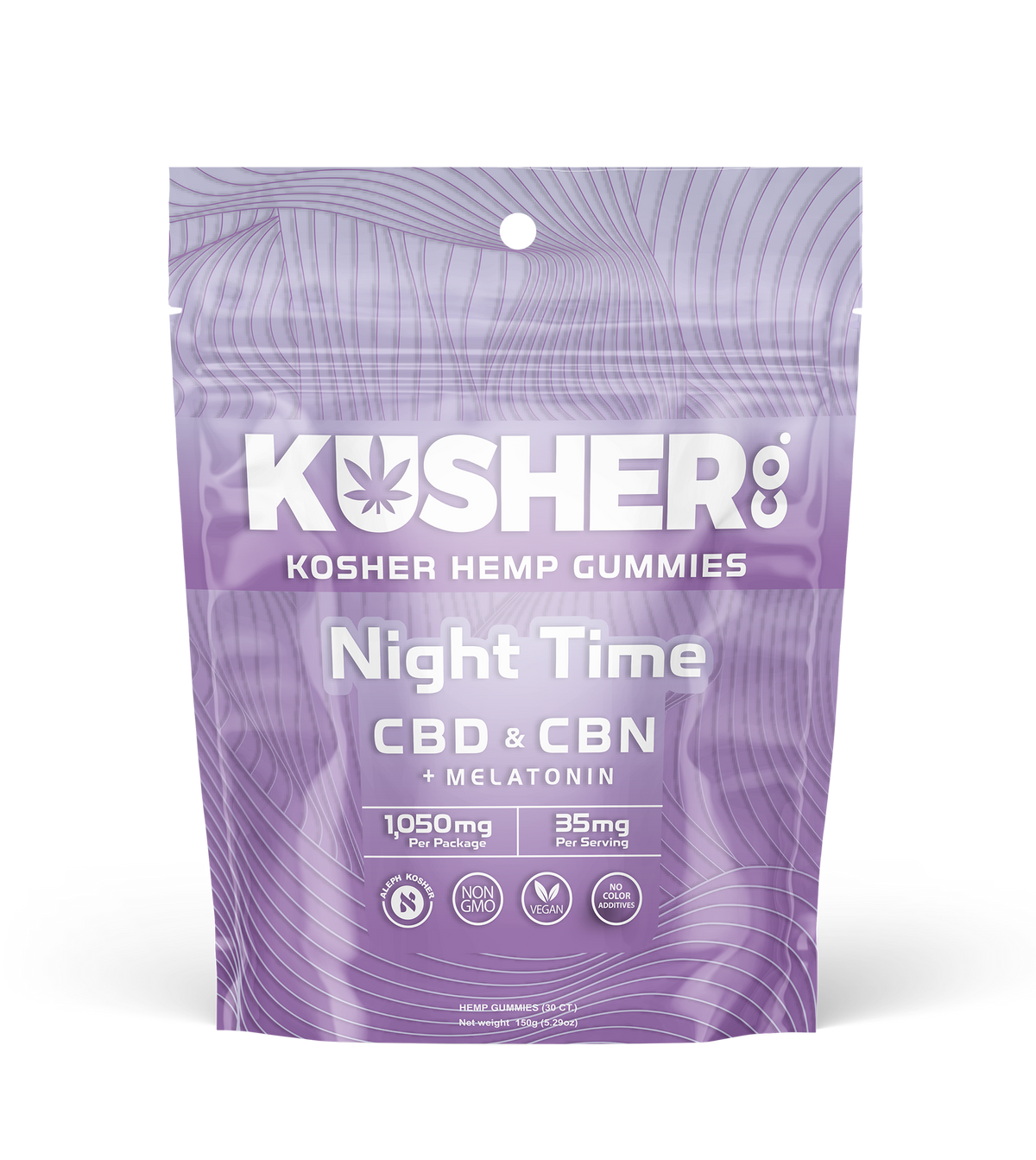
We are deliberately not going to tell you what that means for a person, because that is not what a chemical conversion establishes. What it establishes is that the cannabinoid profile of aged material is genuinely different from the profile of fresh material, and that a potency panel run at production is a description of a moment. Our Night Time Kosher Hemp Gummies contain CBN as a formulated ingredient, which is a different situation entirely. That CBN was put there on purpose and measured on purpose.
Decarboxylation set the precedent
Conversion between cannabinoids is not exotic. It is the normal state of affairs, and it starts before a product exists. In the living plant almost all cannabinoids are present in acid forms: THCA, CBDA, CBGA. Each carries a carboxyl group that comes off with heat and time in a reaction called decarboxylation, converting the acid form into the neutral form that appears on a label.
So every finished hemp product has already been through one deliberate conversion before it reaches a shelf. Decarboxylation is a controlled version of the same kind of chemistry that later causes aging, run on purpose under managed conditions. The molecules do not know the difference between a conversion you wanted and one you did not.
CBD and CBG age too, less dramatically
CBN gets the attention because it has a name and shows up on panels. CBD and CBG oxidize as well, through routes that produce compounds without famous names and that are not always on a standard potency panel at all. The result is that CBD-dominant material can lose measured CBD without any obvious corresponding compound appearing to account for it.
That is a real limitation of testing rather than a mystery. A potency panel measures the compounds it looks for. Degradation products outside that list are invisible to it. This is one of the reasons a very old product can show numbers that do not quite add up against its original report, and it is a good argument for reading a potency panel as a snapshot rather than a permanent property.
Terpenes do something different: they leave
Terpenes are small, light and volatile, which is exactly why you can smell them. Smelling something means molecules of it have left the material and reached your nose. That process does not stop when a product goes into storage. It just slows down.
Different terpenes have different boiling points and different volatility, so they do not all leave at the same rate. The lightest ones go first, which means an aging aroma does not simply fade evenly. It shifts, losing its brightest top notes while heavier, earthier components hang on. This is why an old product often smells not just weaker but subtly wrong compared to how you remember it.
Smell is the earliest reading you get
Here is the practical upshot of all that volatility. Terpene loss begins immediately and is detectable by a human nose long before any cannabinoid change would be detectable by anything short of a laboratory. Your nose is a genuinely sensitive instrument for this specific job.
So the first sign of an aging hemp product is almost always aromatic. A tincture that used to smell green and sharp smelling muted and oily is telling you that time has passed and the container has been opened repeatedly. It is not a verdict on the cannabinoid content, which will have moved far less over the same period. It is the earliest available signal, and it is worth reading as exactly that and nothing more.
The four levers, ranked by how much they matter
All the chemistry above reduces to four variables. Ranked roughly by impact on a finished consumer product:
- Light. Ultraviolet energy drives reactions directly. This is why amber and opaque containers exist and why clear glass on a windowsill is the worst case.
- Heat. Raises reaction rates across the board. Also softens gummies and destabilizes emulsions independently of any cannabinoid chemistry.
- Oxygen. The reactant itself. Headspace in a half-empty bottle is a reservoir of it, and every opening refreshes the supply.
- Time. The multiplier on all three. Nothing above is fast, which is why aging in hemp is measured in months and years rather than days.
Notice that none of these are unique to hemp. They are the same variables that govern olive oil, ground coffee and vitamin C. Cannabinoids are just organic molecules, and organic molecules mostly age for the same reasons.
Gummies: a sugar matrix that ages on its own schedule
In a gummy the cannabinoid is a tiny fraction of the mass, dispersed through a sugar and gelling-agent structure that has its own aging behavior. That structure changes first and most visibly. Water migrates. Sugar can recrystallize on the surface, producing graininess. Texture goes from yielding to firm or, in warm conditions, the opposite.
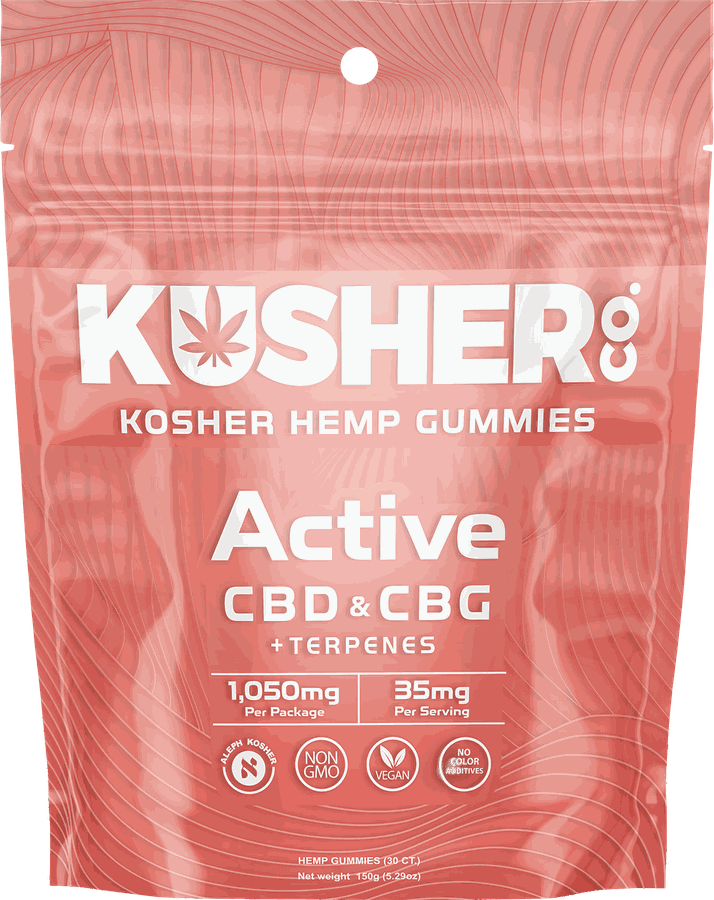
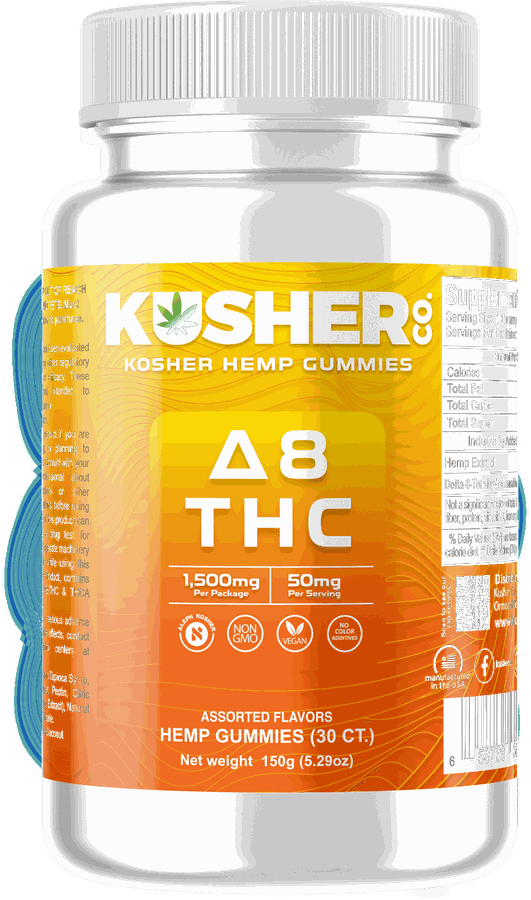
The cannabinoid inside is comparatively sheltered. It sits inside a dense matrix with limited oxygen exposure compared to a liquid with a large surface area. The practical result across our four gummy formulas at $29.99 and the D8 jar at $39.99 is that texture is the property that degrades noticeably first. A gummy that has gone hard or sticky has told you about its sugar and its gelling agent, not directly about its cannabinoid content.
The tincture: two things aging at once
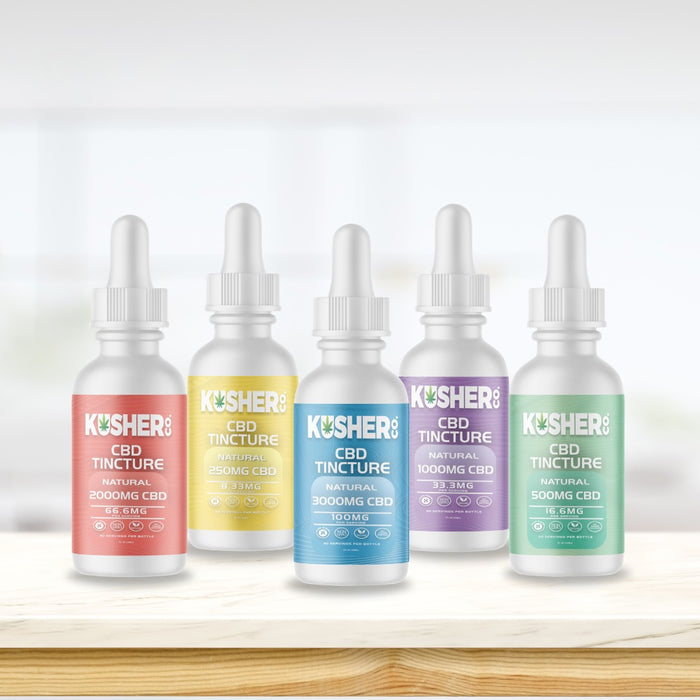
The Full Spectrum Kosher Hemp Extract CBD Tincture is a liquid, and a liquid is the most exposed format we make. It has a large surface area relative to its volume, it gets opened repeatedly, and it accumulates headspace as it empties. Every one of those increases oxygen contact.
There is also a second clock running. The carrier oil is itself an organic compound subject to oxidation, and oxidized oils develop the characteristic flat, waxy smell most people recognize from an old bottle of cooking oil. That change is usually detectable before any change in the extract. A tincture that smells wrong is telling you about its carrier first, which is a useful thing to know, because the two clocks run at different speeds and the oil is the noisier one.
Concentration adds a wrinkle. The ladder runs 250mg, 500mg, 1000mg, 2000mg and 3000mg in the same format. A higher-concentration bottle holds more cannabinoid in the same carrier, so a given percentage of degradation moves a larger absolute number. Proportionally the picture is the same. In absolute milligrams it is not.
Topicals: emulsions have a structural clock as well as a chemical one
The Cooling Pain Relief Gel, the two relief sticks and the two roll ons are formulated products where a cannabinoid has been dispersed through a base of oils, butters and water phases. That base is an emulsion or a semi-solid structure, and structures separate over time. Separation is a physical process, not a chemical one, and it can happen while every molecule in the container is still intact.
The volatile components matter here too. Menthol, mint, eucalyptus and tea tree are all aromatic materials that evaporate from an open or poorly sealed container. Coconut oil and shea butter in the sticks give a firmer matrix that holds volatiles better than a gel does. This is why a stick that has been left in a hot car and cooled again can look and feel different from a fresh one even though nothing in it has chemically degraded much at all.
Full spectrum material ages differently from a single compound
An extract that contains many compounds is a more complicated aging problem than one purified compound would be, because the components can react with each other as well as with oxygen. Plant material carries fats, waxes, chlorophyll and other constituents, and several of those oxidize on their own timelines. The result is a mixture whose composition shifts in more than one direction at once.
Some of that is protective rather than harmful. Plant material contains naturally occurring antioxidant compounds, and an antioxidant works by being oxidized preferentially, taking the hit so that something else does not. A full spectrum extract therefore has a small amount of built-in buffering that a purified compound sitting alone in oil does not. It also has more things in it that can change, which cuts the other way. We would not claim the net effect favors one over the other, because we have not measured it and neither has most of the category.
What potency loss would actually look like on paper
If you tested the same batch at production and again much later, degradation shows up as a slightly lower reading on the primary cannabinoid and, in THC-containing material, a slightly higher CBN reading. It does not show up as a dramatic collapse, because these reactions are slow at room temperature in a sealed container.
We are not going to attach a percentage to that, because we do not have one from our own batches and inventing a figure is exactly the behavior this category has too much of already. What we can say honestly is the direction of travel and the reason for it. Anyone quoting you a precise decay rate for a product like ours should be asked where the number came from.
Why nobody can give you one expiry date
A best-by date on a hemp product is a manufacturer's judgment about a formulation under assumed conditions, not a chemical deadline. Two identical jars stored differently will not be in the same condition on the same day, because the four levers act on them at different intensities. A date on a package cannot know which jar it is on.
That is the honest answer, and it is less satisfying than a number. The compensating fact is that the direction is always the same and the pace is always slow. Nothing about hemp chemistry happens quickly at room temperature, which is why the practical advice is boring and the chemistry underneath it is not.
Bottom line
Cannabinoids do not evaporate, they convert, and THC becoming CBN is the clearest visible case of it. Terpenes are the opposite: they genuinely leave, they leave first, and they are why an old product smells flat before anything else registers. Across our range the format decides what you notice. Gummies change texture first, the tincture shows its carrier oil aging before its extract, and the topicals separate structurally while their aromatic components thin out. Light, heat, oxygen and time are the whole mechanism, and none of them work fast, which is the most reassuring sentence in this article.
Frequently Asked Questions
Does CBD lose potency the way food goes bad?
Not in the same way. Food spoilage is usually microbial. Cannabinoid change is oxidation, a chemical reaction where oxygen alters the molecule into a different compound. Nothing disappears and nothing rots. The mixture simply becomes a slightly different mixture, with less of the original compound and more of whatever it converted into. The reaction is slow at room temperature in a sealed container, which is why hemp aging is discussed in months and years rather than days.
Why does CBN show up in old hemp material?
Because CBN is one of the products of THC oxidation. When THC reacts with oxygen over time, part of it converts into CBN, so aged material characteristically reads lower in THC and higher in CBN than the same material did when fresh. The two shifts are connected rather than coincidental. This is different from a product that contains CBN because it was formulated with it, where the CBN was added deliberately and measured deliberately at production.
Why does an older hemp product smell weaker before anything else changes?
Terpenes. They are small, light and volatile, which is exactly what makes them smell like anything at all. Smelling a product means molecules of it have left the material and reached your nose, and that process continues in storage. Terpenes evaporate rather than converting, and they do it far faster than cannabinoids oxidize. The lightest ones go first, so the aroma does not fade evenly, it shifts, losing bright top notes while heavier components remain.
What is decarboxylation and how does it relate to aging?
In the living plant, cannabinoids exist mostly in acid forms such as THCA, CBDA and CBGA, each carrying a carboxyl group. Heat and time remove that group and convert the acid form into the neutral form that appears on a label. That reaction is called decarboxylation and it happens deliberately during production. It matters here because it proves the principle: cannabinoids convert into other cannabinoids routinely. Aging is the same class of chemistry running slowly and without supervision.
Does a tincture age faster than a gummy?
The two age differently, and the liquid is the more exposed format. A tincture has a large surface area, accumulates headspace as it empties, and meets fresh oxygen every time the bottle is opened. It also has two clocks running, because the carrier oil oxidizes on its own schedule and usually announces itself first with a flat, waxy smell. In a gummy the cannabinoid sits inside a dense sugar and gelling-agent matrix with far less oxygen contact, so texture change is what you notice first.
Why do hemp products not carry a hard expiration date?
Because a date is a manufacturer's judgment about a formulation under assumed storage conditions, not a chemical deadline. Two identical containers kept in different places will not be in the same condition on the same day, since light, heat, oxygen and time act on them at different intensities. No printed date can know which container it ended up on. The compensating fact is that the direction of change is always the same and the pace is always slow at room temperature.