News · 18 August 2026
Terpenes in Hemp Gummies: What They Are and Why Kusher Co Includes Them
Terpenes are the aromatic compounds that give hemp its smell, and the same family of compounds is what you are smelling in a lemon peel, a pine branch, a jar of rosemary and a bag of hops. We include them across our kosher-certified gummy line because they are already present in a whole-plant extract, and stripping them out is an extra processing step that costs money to perform and leaves you with a thinner ingredient. Keeping them is the decision that requires no justification. Removing them is the one that would.
That is a narrower claim than most hemp brands make about terpenes, and it is deliberate. We are going to tell you what a terpene is chemically, which ones show up where, what live resin actually involves, why a gummy holds volatile compounds better than an open bottle does, and what the paperwork behind a terpene ingredient looks like when a kosher certification is riding on it. What we are not going to do is tell you what any of it does for you.
What a Terpene Actually Is
Terpenes are hydrocarbons built from repeating five-carbon isoprene units. That is the whole structural definition. Ten carbons makes a monoterpene, fifteen makes a sesquiterpene, and the family runs to tens of thousands of identified compounds across the plant kingdom. They are not unique to hemp and never have been. Hemp is simply one of the plants that produces a lot of them in a small, resinous place.
The ones you see named on hemp packaging are the same ones a food chemist would recognize from other crops. Myrcene is abundant in hops and mango. Limonene is the dominant aromatic in citrus peel. Pinene is what a pine forest smells like and it also turns up in rosemary. Linalool is the characteristic compound of lavender. Caryophyllene appears in black pepper and cloves. Menthol, which is in our roll on, is a terpene alcohol and it is what makes mint smell and taste like mint.
The property that governs everything practical about terpenes is volatility. These compounds evaporate at low temperatures, which is exactly why you can smell them from across a room. Anything that smells strongly is losing molecules into the air while you smell it. That single fact drives the entire handling, extraction and storage story for the rest of this article.
Isolate, Broad Spectrum, Full Spectrum, Live Resin
Those four words describe how much of the original plant survived into the finished ingredient, and they are worth learning because they are used loosely across this whole category.
- Isolate is a single cannabinoid purified to a powder. Everything else, terpenes included, has been removed. It is the cheapest input to formulate with and the easiest to standardize, because it is one compound.
- Broad spectrum keeps a wider slice of plant compounds but has had one specific thing removed, typically THC, and that removal step tends to take other compounds with it.
- Full spectrum keeps the extract closer to what came out of the plant, cannabinoids and terpenes together, within legal limits.
- Live resin is a full-spectrum extract made from plant material that was frozen immediately after harvest rather than dried and cured first, which is a different starting material rather than a different marketing word.
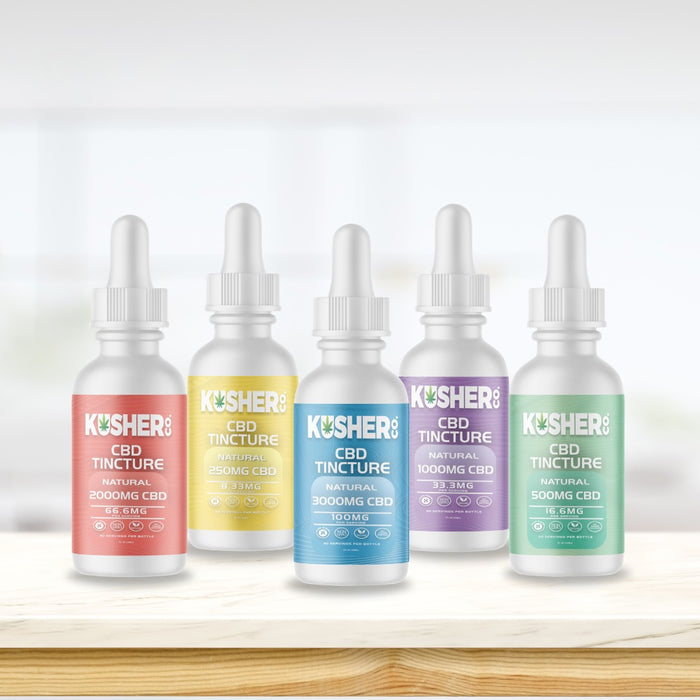
Our Full Spectrum Kosher Hemp Extract CBD Tincture, at $20.00 for 250mg through $40.00 for 3000mg, is named for exactly this distinction. Our Happy Hour Kosher Hemp Gummies at $29.99 are the live resin product in the line, alongside Delta-8 and Delta-9 with total THC under 0.3 percent.
The Phrase Entourage Effect, and What We Are Not Going to Say About It
You cannot read three product pages in this category without meeting the phrase entourage effect. It refers to a hypothesis that the compounds in a whole-plant extract interact rather than acting independently, and it has been repeated so often that it now reads like settled fact on packaging.
It is not settled. It is an active area of research with a mixed literature behind it, and the confident version you see in marketing copy has run well ahead of what has actually been demonstrated. We are not going to tell you what a terpene will do for you, because we do not know and neither does anyone selling gummies. Saying otherwise would be the kind of science-free assertion we criticize other brands for making.
What we can tell you is what is in the jar, how it got there and what the paperwork says. That is a smaller promise. It also happens to be a promise we can keep, which is the difference.
The Operational Rarity Nobody Talks About: Kosher Certification Plus Live Resin
Kosher certification for hemp gummies is already uncommon. Most hemp brands never pursue it, either because the audit process feels unfamiliar or because the operational requirements add layers that slow down production. Getting there requires ingredient traceability at a level that many supplement manufacturers simply are not set up for.
Adding live-resin terpenes into that equation is where most producers stop cold. Here is why. Live-resin extraction captures terpenes directly from fresh-frozen plant material rather than dried flower, which preserves a fuller aromatic profile. But it also means the terpene concentrate itself is a complex, batch-variable input with its own sourcing chain. That sourcing chain has to be documented, verified and traceable at every step for kosher compliance to hold. Terpene extraction involves solvents, temperatures and plant inputs that all require their own certification review. Most terpene suppliers simply are not set up to support that level of documentation. So brands that want to use live-resin terpenes and maintain kosher certification have to either build those supplier relationships from scratch or walk away from one of those two things.
We did not walk away from either. Our Happy Hour Kosher Hemp Gummies carry kosher certification and use live-resin terpenes. That is a genuine supply-chain constraint that most brands do not clear, not a marketing claim. The category exists partly because almost no one else has done the operational work to make it exist.
One honest note on what kosher certification means here. It means the product has met the ingredient traceability and production standards required for certification, across the full formula including the terpene inputs. It does not mean we are making any claim about the certification itself beyond that. It means the sourcing chain is documented and audited in a way that gives you more ingredient-level visibility than you get from most hemp products. For someone who reads labels closely, that visibility is the point.
Which Products Carry Which Terpene Story
The mistake most people make is treating terpenes as a single ingredient that every product handles the same way. They do not. Here is what each gummy in the line actually contains, without any interpretation layered on top.
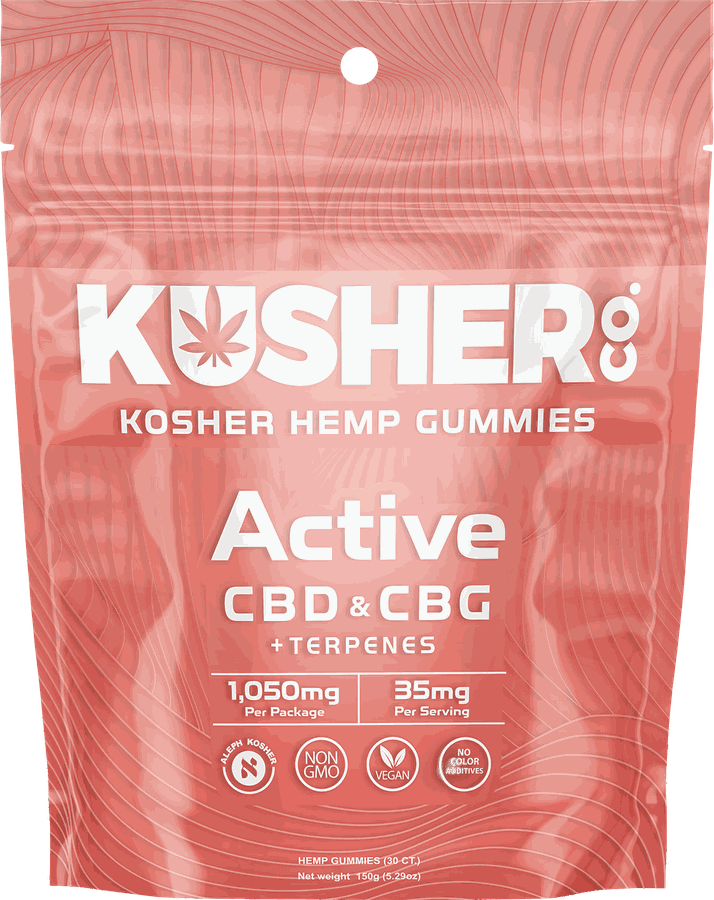
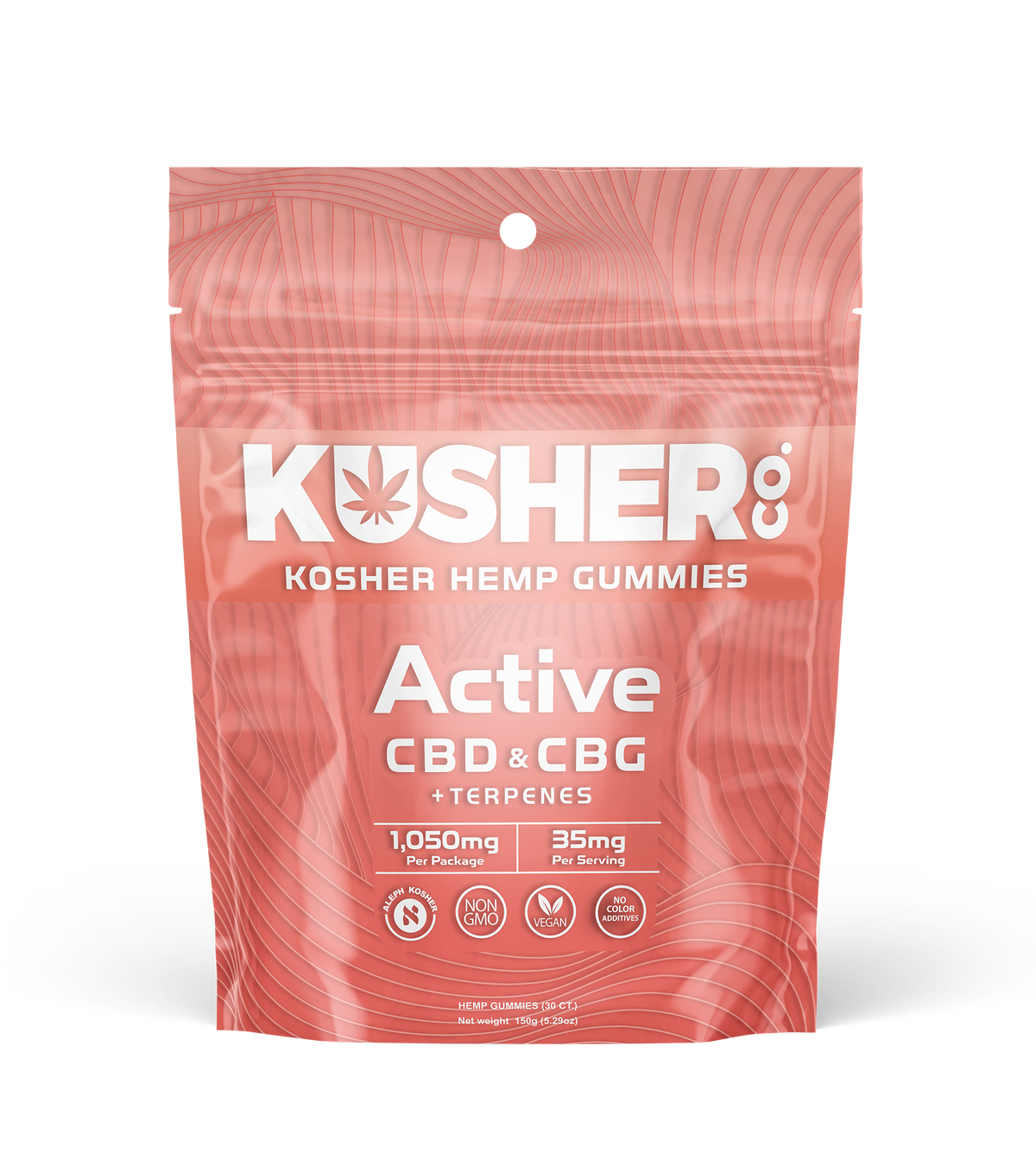
- Active Kosher Hemp Gummies, $29.99. CBD, CBG and terpenes. Two cannabinoids rather than one, which means two separate potency lines on the certificate.
- Wellness Kosher Hemp Gummies, $29.99. CBD and terpenes. The simplest formula we make and the one we point people to when they want a short ingredient list.
- Night Time Kosher Hemp Gummies, $29.99. CBD, CBN and melatonin. CBN is the scarce cannabinoid here, and melatonin is a separately sourced non-hemp ingredient.
- Happy Hour Kosher Hemp Gummies, $29.99. Delta-8, Delta-9 and live resin, total THC under 0.3 percent. This is the broadest aromatic profile in the line because live resin starts from fresh-frozen material.
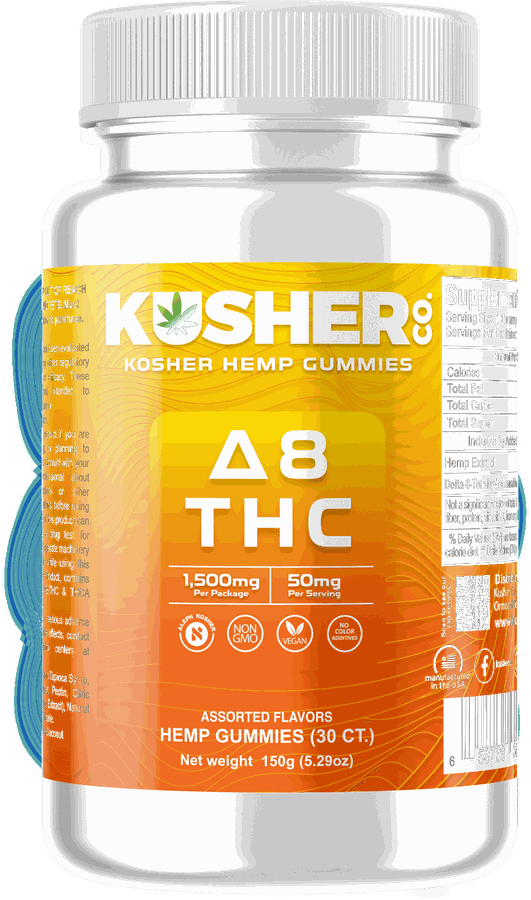
- D8 Kosher Hemp Gummies, $39.99. Delta-8 in a jar format.
All of the gummies are age-gated to 21 and over. If you are choosing between them, the useful question is which ingredient list you want in your cabinet, which is a question you can answer from the panel on the back rather than from anything we write.
Terpenes Are in the Topical Range Too, as Botanical Ingredients
Our topical products are built on plant extracts that are terpene-rich by nature, which is why their ingredient lists read like a herb garden.
The Cooling Pain Relief Gel at $25.00 contains 500mg CBD alongside rosemary and thyme extract, tea tree and mint. The Cooling Relief Stick at $20.00 carries 500mg CBD with eucalyptus and mint in a base of coconut oil and shea butter, plus tea tree. The Heating Relief Stick at $20.00 uses the same 500mg CBD and the same coconut oil and shea butter base with mint, eucalyptus and tea tree, formulated warm rather than cool. The Joint and Muscle Roll on Relief at $20.00 contains 350mg CBD with menthol, tea tree and aloe. The Pain Relief Gel Roll On is $20.00 with 350mg CBD.
Rosemary, thyme, eucalyptus, mint and tea tree are all plants whose characteristic smell comes from terpenes, and menthol is a terpene alcohol in its own right. The connection between our topical range and our gummies is not a marketing idea imposed after the fact. It is a fact about where those ingredients come from chemically. The formats are entirely different, one applied to skin and one eaten, and we are not going to pretend they are interchangeable.
Why a Gummy Holds Volatile Compounds Better Than an Open Bottle
Terpenes are volatile. That is not a marketing word. It describes their chemistry. They evaporate easily, especially when exposed to air, heat or light. A tincture sits in a bottle, and every time you open that bottle, some of the most volatile compounds escape. Over months of daily opening and closing, a tincture can lose aromatic character even while the cannabinoid figure stays intact.
A gummy changes that equation. The terpenes are encapsulated inside a sugar and gel matrix, protected from air between pieces, and the container is only briefly open. Each piece holds its aromatic content until you eat it. That is why our Happy Hour gummies can meaningfully feature live-resin terpenes as part of the formula, while the Full Spectrum tincture is named for its extract type rather than for a specific terpene profile.
The tincture is not a lesser product. It is a different format for a different routine. A dropper lets you measure an amount precisely, in a way that a fixed piece cannot, and at $20.00 for the 250mg bottle it is the least expensive way into the line. If exact measurement matters more to you than aromatic preservation, that is the format to buy, and we would rather say so than push everyone toward the gummies.
Where Terpenes Get Lost Between the Field and the Jar
Every step between harvest and a finished gummy is an opportunity to lose the most volatile compounds, and knowing where the losses happen tells you why certain products cost what they cost.
- Drying and curing. Moisture leaving plant material takes aromatic compounds with it. This is the single largest loss point, and it is the one live resin avoids by freezing instead.
- Heat during extraction. The lower the temperature and the shorter the exposure, the more survives. Heat is cheap and gentleness is expensive.
- Solvent removal. Purging a solvent out of a concentrate involves warmth and vacuum, both of which will carry off light aromatic molecules alongside the solvent.
- Cooking the gummy slurry. A gummy is made hot and then set. Anything added before that heat step is exposed to it, which is why the order of addition in a formula is a real production decision rather than a detail.
- Time on a shelf. Losses continue slowly after the product is made, faster in a warm room and faster still in the light.
How a Terpene Shows Up on a Certificate of Analysis
Cannabinoid potency and terpene content are two different laboratory tests. A standard potency panel measures cannabinoids and says nothing at all about terpenes. A terpene profile is a separate analysis, usually run by gas chromatography, and it is ordered separately and paid for separately.
That distinction is worth knowing because a great many products name terpenes on the front of the package and post only a cannabinoid potency panel. The document does not verify the claim on the label, and most buyers never notice that the two are unrelated tests. If a terpene profile matters to your purchase, ask specifically for a terpene panel by name rather than for the certificate in general.
Read the units and the batch on any panel you are given, the same as you would for cannabinoids. A terpene report from a different production run is a report about a different jar.
Batch Variation Is Real and We Are Not Going to Pretend Otherwise
Terpene ratios vary by harvest and extraction batch. No live-resin product can claim absolute consistency from batch to batch, because the plant itself varies. Any brand that tells you otherwise is overstating what extraction science can deliver. We would rather tell you this upfront than have you expect every jar to be chemically identical to the last.
What stays consistent is the sourcing standard, the certification and the formula. The exact terpene ratio may shift slightly as batches change. That variability is real, and disclosing it is the honest thing to do, particularly in a category where the word consistent is used freely by people selling an agricultural product.
How to Shop for a Terpene Gummy Without Buying a Word
- Check whether the label names specific terpenes or just uses the word. A word is not a formula.
- Ask whether a terpene panel exists for the batch, not just a cannabinoid potency panel.
- Find out whether the terpenes came from the plant the extract came from, or were added afterward from another source. Both are legitimate. They are not the same product.
- Read the whole ingredient list, including the gelling agent and the colorants. The cannabinoid is a small fraction of the piece by weight.
- Compare on price per verified milligram rather than on front-of-package language.
- Check the date. An aromatic product is a perishable one in a way that a purified powder is not.
Storing Them So the Work Is Not Wasted
Cool, dark, closed. Heat and light are the two things that undo everything described above, and a jar left in a sunlit kitchen or a hot car is losing the exact compounds you paid extra for. A drawer beats a counter. A pantry beats a bathroom cabinet, where the temperature swings with every shower.
Buy a quantity you will actually finish. There is no advantage to a large container that sits for a year, and for aromatic products specifically, the last piece is not the same as the first. That is not a defect in the product. It is what volatility means, and it applies to every brand in this category including ours.
Bottom line
Terpenes are the aromatic chemistry of the plant, and they are in our gummies because they were in the extract and we did not take them out. Live resin keeps more of them because the material is frozen rather than dried, kosher certification means every one of those inputs is documented up the chain, and a gummy protects volatile compounds better than a bottle that gets opened every day.
What we will not do is tell you what a terpene will do for you. The entourage effect is a hypothesis with a mixed literature behind it, not a fact you can print on a label, and the brands treating it as settled are doing the thing that made this category hard to trust. Buy on the ingredient list, the panel and the date. Those we can prove.
Before you go, here are the questions customers ask us most when they are sorting out the terpene piece before buying.
Frequently Asked Questions
What does the phrase entourage effect actually refer to?
It refers to a hypothesis that the compounds in a whole-plant extract interact with one another rather than acting independently, so a full-spectrum or live-resin product would not be the same as an isolate carrying the same cannabinoid figure. It is repeated on packaging as though it were settled. It is not. The literature is mixed and the research is ongoing, and the confident version in marketing copy has run ahead of what has been demonstrated. We are not going to tell you what terpenes will do for you. We will tell you what is in the jar, how it got there and what the panel says.
What makes the Happy Hour gummies different from the other terpene gummies in the line?
The Happy Hour Kosher Hemp Gummies use live-resin terpenes, which means the plant material was frozen immediately after harvest rather than dried and cured before extraction. Drying is the single largest loss point for aromatic compounds, so freezing keeps a wider profile in the material. The formula is $29.99 and contains Delta-8 and Delta-9 with total THC under 0.3 percent. The other gummies use terpenes alongside different cannabinoid combinations, such as CBD with CBG in the Active formula. The honest limitation of live resin is batch variability, since it is tied to a specific harvest.
Are terpenes unique to hemp?
Not remotely. Terpenes are hydrocarbons built from repeating five-carbon isoprene units, and tens of thousands of them have been identified across the plant kingdom. Limonene is the dominant aromatic in citrus peel. Pinene is what a pine forest smells like and it also occurs in rosemary. Myrcene is abundant in hops and mango. Linalool is the characteristic compound of lavender. Menthol is a terpene alcohol and it is what makes mint smell like mint. Hemp is simply a plant that produces a lot of them in a small resinous place, which is why they get discussed so heavily in this category.
Does the topical range contain terpenes too?
Yes, by way of the botanicals in the formulas. The Cooling Pain Relief Gel at $25.00 has 500mg CBD with rosemary and thyme extract, tea tree and mint. The Cooling and Heating Relief Sticks at $20.00 each carry 500mg CBD with eucalyptus, mint and tea tree in a coconut oil and shea butter base. The Joint and Muscle Roll on Relief at $20.00 has 350mg CBD with menthol, tea tree and aloe. Rosemary, thyme, eucalyptus, mint and tea tree all owe their characteristic smell to terpenes. The formats are entirely different from a gummy, one applied to skin and one eaten.
How does kosher certification affect what is actually in the gummies?
Kosher certification requires ingredient traceability at a level most hemp brands never pursue. Every input in the formula, including the terpene concentrate, has to come from a supplier whose process can be documented and verified through the audit, and the review extends to the facility, the equipment and the changeover procedures between runs. In practical terms the sourcing chain behind our terpenes is audited, not just the finished product. It is also operationally rare in combination with live resin, because most terpene suppliers are not set up to support that level of documentation.
Will terpene ratios be the same from jar to jar?
No, and any brand that tells you otherwise is overpromising. Live-resin extraction is tied to the specific harvest and plant material used, and terpene ratios shift naturally as batches change because the plant itself varies. What remains consistent is the sourcing standard, the certification status and the formula. The specific ratio may differ slightly from one run to the next. We are transparent about this because disclosing real variability is more useful to you than a consistency claim that extraction science cannot fully back up.
Does a certificate of analysis show the terpene content?
Only if a terpene panel was ordered. Cannabinoid potency and terpene profile are two separate laboratory tests, usually run by different methods and paid for separately, so a standard potency panel says nothing at all about terpenes. Many products name terpenes on the front of the package and post only a potency panel, which means the document does not verify the label. If a terpene profile matters to your purchase, ask for a terpene panel by name, and check that its batch number and date match the container you are buying.
Ready to pick one? Browse Kosher Hemp Gummies.