News · 18 August 2026
Traveling With Hemp Products: What to Think About Before You Pack
Before anything else: the rules where you are going are your job to check, and we cannot check them for you. Not because we are being cautious for the sake of it, but because rules for hemp products differ by state, by country, by airline and by specific compound, they have changed repeatedly, and a store that gave you a confident answer would be handing you a risk it does not carry. Everything below is about the physical and practical side of packing, which is the part we actually know something about.
That part is worth knowing, because formats travel very differently. A roll on shrugs off a hot bag that would ruin a stick. A three thousand milligram tincture bottle is close to the worst object in our range to put in luggage. Gummies survive better than people expect until the moment they do not. Here is how we would pack, with the legal question left where it belongs, which is with you and with a source qualified to answer it.
The rules question comes first, not last
People tend to work out what they want to bring and then wonder about the rules at the airport. Reverse that. Whether you can bring something to where you are going determines what you pack, so it is the first decision rather than a last minute worry.
The awkward part is that there is no single answer to look up. Where you leave from, where you land, where you connect, and what specifically is in the product can all matter independently. Two products from the same store can sit in different positions.
We are not going to summarize any of it, including places where we might be reasonably confident. We would be wrong somewhere, that somewhere would move, and you would be the one standing there holding the bag. Ask someone accountable for being right.
Original packaging, original label, every time
This is the single most useful practical habit and it costs nothing. Whatever you bring, bring it in the packaging it came in, with the label intact.
The reason is identifiability. A labeled container states what the product is, what is in it, who made it and what it is specified to. An unlabeled container states nothing, and anyone who encounters it has no way to establish what it is other than asking you and taking your word.
Our labeling carries the things that matter here, including the kosher certification and the product specification. Happy Hour Kosher Hemp Gummies being specified to total THC under 0.3 percent is information that only exists if the packaging is still with the product. Loose gummies in a sandwich bag have thrown all of it away.
Which of our formats actually travels well
Ranked purely on physical resilience in a bag, with no comment on anything else, the order is fairly clear.
- Roll ons travel best, sealed liquid in a housing with a ball closure
- Gummies travel well enough if they stay cool and stay sealed
- The gel is fine in a bag, provided the cap is fully closed and it is bagged
- Sticks are the most temperature sensitive thing we make
- The large tincture bottle is the format we would leave at home
Notice this ranking is about the container and the base material, not about the product inside it. Physics decides how a format handles a bag, and the format is the thing you choose when you pack.
Why a roll on tolerates a hot bag better than a stick
Joint and Muscle Roll on Relief and Pain Relief Gel Roll On are both $20.00 with 350mg CBD, and they are liquids in a sealed housing. A liquid that gets warm is still a liquid. It does not lose its shape, because it never had one. Warm it and cool it and the product is essentially unchanged in how it behaves when you use it.
A stick is the opposite. Cooling Relief Stick and Heating Relief Stick are $20.00 with 500mg CBD, built on coconut oil and shea butter, and the whole format depends on that base being solid. Warm it and it softens. Really warm it and it slumps in the tube, then sets again in whatever shape it cooled into, which may not be a shape that pushes up through the housing the way it used to.
There is a second reason too. A soft stick deposits far more material per pass, so a stick that traveled in a hot bag empties much faster than the same stick used at home. You have not just risked the shape, you have changed the metering.
Bags get hotter than rooms
People pack for the destination temperature and forget the transit temperature, which is frequently worse. A bag sitting on tarmac in the sun, a car trunk during a long drive, a backpack left in a rental car while you go for lunch. Those all get far hotter than any room you will actually be in.
Transit is also where you have the least control. You cannot open a checked bag to move something out of the sun, and you cannot do much about how long a vehicle sits.
Which argues for a simple rule. If a format is temperature sensitive, keep it in the bag that stays with you rather than the one that disappears, and keep it out of the parts of your luggage that sit against the outside.
The large tincture bottle is the wrong object to travel with
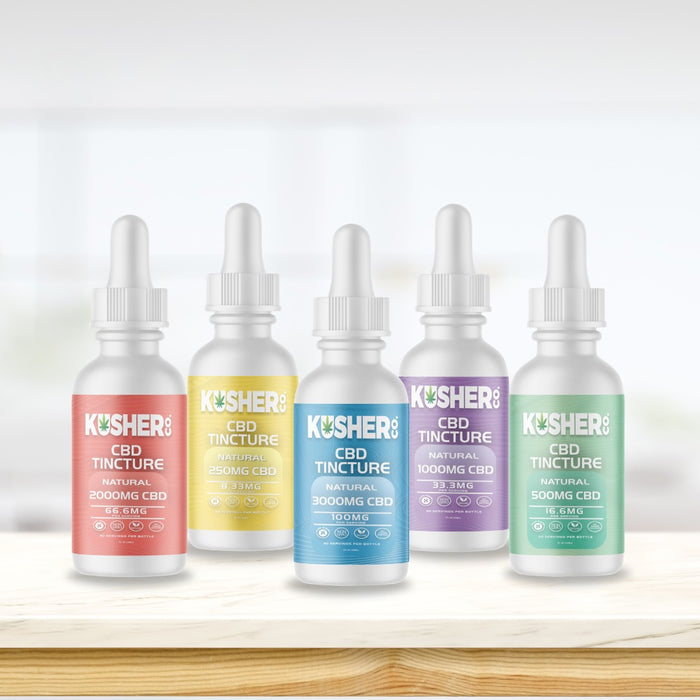
Our Full Spectrum Kosher Hemp Extract CBD Tincture runs from 250mg at $20.00 up to 3000mg at $40.00, and the big bottle is excellent value at home and a poor traveler.
Three separate reasons stack up. It is glass, and glass in luggage is glass that can break against something hard. It is liquid volume, which is its own set of considerations depending on how you are traveling. And it concentrates a lot of extract into one object, so a single failure loses the whole thing rather than a portion of it.
There is a fourth reason that is easy to miss. A tincture is the most light and heat sensitive product we sell, and a trip is a stretch of time when you have very little control over either. The bottle that lives in a cool dark cupboard at home spends a week in a bag by a window.
If you take a tincture anyway
Sometimes the answer is still yes, and there are sensible ways to do it.
Take the smallest size that covers the trip rather than the bottle you have. The 250mg at $20.00 exists for exactly this kind of situation, and buying a small bottle for a trip is cheaper than losing a large one. Keep it upright, keep the cap firmly closed, and put it inside a sealed bag so that a leak stays inside the bag rather than reaching your clothes.
Pack it in the middle of soft items rather than against the shell of a case. Padding is what protects glass, and clothing is padding you are bringing anyway.
Gummies in a bag
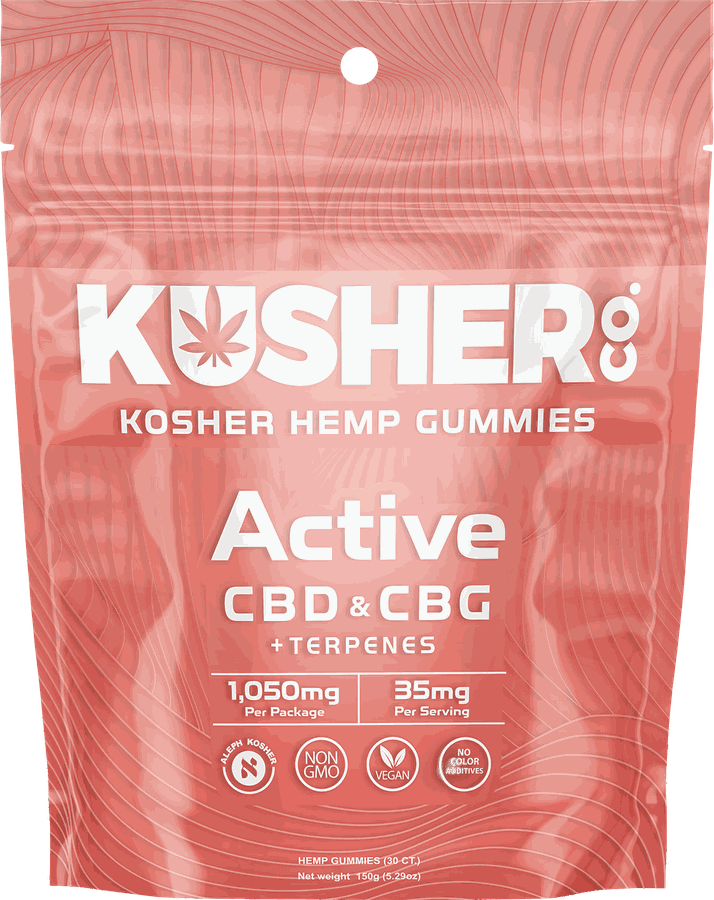
Our gummies are $29.99 across Active, Wellness, Night Time and Happy Hour, and they travel acceptably as long as the enemy is understood. The enemy is heat, and the failure is the coating turning tacky and the pieces fusing into a mass.
A fused block is not a disaster in the way broken glass is, but it does destroy your portioning. A defined piece size stops meaning anything once the pieces are one lump, and reassembling that boundary by eye is not a thing anyone can do accurately.
Keep them sealed, keep them out of direct sun, and keep them off the hot surfaces of a car. If they do fuse, letting them cool fully before handling at least gets you a solid mass rather than a smeared one.
The jar format is a different problem from the pouch
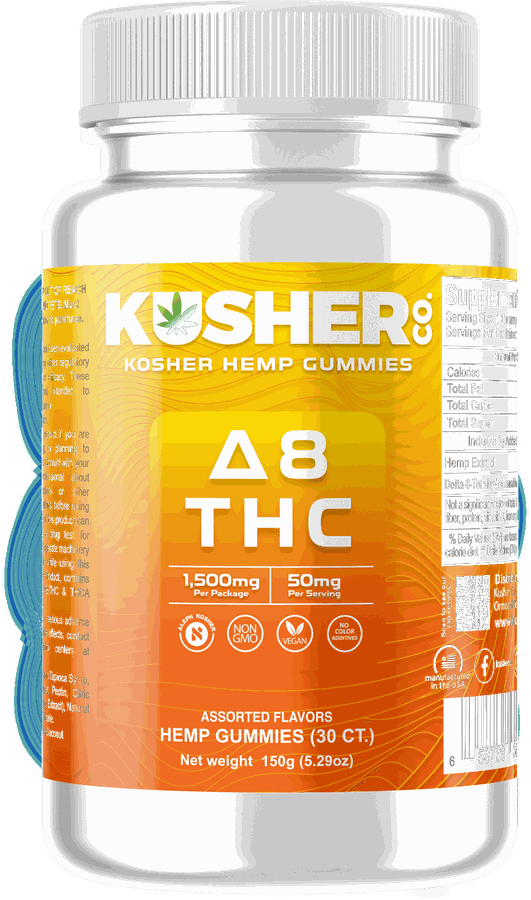
D8 Kosher Hemp Gummies are $39.99 and come in a jar, which changes the calculus in both directions.
A rigid jar protects the contents from being crushed under other luggage far better than a soft pouch does, which is a real advantage in a packed bag. The cost is that a jar has a wide opening and a large air volume inside it, so every opening exposes more surface to air than a resealable pouch does, and it takes up more space for the same contents.
The practical answer is to close a jar firmly and to treat its lid as the thing that matters, since a lid that has worked loose in a bag is an open container for the rest of the trip.
Decanting is the mistake we see most
The instinct is understandable. Space is tight, a big jar seems wasteful for a short trip, and moving a few days worth into a small pill container feels efficient.
Do not do it. An unlabeled container of loose product is a container nobody can identify, including you three days later when it has been in a bag with something else. You have separated the product from every statement made about it, which is the opposite of what you want when you are somewhere unfamiliar.
If space is the real constraint, bring a smaller product rather than a smaller container. Bringing less of something in its original packaging beats bringing more of it in something anonymous, every time.
Crossing a border is not a packing question
Everything above is about protecting a product from a bag. Taking a product across a border is a different category of question entirely, and it is not one we will offer any view on.
Different countries treat these products in radically different ways, the treatment can turn on the specific compound rather than the category, and the consequences of getting it wrong are not the kind of consequences a blog post should be casual about.
The only responsible advice we have is to find out from the authorities of the place you are going, in advance, and to accept the answer you get. If you cannot get a clear answer, that is itself a piece of information worth acting on.
How much to bring
Bring what the trip needs and leave the rest at home, which sounds obvious and is regularly ignored.
People pack their whole supply out of habit, which means the entire thing experiences transit conditions, the entire thing is exposed to whatever risk the trip carries, and the entire thing comes back having spent a week getting warm. Taking a portion means the rest stays in a cool dark cupboard where it belongs.
For topicals this is easy, since a stick or a roll on at $20.00 is a self contained item and you can simply take one rather than three. For the tincture it means buying a small bottle for the trip. For gummies it means deciding on a quantity before packing rather than throwing in the whole jar.
Leaving them at home is a legitimate answer
We sell these products and we will still say it. For a short trip, into a place where you are not certain what the rules are, not bringing anything is a perfectly reasonable decision and it is often the least stressful one.
Nothing about a few days without a product you like is a problem, and there is no benefit to bringing something you are going to feel uncertain about the entire time you are carrying it.
The version of this we would push back on is the middle path, where someone brings a product but strips off the packaging to make it less conspicuous. That combines the risk with the loss of identifiability, which is the worst of both.
What we would actually pack for a weekend
Concretely, and assuming the rules question has already been settled for where you are going, the shortest sensible list is one roll on plus a small amount of one other thing.
A roll on at $20.00 does the job of a topical without any of the temperature fragility, it is sealed against leaking better than anything else we make, and it takes up almost no room. If you would rather bring a stick because you prefer that format, bring it and keep it in the bag that stays with you rather than the one that disappears into a hold for six hours.
Add gummies in their original pouch or jar, in the quantity the trip needs rather than the whole container, and leave the tincture at home unless you specifically bought a small bottle for the trip. That list fits in the corner of a bag, keeps every label with every product, and leaves the bulk of what you own sitting in a cool dark cupboard instead of riding around in a warm one.
The principle underneath it is simple. A trip is a stretch of reduced control, so the right things to bring are the things that need the least looking after.
Bottom line
Check the rules for where you are going before you pack anything, ask someone accountable for being right, and understand that we genuinely cannot answer that question for you and will not pretend otherwise. On the physical side, roll ons travel best and sticks travel worst, the large tincture bottle should stay in its cupboard, and gummies need to stay cool and sealed.
Keep everything in its original labeled packaging, always, and bring the amount the trip actually needs rather than everything you own. If any of that feels like more thought than a short trip deserves, leaving the products at home is a completely respectable answer and we would rather say so than sell you a travel size.
Frequently Asked Questions
Can I take hemp products on a plane?
That is a rules question and it is genuinely yours to answer, not ours. Rules for hemp products differ by state, by country, by airline and by the specific compound involved, and they have changed repeatedly. Where you depart from, where you land and where you connect can all matter independently, and two products from the same store can sit in different positions. We are not going to summarize any of that, including places where we might feel reasonably confident, because we would be wrong somewhere and you would be the one holding the bag. Check with sources accountable for being right, before you pack.
Why does a roll on travel better than a stick?
Because a liquid has no shape to lose. Our roll ons are $20.00 with 350mg CBD, sealed liquid in a housing with a ball closure, and warming and cooling leaves them essentially unchanged in use. A stick is the opposite. Cooling Relief Stick and Heating Relief Stick are built on coconut oil and shea butter, and the format depends on that base staying solid. Heat softens it, real heat slumps it in the tube, and it resets in whatever shape it cooled into. A softened stick also deposits far more material per pass, so it empties much faster than the same stick used at home.
Should I bring my big tincture bottle on a trip?
We would not. The Full Spectrum Kosher Hemp Extract CBD Tincture runs from 250mg at $20.00 to 3000mg at $40.00, and the large bottle is great value at home and a poor traveler. It is glass, it is liquid volume, and it concentrates a lot of extract into one object so a single failure loses all of it. It is also the most light and heat sensitive product we sell, and a trip is a stretch of time when you control neither. If you want a tincture with you, buy the smallest size that covers the trip, keep it upright and capped, and pack it inside a sealed bag surrounded by clothing.
Is it fine to move gummies into a smaller container to save space?
No, and this is the mistake we see most often. Decanting separates the product from every statement made about it. The original packaging carries what the product is, what is in it, who made it and what it is specified to, including our kosher certification and, for Happy Hour, the total THC under 0.3 percent specification. Loose product in an unmarked container is unidentifiable to anyone who encounters it, including you a few days later. If space is the real constraint, bring a smaller product rather than a smaller container. Less of something in its original packaging beats more of it anonymous.
Do luggage temperatures really get bad enough to matter?
Yes, and transit is usually worse than the destination. A bag on tarmac in the sun, a car trunk on a long drive, a backpack left in a rental car during lunch. All of those run far hotter than any room you will be in, and you have the least control over them, since you cannot open a checked bag to move something out of the sun. If a format is temperature sensitive, and sticks and gummies both are, keep it in the bag that stays with you and out of the parts of your luggage that sit against the outside shell.
Is the jar format better or worse for travel?
Both, in different ways. D8 Kosher Hemp Gummies are $39.99 in a jar, and a rigid jar protects the contents from being crushed under other luggage far better than a soft pouch. The cost is that a jar has a wide opening and a large internal air volume, so every opening exposes more surface to air than a resealable pouch does, and it takes more space for the same contents. Treat the lid as the thing that matters. A lid that has worked loose during transit is an open container for the rest of the trip, which is how aromatics and freshness quietly go.
What about taking these across an international border?
That is not a packing question and we will not offer a view on it. Different countries treat these products in radically different ways, the treatment can turn on the specific compound rather than the broad category, and the consequences of getting it wrong are not something a blog post should be casual about. The only responsible advice we have is to find out in advance from the authorities of the place you are going, and to accept the answer you get. If you cannot obtain a clear answer, treat that as information in itself. Leaving products at home for a trip is always a legitimate choice.