News · 18 August 2026
The Questions Worth Asking Before You Buy Any Hemp Product Online
Six questions will tell you more about a hemp product than an hour of reading around it. Does the milligram number describe the container or the serving. Is a percentage standing in for a dose. Is hemp extract being quoted where CBD is meant. Who checked the claims and what exactly did they check. What is in the formula besides the cannabinoid. And does the format suit the place you want the product to work. Ask those six and most of the confusion in this category disappears.
We sell hemp products, so read this with that in mind. The questions below are still worth asking us, and we have written each one so it works on any product page anywhere, including pages we did not write. A shopper who knows what a good answer looks like is a better customer for a store that can give one, and a much harder sell for a store that cannot.
Why the category needs a checklist at all
Hemp went from a legal curiosity to a full retail category in a few years, which is not enough time for labeling conventions to settle. Two products can use the same word for different things and neither is lying. Milligram figures can refer to a bottle, a serving, or the total weight of an extract that is mostly not the cannabinoid you care about. There is no house style the whole category follows.
That leaves the reading to you, and the good news is that it is genuinely learnable. None of what follows requires chemistry. It requires knowing which number is which, and noticing when a page has quietly answered a different question from the one you asked.
Does the milligram number describe the container or the serving?
This is the first question because it is the one that most often makes two products look wildly different when they are not. A big number on the front of a package can be the total in the container. It can also be per serving. The gap between those two readings can be a factor of thirty.
A good answer states both, in the same place, in plain numbers. It tells you the container total, the serving size, and how many servings are in the package. Then the division is available to you without hunting through a supplement panel photographed at an angle.
A non-answer gives you one large number and nothing to divide it by. It is not necessarily dishonest. It is often just a label designed for shelf appeal rather than for a shopper doing arithmetic. Either way you cannot compare it with anything, and a number you cannot compare is not information yet.
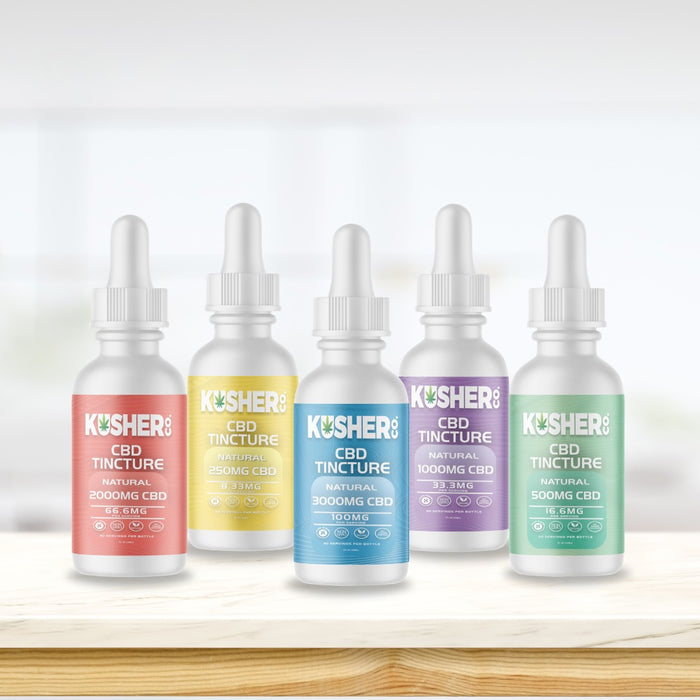
On our own listings the topicals state the container total. The Cooling Relief Stick and Heating Relief Stick hold 500mg of CBD each, and the Joint and Muscle Roll on Relief and Pain Relief Gel Roll On hold 350mg each. The tincture states its total per bottle, from 250mg up to 3000mg. Those are container figures, and we say so rather than letting a large number float free.
Is a percentage being used where a dose belongs?
A percentage tells you concentration. It does not tell you how much of anything you are getting, because it says nothing about the size of the thing it is a percentage of. Ten percent of a small bottle and ten percent of a large one are different amounts of CBD, and you cannot dose from a percentage without knowing the volume.
A good answer gives you milligrams and treats the percentage, if it appears at all, as extra context. A non-answer leads with the percentage and never converts it, leaving you to reverse engineer the number that actually matters from a bottle size printed somewhere else.
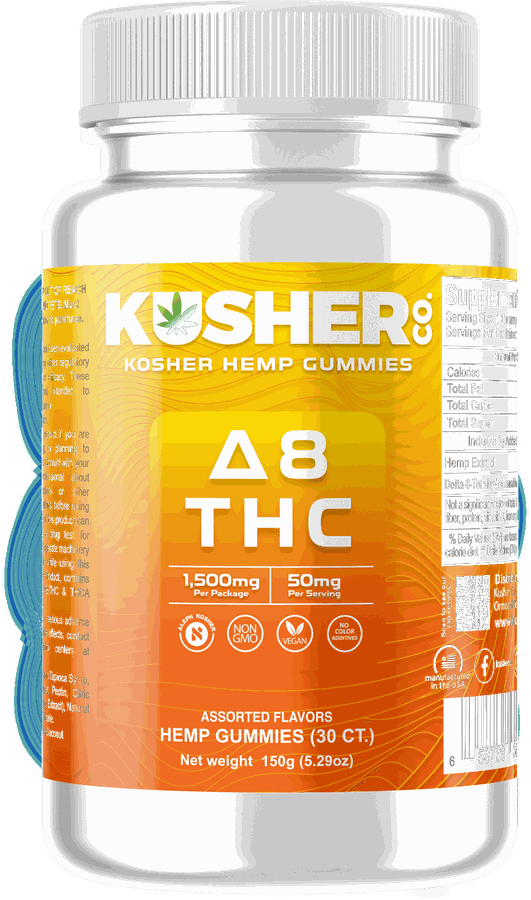
There is one place where a percentage is exactly the right unit, and it is worth knowing so you do not overcorrect. Legal THC limits are written as a percentage of dry weight, which is why our Happy Hour Kosher Hemp Gummies are described as having total THC under 0.3 percent. That is a compliance figure answering a legal question. It is not a dose, and it was never meant to be one. A percentage in that spot is correct. A percentage where you asked how much you are taking is a substitution.
Is hemp extract being quoted where CBD is meant?
These are not synonyms and the difference can be large. Hemp extract is everything pulled out of the plant, and CBD is one component of it. A number attached to hemp extract describes the weight of the whole extract, of which the CBD is a fraction. A number attached to CBD describes the cannabinoid itself.
Hemp seed oil is a third thing again. It is pressed from the seed rather than extracted from the flower, and it contains no meaningful cannabinoid content at all. It is a perfectly good oil and it is not what you are shopping for when you are shopping for CBD.
A good answer names the cannabinoid and gives its milligrams. Ours is called a Full Spectrum Kosher Hemp Extract CBD Tincture, and the strengths quoted are CBD milligrams per bottle. Full spectrum tells you the extract keeps the plant's other compounds rather than isolating one, and the milligram figure still refers to the CBD.
A non-answer keeps the language vague on purpose or by habit, quoting a large hemp figure with no cannabinoid breakdown behind it. If a page will not tell you which substance the number describes, treat the number as unusable rather than as impressive.
Who verified the claims, and what exactly did they check?
Verified is doing a lot of work in most product copy, so break it into its two halves. Who did the checking, and what did they look at. Both halves have to be answered for the claim to mean anything.
The document you want is a certificate of analysis from a laboratory that does not belong to the seller. On a good one the batch or lot number matches the code on the package in your hand, the date is recent enough to be about your batch rather than a batch from two years ago, and the panels are listed. Potency is the obvious one. Pesticides, heavy metals, residual solvents and microbial contamination are the ones that tell you the testing was about safety and not just about the headline number.
A non-answer is the phrase lab tested with no document attached, or a certificate with the batch identifier cropped out, or a link to a single sample from a long time ago standing in for every batch since. None of those are checkable, and a claim you cannot check is a claim you are being asked to take on faith.
What a certificate cannot tell you
Different certifications answer different questions, and mixing them up is a common error. Our products are kosher certified, which is a statement about ingredients, sourcing and how production is supervised. It is a genuine, audited standard and it is one of the few things in this category where an outside body inspects the facility rather than reading a form.
It is not a potency test. Kosher certification does not tell you how much CBD is in the bottle, and a laboratory potency report does not tell you whether the ingredients meet a dietary standard. You need both documents for both questions, and any page that offers one as an answer to the other has changed the subject.
The useful habit is to name the question first, then look for the document that answers that question specifically. It sounds obvious written down. It is surprisingly easy to skip when a page is covered in seals.
What is in the formula besides the cannabinoid?
The rest of the ingredient list decides who a product suits, and it is the part shoppers skim. Two products can carry identical CBD figures and be completely different purchases once you read past the first line.
Our own range makes the point. The Joint and Muscle Roll on Relief has menthol, tea tree and aloe alongside its 350mg of CBD, while the Pain Relief Gel Roll On carries 350mg of CBD without that list. Both relief sticks are built on coconut oil and shea butter with mint, eucalyptus and tea tree. The Cooling Pain Relief Gel adds rosemary and thyme extract. Our Night Time Kosher Hemp Gummies contain melatonin in addition to CBD and CBN, which is exactly the kind of thing you want to know before you take one, and our Happy Hour formula contains live resin with Delta-8 and Delta-9.
A good answer lists everything and does not hide behind a blend name. A non-answer uses a proprietary label to avoid disclosing proportions, or lists actives while leaving the base unstated. If you have an allergy, a sensitivity, a dietary rule you keep, or a preference about what goes on your skin, the full list is the only part of the page that can answer you.
Does the format actually suit where you want it to act?
Format is not a style choice. A topical goes onto skin and stays roughly where you put it. Something you swallow goes through your digestive system first and then through your bloodstream. Those are different routes into your body, and no milligram figure makes one behave like the other.
So the question to ask yourself before you compare any two products is where you want the product to be. If the answer is a specific spot you can point to, a stick, a gel or a roll on is the shape that matches, and the applicator matters as much as the formula. A stick puts down a thicker layer. A roll on puts down a thin one without your hands in it. A gel spreads over a wider area.
If the answer is not a specific spot, then a gummy or a tincture is the honest match, and the choice between them is about control and routine. A tincture lets you adjust the amount by fractions of a dropper. A gummy is a fixed amount with no measuring, which is easier to be consistent with and harder to fine tune.
What a non-answer usually sounds like
Non-answers have a texture you learn to recognize. Adjectives where numbers belong. Premium, pure and high quality are not measurements, and none of them can be wrong, which is what makes them useless. Claims of testing with nothing to open. Awards and badges with no issuing body named. A page that answers a question adjacent to yours and moves on quickly.
The tell is not that the language is enthusiastic. Plenty of honest pages are enthusiastic. The tell is that after reading it you still cannot state a single number, a single ingredient, or a single verifiable fact you did not know before.
The questions that are worth less than they look
Which product is strongest is a weaker question than it appears, because strength is only meaningful next to a format, a route and a serving. A large container total on something you use twice a week is not stronger than a small one you use daily.
Whether a product is natural is a question with no defined answer in this category, so it cannot separate two options. Whether it is organic is a real question only when a certifying body is named and the scope is stated, because the word can attach to a single ingredient rather than to the finished product.
Replace all three with the six above and you will get further. Those six have answers that are either given or conspicuously missing, and both outcomes are informative.
Ask us the same six
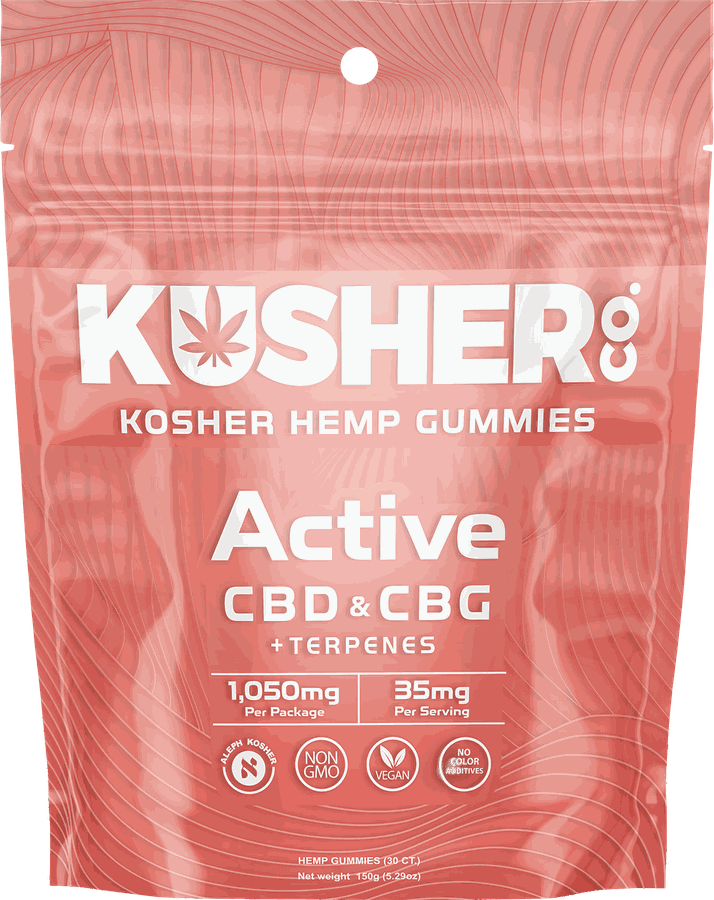
We would rather be held to this list than exempted from it. Our topicals state their container totals at 500mg or 350mg. Our tincture states CBD milligrams per bottle across five strengths. Our gummy formulas name what is in them, including the melatonin in the night formula and the live resin in Happy Hour. Our certification is a documented standard with an outside body behind it, and it covers ingredients and supervision rather than potency, which we say rather than letting the seal imply more than it means.
Where an answer is not on the page, ask for it. A store that knows its own formulas can answer these in a sentence each. The speed of the reply tells you nearly as much as the content of it.
What to do when the answers do not come
Do not read silence as guilt. Small operations get behind, and a slow reply about a batch document is not evidence of anything. What it does mean is that you cannot verify the claim right now, so treat the product as unverified for the moment rather than as good or bad.
The practical move is to buy the smallest version of anything unfamiliar. Rate per milligram gets worse at the small end, and that difference is the price of finding out. On our own range the 250mg tincture at $20.00 is exactly that trade, and we say plainly that it is the worst value per milligram we sell and the cheapest way to learn whether the format suits you.
Bottom line
Learn to read the numbers and the category stops being confusing. Container or serving, milligrams not percentages, CBD not hemp extract in general, a batch matched certificate from an independent lab, the whole ingredient list rather than the headline actives, and a format that matches where you want the product to be. Six questions, no chemistry required. Any seller who can answer them is worth your attention whether or not that seller is us, and any product page that dodges all six has told you something useful by dodging.
Frequently Asked Questions
How do I tell whether a milligram figure is per container or per serving?
A well built listing states both and gives you the serving count, so the division is available without hunting. If only one number appears, look for a supplement or ingredient panel, which almost always breaks the amount down per serving. If neither is stated, ask before you buy, because the gap between a container total and a per serving amount can easily be a factor of thirty. Until you know which one you are reading, the number cannot be compared with anything else.
Why is a percentage not good enough for working out a dose?
A percentage describes concentration, not amount. Ten percent of a small bottle and ten percent of a large bottle are very different quantities of CBD, so a percentage alone cannot tell you how much you are taking. Milligrams answer the question directly. The one place a percentage is the correct unit is a legal THC limit, which is written as a percentage of dry weight. That is why our Happy Hour gummies are described as having total THC under 0.3 percent. That figure answers a compliance question, not a dosing one.
What is the difference between hemp extract, hemp seed oil and CBD?
Hemp extract is everything taken from the plant, and CBD is one component within it, so a hemp extract weight is always larger than the cannabinoid it contains. Hemp seed oil is pressed from the seed rather than extracted from the flower and carries no meaningful cannabinoid content. A listing that quotes a large hemp extract figure without breaking out the cannabinoid has not told you what you need. Look for the cannabinoid named and its milligrams stated.
What should a certificate of analysis actually show me?
It should come from a laboratory independent of the seller. The batch or lot number on it should match the code printed on the package you received, and the date should be recent enough to describe your batch rather than an older one. Look for the panels tested, which ideally cover potency along with pesticides, heavy metals, residual solvents and microbial contamination. A certificate with the batch identifier cropped out, or a single old sample presented as evidence for every batch since, is not something you can check.
Does a kosher certification tell me anything about potency?
No, and the two should not be confused. Kosher certification is an audited standard covering ingredients, sourcing and supervised production, and it involves an outside body inspecting facilities rather than accepting a form. It says nothing about how much CBD is in a bottle. A laboratory potency report answers that question and says nothing about dietary standards. You need both documents for both questions, and any page offering one as an answer to the other has changed the subject.
Why does the rest of the ingredient list matter so much?
Because it decides who the product suits. Two items with identical CBD figures can be completely different purchases once you read past the first line. Our Joint and Muscle Roll on Relief carries menthol, tea tree and aloe alongside its CBD, while the Pain Relief Gel Roll On has the same 350mg without that list. Our Night Time gummies contain melatonin, which is exactly the sort of thing to know before taking one. If you have an allergy, a sensitivity or a dietary rule, the full list is the only part of the page that can answer you.
Is it worth paying more for a small size to try something first?
Often, yes, as long as you know that is the trade you are making. Rate per milligram is almost always worse at the small end, because the container, label and batch testing cost the same whether the container is small or large. The extra cost per milligram is the price of finding out whether a format suits you. Our 250mg tincture at $20.00 is exactly that. It is the worst value per milligram we sell and the least expensive way to learn whether you like the format.