News · 18 August 2026
Can You Use CBD Topicals and CBD Gummies at the Same Time?
Yes. You can use a CBD topical and a CBD gummy on the same day, and there is nothing about the combination that needs special planning. A topical acts where you rub it in and very little of it reaches general circulation. A gummy goes down your throat, through your gut, and into the bloodstream. Two different routes, two different destinations, which is why running both is closer to using two unrelated products than it is to doubling up on one.
The part that deserves slowing down for is the exception. Two of our gummies contain THC rather than CBD alone, and combining THC products with each other is a different question with a different answer. We get to that below, because skipping past it would be the dishonest version of this article.
Where a topical goes, and where it does not
Skin is a barrier by design. Its entire job is keeping the outside outside, and it is very good at that job.
When you rub a gel or a stick into your forearm, the CBD in it moves into the tissue directly underneath and stays in that neighborhood. Some sits in the upper layers of skin. Some works a little deeper into what is right below. What does not happen, in any quantity that matters, is a flood of it into your bloodstream and out to the rest of your body.
That is the defining property of the format, and it is the reason the question in the title has such an easy answer. A product that mostly does not enter circulation cannot interact with much of anything happening elsewhere in you. Our Cooling Relief Stick at $20.00 carries 500mg across the whole tube. The fraction of that 500mg that ends up circulating through your system after one application is small enough that it does not change the picture.
Where a gummy goes
A gummy takes the long road. You chew it, it goes down, and then it waits in line behind whatever else is already in your stomach.
From there it passes through the gut wall and the liver before any of it reaches general circulation. That route is slow and it is lossy. Onset gets measured in tens of minutes rather than seconds, and the amount that arrives is a fraction of the amount you swallowed, which is true of most things you eat.
What you get in exchange is reach. A gummy is not aimed anywhere. Once it is circulating, it is wherever blood goes, and that is the entire reason to choose the format in the first place. Our Wellness, Active and Night Time gummies are all $29.99 and all work this way, whatever else differs between them in cannabinoid content.
Two jobs, in two places
Line those two descriptions up next to each other and the answer more or less writes itself.
The topical is a local tool. You choose the spot, you put it there, and whatever it does is concentrated where your hand went. The gummy is a systemic tool. You cannot aim it, and you are not supposed to be able to.
Running both at once is not one larger dose of anything. It is one product busy in your shoulder and another product circulating through your whole system, at the same time, with very little overlap between the two. People get into trouble here by imagining a single pool of CBD inside the body that both products are pouring into. That mental picture is wrong in a way that leads to real mistakes, the most common being someone who uses less topical than they meant to because they figure the gummy has already covered it.
The milligram figures on the two are not additive
Here is the practical consequence, and it comes up more than any other question we get on this subject.
The 500mg printed on our Cooling Pain Relief Gel describes the entire $25.00 tube. It is not a dose and it was never meant to read as one, because nobody applies a whole tube. The figure tells you the concentration of the product you are buying, which makes it useful for comparing one topical against another topical and close to useless for anything else.
Adding that 500mg to whatever is in a gummy to arrive at a daily total is therefore not arithmetic, it is a category error. The two numbers describe different substances taking different routes to different places. If you want to think in totals, think in totals within a format. Our two roll ons, the Joint and Muscle Roll on Relief and the Pain Relief Gel Roll On, both carry 350mg at $20.00, and those figures are genuinely comparable to each other because the format and the rate of delivery match.
Add one thing at a time
The strongest argument for introducing these separately has nothing to do with safety and everything to do with information.
Start both on the same morning and you have given yourself a two variable experiment with one observer and no control. Whatever you notice over the following week belongs to the pair. You will not know which product earned it, which one you could drop, or which one you should have bought more of. That is a genuinely annoying position to be in after spending $50 on two products.
Start with one, live with it long enough to form an opinion, then add the second. Now every change after the second product arrives has one obvious candidate behind it. The cost of this approach is patience. The return is that you actually learn something about your own response instead of collecting a vague impression about a bundle.
A sequence that tells you something
If you want a shape to follow rather than a principle to interpret, this is the one we suggest to people who ask.
- Week one and two, one product only, used consistently rather than occasionally. Consistency matters more than quantity at this stage.
- End of week two, decide whether it is doing anything for you. Be honest. A shrug is an answer.
- Week three, add the second product while keeping the first exactly as it was. Change one thing.
- End of week four, compare the two halves. If nothing shifted when the second product arrived, you have learned that the second product is optional for you, which is worth knowing.
Four weeks feels slow when you have two products sitting on the counter. It is still faster than the alternative, which is months of running an unclear combination and never being sure what any of it is doing.
Which of our gummies are CBD only
Three of the five, and the distinction matters for everything that follows.
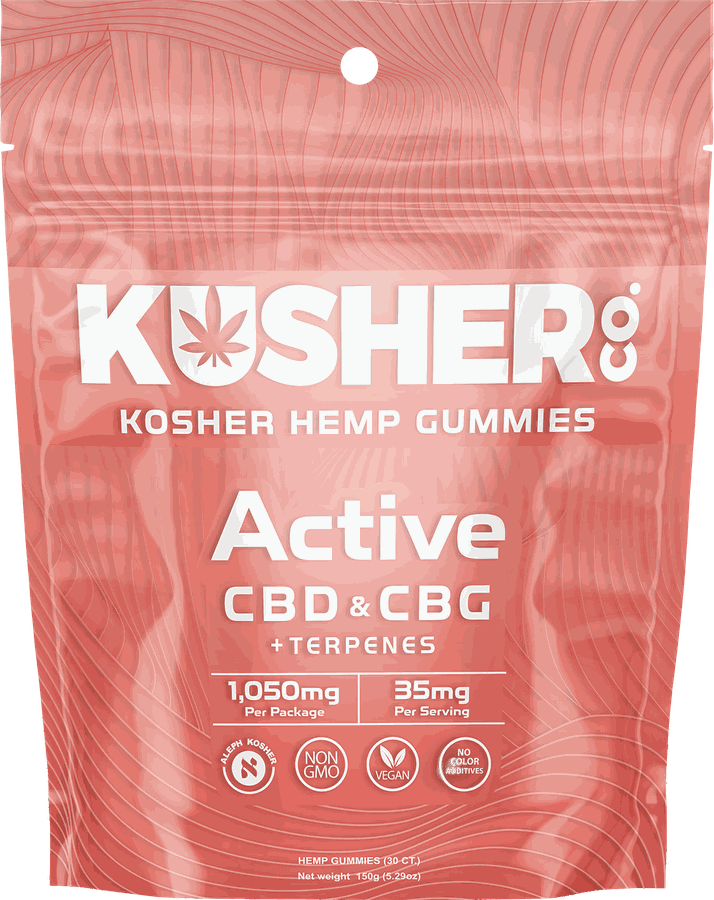
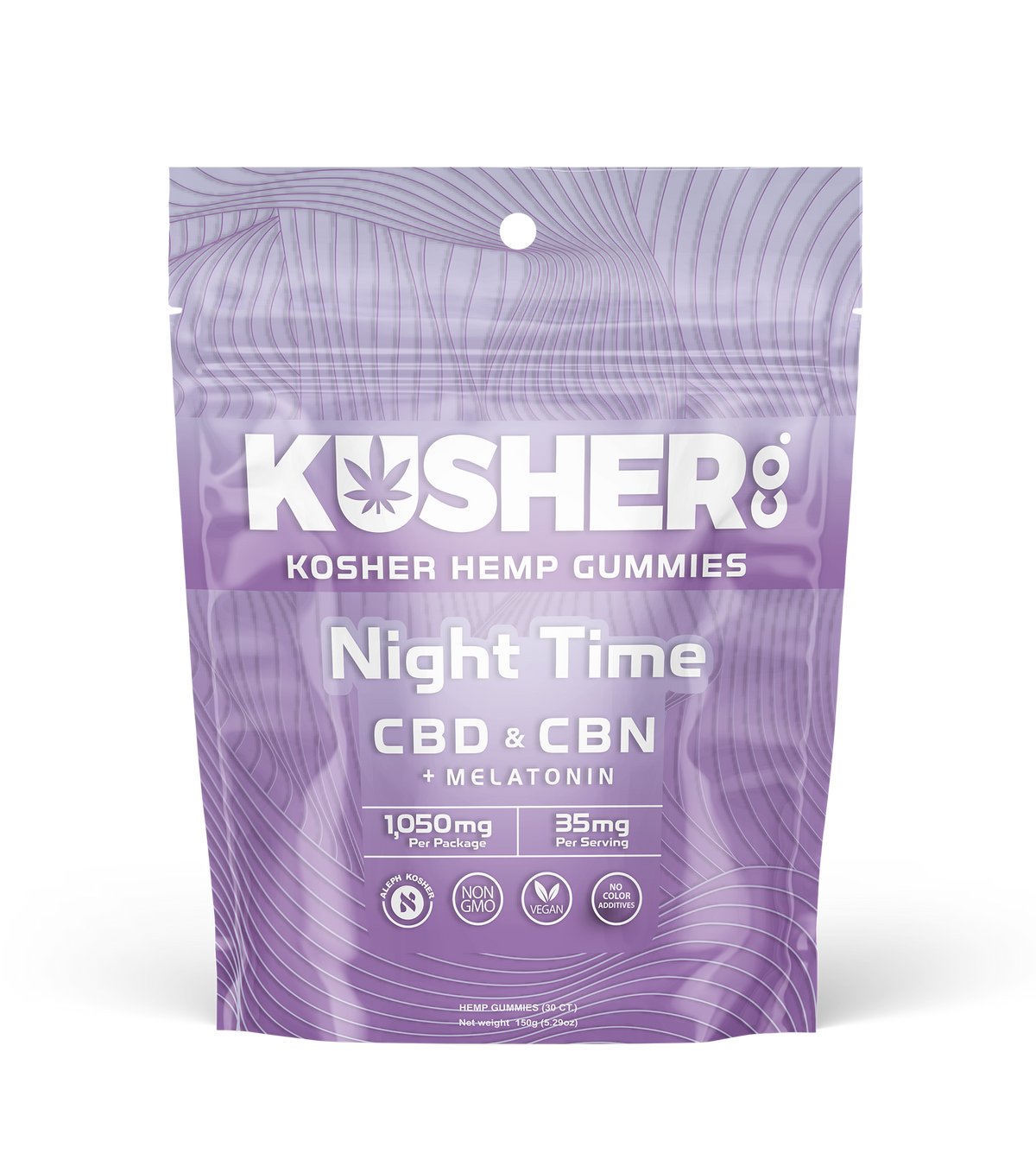
Wellness Kosher Hemp Gummies at $29.99 are CBD with terpenes, and they are the plainest expression of the format we make. Active Kosher Hemp Gummies at $29.99 add CBG alongside the CBD and terpenes. Night Time Kosher Hemp Gummies at $29.99 pair CBD with CBN and melatonin, which puts one non cannabinoid ingredient into the mix that the other two do not have.
None of those three contain THC. Pairing any of them with any of our topicals is the straightforward case this article has been describing, and there is no additional consideration hiding behind it.
The exception: Happy Hour and D8
The other two gummies are a different product category wearing similar packaging.
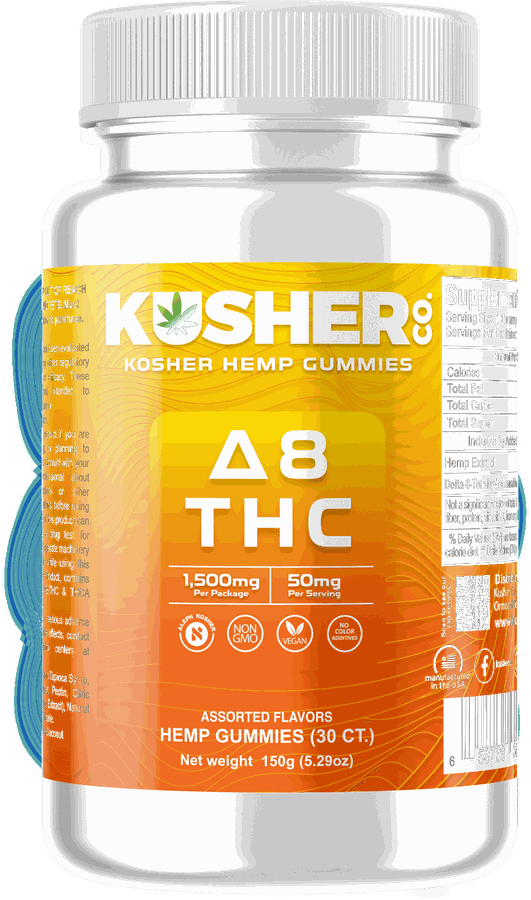
Happy Hour Kosher Hemp Gummies at $29.99 contain Delta-8 and Delta-9 along with live resin, with total THC under 0.3 percent. D8 Kosher Hemp Gummies at $39.99 are Delta-8 in a jar format. Both are intoxicating in a way that none of our CBD products are, and both should be approached as their own thing rather than as a variation on the Wellness gummy.
Combining either of those with a CBD topical is still the simple case, because the topical is still local and still mostly staying put. Combining either of them with each other, or with any other THC product, is where the easy answer stops applying.
Why THC on top of THC is a different question
The reason is that both products are systemic and both are active in the same way at the same time.
Two ingested THC products are not doing separate jobs in separate places. They are doing the same job in the same place, and their effects genuinely do combine in a way that a topical and a gummy never do. Onset from an edible is slow enough that the classic mistake is easy to make. Someone takes one, waits a stretch that feels long, decides nothing is happening, takes another, and then meets both at once about an hour later.
We would not run Happy Hour and D8 together, and we say so plainly rather than hedging it. Pick one, learn what it does for you, and treat the second as an alternative rather than an addition. That is not a legal disclaimer, it is what we would tell a friend.
The tincture follows the gummy rule
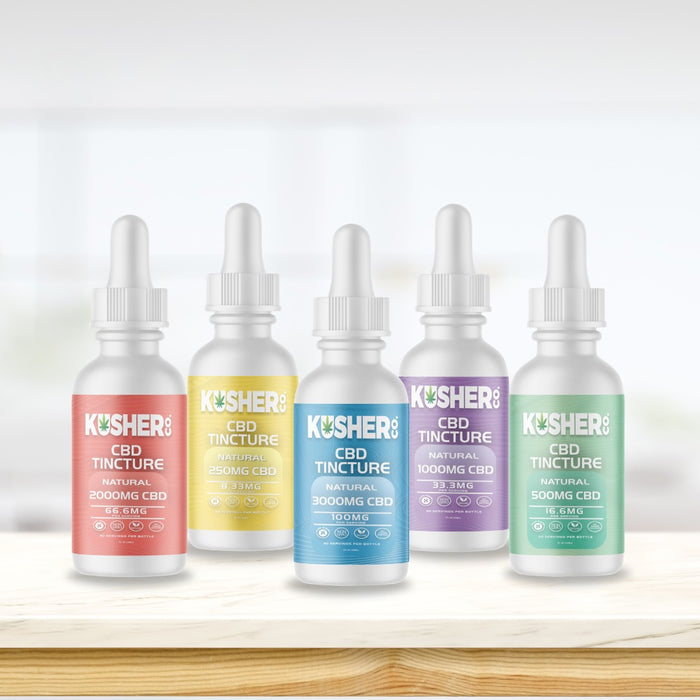
Our Full Spectrum Kosher Hemp Extract CBD Tincture runs from $20.00 for 250mg up to $40.00 for 3000mg, with 500mg at $25.00, 1000mg at $30.00 and 2000mg at $35.00 in between.
It is taken by mouth, so for the purposes of this question it belongs on the same side of the line as the gummies. Systemic, unaimed, slower than a topical to arrive and longer to fade. Pairing it with a stick or a gel raises exactly the same considerations and exactly the same non issue.
The one difference is control. A tincture lets you move in small increments in a way a fixed gummy does not, and the strength range means you can pick your starting point rather than accepting the one the format hands you. If you are the sort of person who wants to run a careful one variable experiment, the tincture is the easier instrument to run it with.
The certification covers both formats
Everything named in this article is kosher certified, and that is not a detail we treat as decoration.
Certification means the ingredients and the production process have been inspected against a standard by someone outside our company. It applies to the gel and the stick just as it applies to the gummy, which surprises people who assume a topical falls outside the question because you are not eating it.
For a shopper running two products at once, this is the part that removes a whole category of worry. You do not need to certify one and take the other on faith. The same standard covers the thing you swallow and the thing you rub in, so combining them does not mean accepting a lower bar on one half of the pair.
What a topical cannot do, and why that is the point
It is worth stating the limitation directly, because the limitation is also the feature.
A topical cannot reach anywhere you did not put it. Apply something to a knee and your shoulder is unaffected. That is not a shortcoming of the format, it is the whole design, and it is the reason the format exists as a separate category rather than as a weaker version of an edible.
Which also means a topical is a poor choice for anything you cannot point at. If you find yourself trying to work out where to apply something because there is no obvious spot, the format is telling you it is the wrong tool for that particular purchase. The gummy and the tincture exist for the unlocated case, and the topicals exist for the located one. Buying the wrong side of that split is the most common mistake we see, and it is entirely avoidable by asking one question before you order.
What running both actually costs
Since we are being practical, the money is worth a paragraph.
A gummy plus a stick is $29.99 plus $20.00. A gummy plus the gel is $29.99 plus $25.00. Those are the two most common pairs people build, and neither is an unusual amount to spend on a shelf of two products that get used at different moments for different reasons.
The thing that wastes money is not the second product. It is buying both, running them together from day one, forming no clear view about either, and then reordering both out of uncertainty rather than conviction. Sequencing them costs you nothing except a couple of weeks and it puts you in a position to drop one, which is the only way the second purchase ever becomes optional.
How people actually put the two together
The pattern we see repeated in orders is fairly consistent and fairly sensible.
The topical gets bought for a specific place. A shoulder, a knee, a lower back, something the person can point at. The gummy gets bought for something less located, and it becomes part of a daily rhythm rather than a response to a moment. One is reactive and the other is routine.
Those two buying reasons rarely conflict, which is the real reason the combination is so common. A person who wants both is not trying to hit one thing twice. They have two separate reasons for two separate purchases, and the products happen to share a shelf.
Bottom line
For CBD, run them together without a second thought. The topical stays where you put it, the gummy goes everywhere, and there is no meaningful interaction between the two to worry about. Introduce them a couple of weeks apart, not because anything bad happens otherwise but because you will learn nothing from starting both at once.
The exception is the one to remember. Happy Hour and D8 contain THC, they are systemic, and stacking them on each other is a real question with a real answer, which is that we would not do it. Pick one of those two, not both.
Frequently Asked Questions
Can I use a CBD gummy and a CBD topical on the same day?
Yes. A topical acts in the tissue under the spot where you applied it and very little of it reaches general circulation. A gummy is swallowed, passes through the gut and liver, and then circulates through your whole system. They are taking different routes to different places, so running both is closer to using two unrelated products than to doubling one. The only combination we would tell you to avoid is stacking two THC products on each other, which means Happy Hour and D8 should not be run together.
Do the milligram numbers on a topical and a gummy add up to a daily total?
No, and treating them that way leads to bad decisions. The 500mg on our Cooling Pain Relief Gel describes the entire $25.00 tube rather than a single application, because nobody uses a whole tube at once. That figure is useful for comparing one topical against another topical and not useful for much else. A gummy figure describes something swallowed and circulated. Adding the two together produces a number that does not correspond to anything real. Compare within a format, not across formats.
Which Kusher Co gummies contain THC?
Two of the five. Happy Hour Kosher Hemp Gummies at $29.99 contain Delta-8 and Delta-9 with live resin, total THC under 0.3 percent. D8 Kosher Hemp Gummies at $39.99 contain Delta-8 in a jar format. The other three, Wellness at $29.99, Active at $29.99 and Night Time at $29.99, are CBD based with no THC. If you are asking about combining products, the first thing to establish is which side of that line each product sits on, because the answer changes.
Why should I add the second product a couple of weeks after the first?
So you can tell which one is doing what. Starting both on the same day gives you a two variable experiment with no way to attribute anything you notice. Two weeks on one product, then add the second while keeping the first unchanged, and any difference after that point has one obvious candidate behind it. The cost is patience. The return is that you find out whether the second product is earning its place, which is worth knowing before you reorder it.
Does the same answer apply to the tincture?
Yes. Our Full Spectrum Kosher Hemp Extract CBD Tincture runs from $20.00 for 250mg to $40.00 for 3000mg and is taken by mouth, so it belongs on the same side of the line as the gummies. Systemic rather than local, slower to arrive than a topical and longer to fade. Pairing it with a stick or a gel raises the same considerations, which is to say almost none. The tincture does make a careful one variable trial easier, because the strength range lets you pick your starting point.
Are the topicals kosher certified too, or only the edible products?
Both. The certification covers the gel, the stick and the roll on formats as well as the gummies and the tincture. People often assume a topical falls outside the question because you are not eating it, but the ingredients and the production process are inspected against the same standard by the same outside authority. For anyone running two products at once, that means you are not certifying one half of the pair and taking the other half on trust.