News · 18 August 2026
Why Jewish Dietary Law and Hemp Certification Overlap More Than You'd Expect
Kosher law and careful hemp buying ask the same two questions in the same order. Where did this come from, and what did it touch. One framework has been asking for a very long time and has built an entire apparatus of documentation and inspection around the answer. The other is roughly a decade into working out that the questions matter at all. The overlap is not a coincidence and it is not a marketing angle. It falls out of the structure of both problems.
We sell kosher certified hemp, so we have an obvious interest here, and we would rather set out the framework accurately than dress it up. What follows is a description of how a system of provenance and separation works and why it maps onto a category where almost nothing important is visible in the finished product. It is not religious guidance. Anyone with a question about their own observance should take it to their own rabbi.
The first question is provenance
Kosher law begins with where something came from. Not what it looks like, not what it tastes like, not what a label says about it. The origin of an ingredient determines its status, and no amount of examining the finished food will reveal that origin to you.
Two gummies can be identical in every observable respect while one is acceptable under the standard and the other is not, purely because of what the gelling agent was made from. Nothing you can see, smell or taste distinguishes them. That is not a flaw in the framework. It is the reason the framework needs documentation in the first place, because the question being asked is a question about history rather than about the object.
Now consider a hemp buyer with the same jar in hand. Was that plant grown in soil with a heavy metal problem. What solvent pulled the extract, and was it fully removed. Which country did the raw material transit through. Every one of those is a history question, and the jar answers none of them.
The second question is separation
The other structural principle is that certain categories must be kept apart, and keeping them apart is not just about the finished product. It extends to the equipment, the utensils and the surfaces, because the framework treats contact as consequential even when nothing measurable is transferred.
That is a strong position and it has real operational teeth. A production line that ran something outside the standard cannot simply be used for something inside it. There is a defined procedure, and the procedure has to be recorded. The record is what the certification rests on.
A careful hemp buyer arrives at the same concern by a different road. Shared equipment is exactly how cross contact happens between product lines, how a supposedly THC free product picks up a trace it should not have, and how an allergen ends up somewhere nobody intended. The reasoning differs. The operational demand is close to identical.
Why a finished product cannot answer either question
This is the point where the two frameworks stop merely resembling each other and become the same problem. In both cases the thing you want to know was decided before the product reached its final form, and inspecting the final form does not recover it.
You cannot look at a bottle of oil and see the field it grew in. You cannot look at a gummy and see the supplier who made the flavor system. The information has to travel alongside the product as a chain of records, or it is simply gone. Once it is gone, no amount of testing at the end brings it back, because testing can only find what it is looking for in what remains.
Documentation as the answer both systems reached
Faced with an invisible history, both traditions of care land on the same solution. Write it down, get it from the supplier, and have someone outside the transaction check the file.
Kosher certification built that infrastructure over a long period and formalized it: ingredient files, supplier verification going back several steps, physical inspection, recurring review, and the authority to withdraw approval. A serious hemp supply chain is trying to build the same thing right now under different names, with certificates of analysis, supplier qualification programs and audit trails.
The reason our category found this hard is that it grew up fast in a legal gray area, where the supply chain was improvised and record keeping was nobody's priority. The framework we work inside came with the record keeping already assumed.
Where hemp specifically sits inside the framework
Hemp is a plant, and plants in themselves are not usually where the difficulty lies. The complications in a hemp product come from everywhere else: what was added to make it a gummy, what carrier the extract sits in, what flavor system was used, and what equipment the whole thing ran across.
That is a useful thing for a buyer to understand, because it locates the risk correctly. The cannabinoid is rarely the interesting question. The confection around it usually is. A tincture with an oil carrier is a short conversation. A flavored, colored, coated chew is a long one, and the length of the conversation tracks the number of separate inputs rather than the strength of the product.
What the framework is not saying
We want to be precise here, because this is exactly the place where a marketing department would overreach. Certification is not a statement that a product is good for you. It is not a health judgment, it is not a safety score, and it says nothing at all about what any product does in a body.
It is also not a claim about anyone's religious practice, ours or yours. It is a standard applied to inputs and process by an outside body, and the certification means the standard was applied and can be withdrawn. That is the entire content of it. Stretching it into a wellness claim would be a misuse of a framework that is careful for reasons that have nothing to do with our category.
Where the two frameworks genuinely diverge
The overlap is real but it is not total, and pretending otherwise would be the kind of loose argument we try to avoid.
- Kosher certification does not test for heavy metals, pesticides or residual solvents. Those are contamination questions, and they belong to a lab.
- It does not verify potency. Milligram accuracy is measured, not certified.
- It is concerned with the permissibility of categories, which is a question a hemp buyer does not have at all.
- Certification for Passover is a separate standard with its own review, and year round certification does not carry it. Anyone who needs that should ask rather than assume.
So the frameworks are structurally similar and functionally different. They overlap in method and diverge in what they are looking for. That is precisely why a certified product should still show you a batch lab report.
Categories, and why the idea travels well
One more feature of the framework is worth setting out because it has an unexpected parallel. Kosher law sorts foods into categories and treats the boundaries between those categories as things to be maintained rather than blurred. What matters is not only what an item is, but what it is being kept apart from and how that separation is preserved through handling.
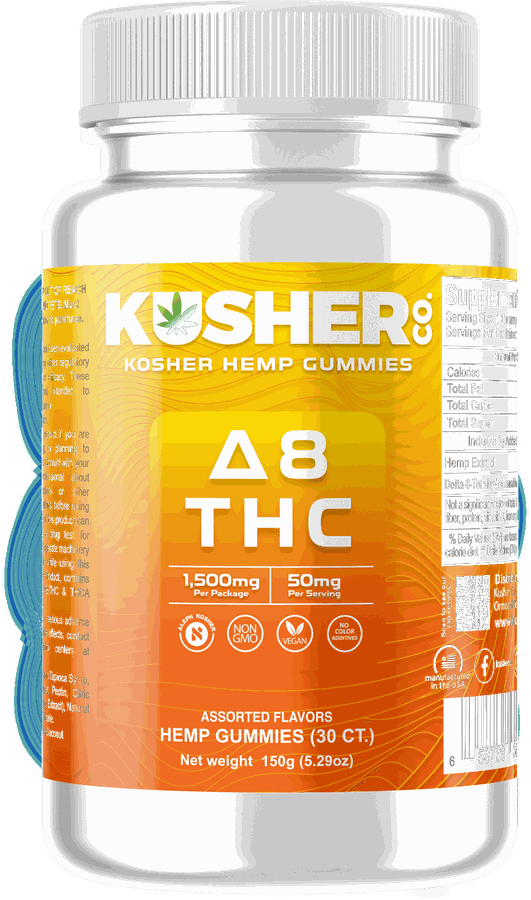
Our category has its own version of this and generally handles it worse. Cannabinoids are not interchangeable. CBD, CBG, CBN, Delta-8 and Delta-9 are distinct compounds with distinct properties, and a great deal of hemp marketing smears them together into a single undifferentiated idea of hemp. That blurring is a failure of exactly the same type: treating a category boundary as a nuisance rather than as information.
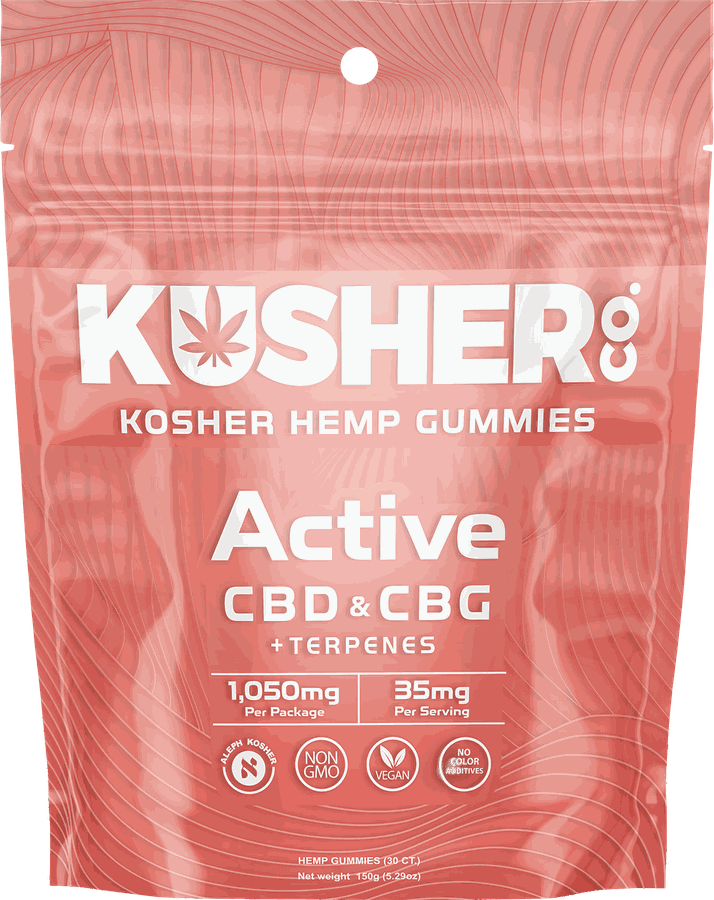
A buyer who insists on knowing which compound is in a product, in what quantity, alongside what else, is applying the same discipline in a different domain. It is why we label the actives in each product rather than putting one broad word on the front, and why Active Kosher Hemp Gummies name CBD and CBG rather than simply saying hemp.
Ongoing supervision versus a single pass
One more structural feature worth borrowing. Kosher certification is a standing relationship rather than a document issued once. It recurs, it is tied to specific products at specific facilities, and it reopens when anything material changes.
Compare that to how most claims in our category work, where a statement is made once on a label and then simply sits there indefinitely, surviving supplier changes and formula tweaks without anyone revisiting it. A claim that has to be maintained is a different kind of claim from one that is merely made. Maintenance is where the information is.
What it costs us to work this way
Being honest about the trade off matters more to us than the argument sounding clean. Working inside this framework means a shorter list of acceptable suppliers, a slower path to any reformulation, and inputs that sometimes cost more than the ordinary version of the same thing.
It also means we say no to formats that would be easier to sell. When a supplier for a minor input changes hands, we are the ones reopening a file rather than shipping through it. None of that is glamorous and none of it improves the product in a way you can feel. It is a constraint we chose, and constraints have prices.
Why the checker has to be outside the company
Both frameworks land on the same structural answer to a problem that looks like it should have an internal solution. A company can be careful. A company can keep excellent records. What a company cannot do is verify itself in a way that carries information to somebody outside it, because the careful company and the careless one produce the same reassuring paperwork.
Kosher certification handles this by putting the review in the hands of a body with no stake in whether the product sells, and by giving that body the power to withdraw its approval. The withdrawal is what makes it mean anything. An internal audit that finds a problem can be quietly buried. An external one that finds a problem can end the arrangement, and the seller has something concrete to lose.
A hemp buyer arrives at the same place when they ask why a company's own statement about its own sourcing should move them at all. It should not, particularly. What moves them is a check somebody else did.
A chain is only as good as the weakest link in it
The other feature both frameworks share is that the standard applies at every step or it does not really apply. Careful sourcing followed by a careless production run gives you a careless product. A well documented supplier feeding a facility that does not track its own equipment gives you an untracked product.
This is why certification is not organized around the finished item. It is organized around the whole path, and a break anywhere on that path breaks the whole claim rather than degrading it slightly. That is a much stricter logic than most quality systems use, and it is the logic a hemp buyer needs, because contamination and mislabeling do not politely confine themselves to one stage.
What a buyer can take from this even without keeping kosher
Most people who buy from us are not buying because of the certification. They are buying a tincture or a gummy, and the certification is background. The framework is still useful to them, because it hands them a way of interrogating any product in the category.
Ask where each input came from. Ask what the product shared equipment with. Ask whether anyone outside the company checked, and whether that check can be withdrawn. Those three questions are the whole method, translated out of one context and into a shopping decision. They work on any product on any shelf, including ours.
How this shapes what we make
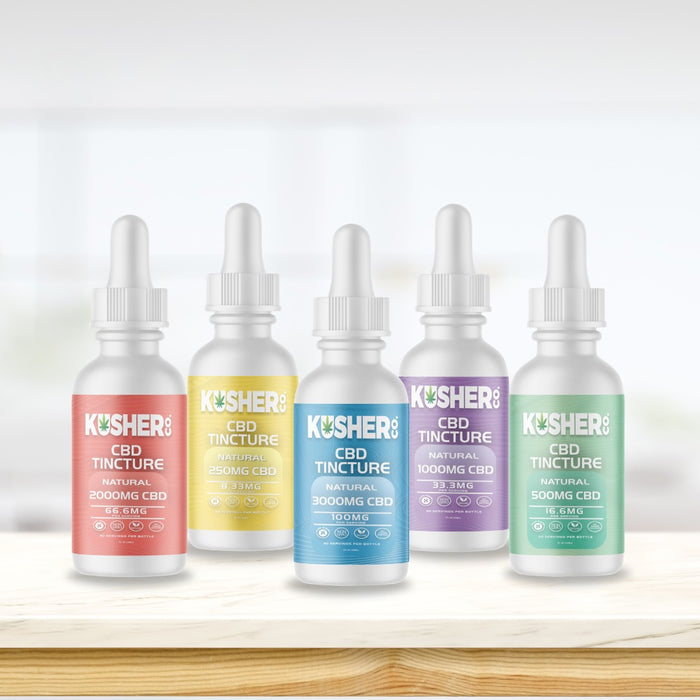
You can see the framework in the shape of our line. The Full Spectrum Kosher Hemp Extract CBD Tincture, at $20.00 for 250mg through $40.00 for 3000mg, is deliberately simple, and simplicity is not an accident when every input carries a file. The Wellness Kosher Hemp Gummies at $29.99 hold CBD and terpenes and not much else.
Where we do build something more complex, we know what it costs us. Night Time Kosher Hemp Gummies at $29.99 bring CBD, CBN and melatonin together, and each added element is a separate provenance question. The complexity is a choice made with the file in mind rather than in spite of it.
Bottom line
The overlap is structural. Both frameworks accept that the important facts about a product are invisible in the product, and both respond by demanding a documented history verified by someone outside the sale. One arrived at that conclusion over centuries, the other over the last decade under commercial pressure.
We happen to sit at the intersection, and we would rather explain the intersection accurately than sell it as mystique. The certification is not why our products are worth buying. It is a description of how carefully the inputs were tracked, which is one real fact among several you should want before you spend money on anything in this category.
Frequently Asked Questions
Is hemp itself a problem under kosher standards?
Hemp is a plant, and plants in themselves are not usually where the difficulty sits. The complications in a hemp product come from everything built around the extract. The gelling system in a gummy, the carrier the extract is dissolved in, the flavor system, the coating, and the equipment the whole run passed across. That is why a simple tincture is a short conversation and a flavored chew is a long one. The number of separate inputs drives the review, not the strength of the product.
Does kosher certification mean a product is safer?
No, and we would rather correct that assumption than benefit from it. Certification is a standard applied to inputs and process by an outside body. It makes no health judgment, no safety score and no statement about what any product does in a body. It also does not screen for heavy metals, pesticides or residual solvents, which are contamination questions that belong to a laboratory. Read it as a narrow, verifiable claim about provenance and separation, and read a batch lab report for everything else.
What does separation actually mean in practice?
It means certain categories are kept apart at the level of equipment and surfaces, not just in the finished product. Contact is treated as consequential even when nothing measurable transfers. A line that ran something outside the standard has to be handled by a defined procedure before it runs something inside it, and that has to be recorded. A hemp buyer worries about shared equipment for different reasons, mainly cross contact and unintended traces, but the operational demand ends up almost identical.
Is a year round certification the same as certification for Passover?
It is not. Passover carries a separate standard with its own review, and a product holding year round certification does not automatically hold it. This catches people out every year because the word kosher gets used as though it were one uniform thing. Anyone who needs that specific standard should ask directly rather than assume, and should ask about the particular product rather than the brand as a whole. We would rather answer that question plainly than let a customer guess.
Why can a finished product not answer these questions?
Because the facts you want were settled before the product reached its final form. You cannot look at a bottle of oil and see the field it grew in, or look at a gummy and see who made the flavor system. That information has to travel alongside the product as a chain of records or it is simply lost. Testing at the end only finds what it is looking for in what remains, which is a different question from what happened along the way.
Can I use this framework if I do not keep kosher?
The method transfers cleanly. Ask where each input came from, ask what the product shared equipment with, and ask whether anyone outside the company checked in a way that can be withdrawn. Those three questions work on any product on any shelf, including ours. Most of our customers are not buying for the certification at all, and the framework is still useful to them because it gives them a way to interrogate claims in a category where almost nothing important is visible.