News · 18 August 2026
Is Kosher CBD Actually Tested Differently? What the Certification Requires
Yes, kosher certified hemp goes through a check that a standard product never sees, and the difference is not that the testing is stricter. It is that the certification is not a test at all in the way most people picture one. A lab test takes a finished sample and reports what is inside it. A certifying body looks at everything that happened before that sample existed, ingredient by ingredient, machine by machine. Those are two different questions, and the answer to one tells you almost nothing about the other.
We sell kosher certified hemp products, so we have been on the receiving end of this process, and the part that surprises people is how little of it resembles testing. No instrument reads a gummy and returns a kosher score. There is an ingredient file, there is a chain of supplier documents behind every line in that file, and there is a person who comes to look at the room where the work happens.
What a third party lab test actually measures
A certificate of analysis is a snapshot. Someone pulled a sample from a batch, ran it through instruments, and wrote down what came back. Cannabinoid content, so you know how much CBD or CBG or Delta-8 is really in there against what the label says. Contaminant screens for things like heavy metals, residual solvents, pesticides and microbial growth. The report is tied to a batch number and a date, and that specificity is the whole value of it.
This is real information and we are not about to talk it down. If you want to know whether the 1000mg tincture on our shelf actually carries what the bottle claims, the lab report is the document that answers you. Nothing else does. Certification will not tell you that, and no amount of process review substitutes for a number produced by an instrument reading the finished product.
But notice the shape of what you learned. You learned about a sample. You learned about the moment after everything was already made. If something upstream was wrong in a way the panel does not screen for, the report comes back clean anyway, because the report only knows what it was asked to look for.
What a certifying body looks at instead
The review starts with a list of every single input. Not the five ingredients on the front of the label. Every input, including the ones that exist only for manufacturing reasons and never appear on any consumer facing material at all.
For each of those inputs, the certifying agency wants to know where it came from. That means the supplier, and often the supplier behind the supplier, because a flavor system or a carrier oil is frequently itself a blend with its own upstream sources. Each of those has to be documented and acceptable in its own right. A single line on a formula sheet can open into a file of its own.
Then the agency looks at the facility. What equipment the product runs on, what else runs on that equipment, what happens between production runs, how the lines are cleaned and how that cleaning is recorded. An inspector visits. The visit is not scheduled around your convenience and it is not a formality.
One asks what is in the jar. The other asks what happened
That is the cleanest way to hold the two apart in your head. A lab test answers a question about a physical object sitting in front of you. Certification answers a question about a history.
Neither question is more serious than the other and neither one covers for a gap in the other. A product can carry a clean lab report and have no idea what happened upstream, because nothing in that report asked. A product can carry certification and be mislabeled on potency, because certification did not measure potency. The two documents overlap far less than the word "verified" suggests when it gets used loosely.
People who understand this stop treating the choice as which one to trust. They start treating it as which one answers the question they actually have right now.
Every ingredient, including the ones nobody puts on the front
The part of the review that costs the most work is the long tail. A gummy is not four ingredients. There is the gelling system, the sweetener, the acid, the flavor, the color, the coating that keeps pieces from sticking to each other, the release agents used on the depositing equipment, the carrier the active is dissolved in before it is dosed.
Some of those are processing aids that do not show on a label at all under normal labeling rules. The certifying body still wants them documented, because the question it is asking is what touched the product, not what the label was required to disclose. That gap between the two lists is exactly the space where a process review earns its keep.
- Gelling and texture agents, which can be animal derived or plant derived
- Carrier oils and solvents used to distribute the active evenly
- Flavor systems, which are usually compound ingredients with sources of their own
- Coatings, dusts and anti-stick agents applied after the piece is formed
- Equipment release agents that leave only traces behind
The equipment is part of the review, not a footnote
This is the piece that most surprises people coming from a supplement background. In a lab test model, equipment matters only if it left a measurable residue. In a certification model, equipment matters because of what it ran previously, whether or not any of that is detectable afterward.
A shared line that produced something outside the standard has to be handled before it produces something inside it, according to a defined procedure, and that has to be recorded. The record is the point. An unrecorded cleaning did not happen as far as the file is concerned, and the file is what the certification rests on.
You can see why this pushes a manufacturer toward dedicated equipment or toward tightly controlled schedules. It is a real operational constraint, and it is one of the reasons the certification is not common in our category.
It is a standing relationship, not a certificate you buy once
Certification is not a one time pass that hangs on a wall forever. It is renewed, it involves recurring inspection, and it is tied to specific products made in specific ways at specific facilities.
Change the formula and the file reopens. Swap a supplier for the same nominal ingredient and the file reopens, because the new supplier has a different upstream story. Move production to a different facility and effectively you are starting the facility review over. None of that is optional and none of it is fast.
The practical effect is that a certified product moves slowly. We cannot chase an ingredient trend in a month. That is a genuine cost and we would rather name it than pretend the constraint is free.
What certification does not tell you
Here is where we would rather be blunt than flattering to our own position. Kosher certification is a narrow claim, and reading it as a broad quality signal is a mistake.
It does not tell you the potency is accurate. It does not screen for heavy metals or pesticide residue. It does not tell you the product is right for you, and it makes no statement whatsoever about what any product does in a body. It is not a health claim and treating it as one gets the framework backwards.
What it tells you is that a defined standard was applied to the inputs and the process, and that an outside party with no stake in the sale reviewed it and can withdraw the approval.
What a lab report will not tell you either
The reverse gap is just as wide. A certificate of analysis covers one batch. It says nothing about the next one, and nothing about the supplier chain feeding either. It reports on the panel that was ordered, which means anything outside that panel is not absent from the product, it is simply unmeasured.
A seller can also order a narrow panel and present a clean result honestly, without ever mentioning what was left out. Nothing in the document itself flags that omission. You have to know to ask what was tested for, and most buyers do not know that is a question.
Why the two together are stronger than either alone
Put them side by side and the coverage starts to close. The process review handles the history and the inputs. The lab report handles the finished object. Between them you get a chain that runs from where a raw material came from to what ended up in the jar you were shipped.
Either one on its own leaves a real hole. That is not a marketing line, it is just what each document is built to do. We would rather a customer understood both than trusted either blindly.
How this plays out across what we sell
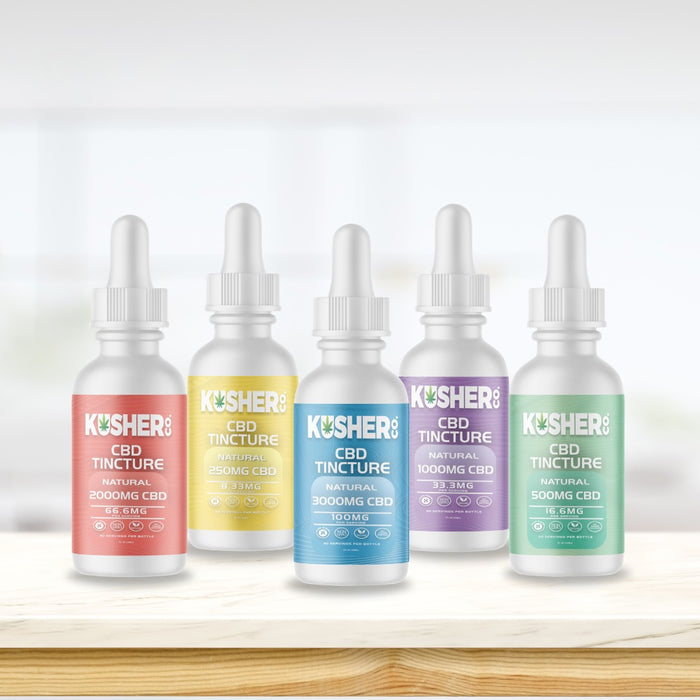
The burden is not equal across a catalog. Our Full Spectrum Kosher Hemp Extract CBD Tincture, which runs from $20.00 for the 250mg up to $40.00 for the 3000mg, is a simple build with few inputs. Fewer inputs means a shorter file.
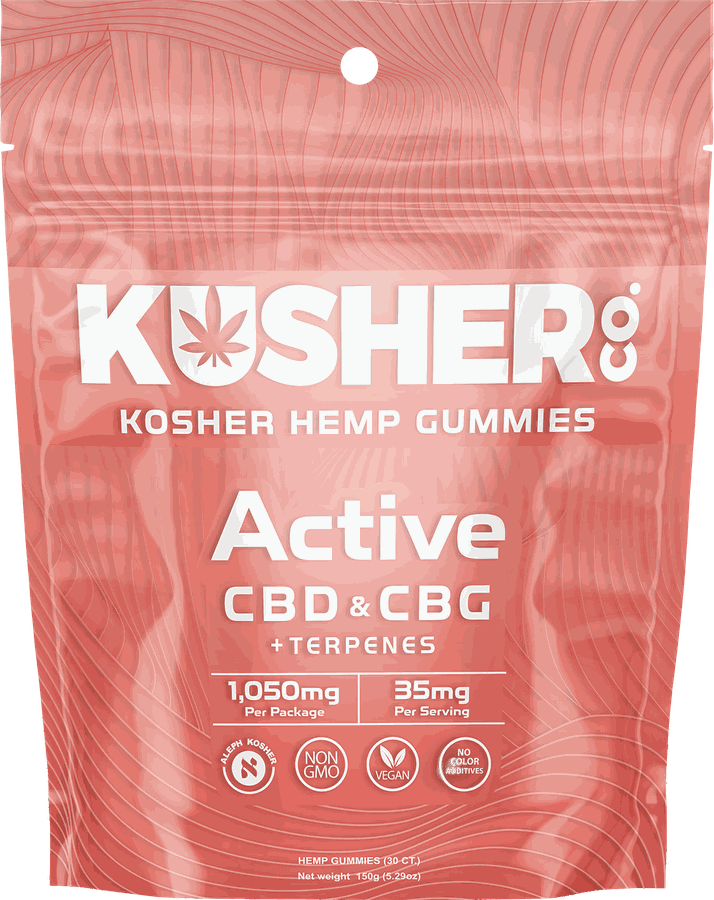
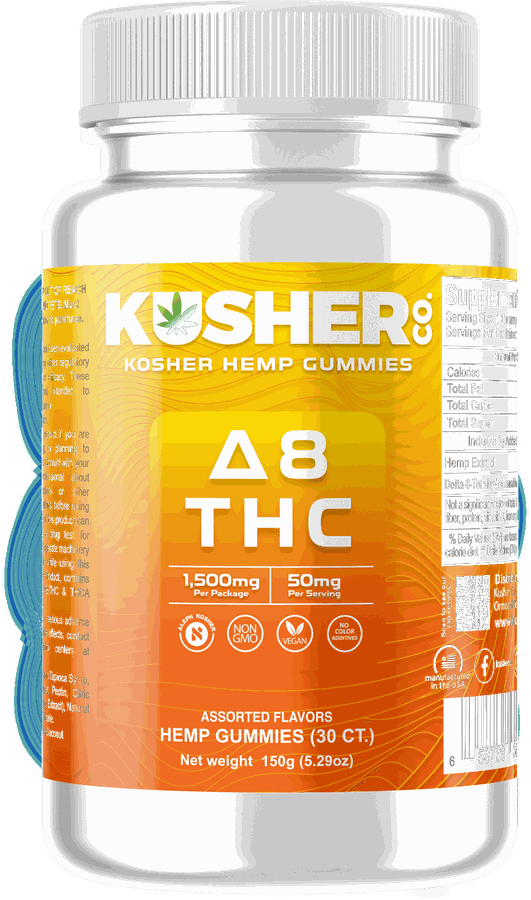
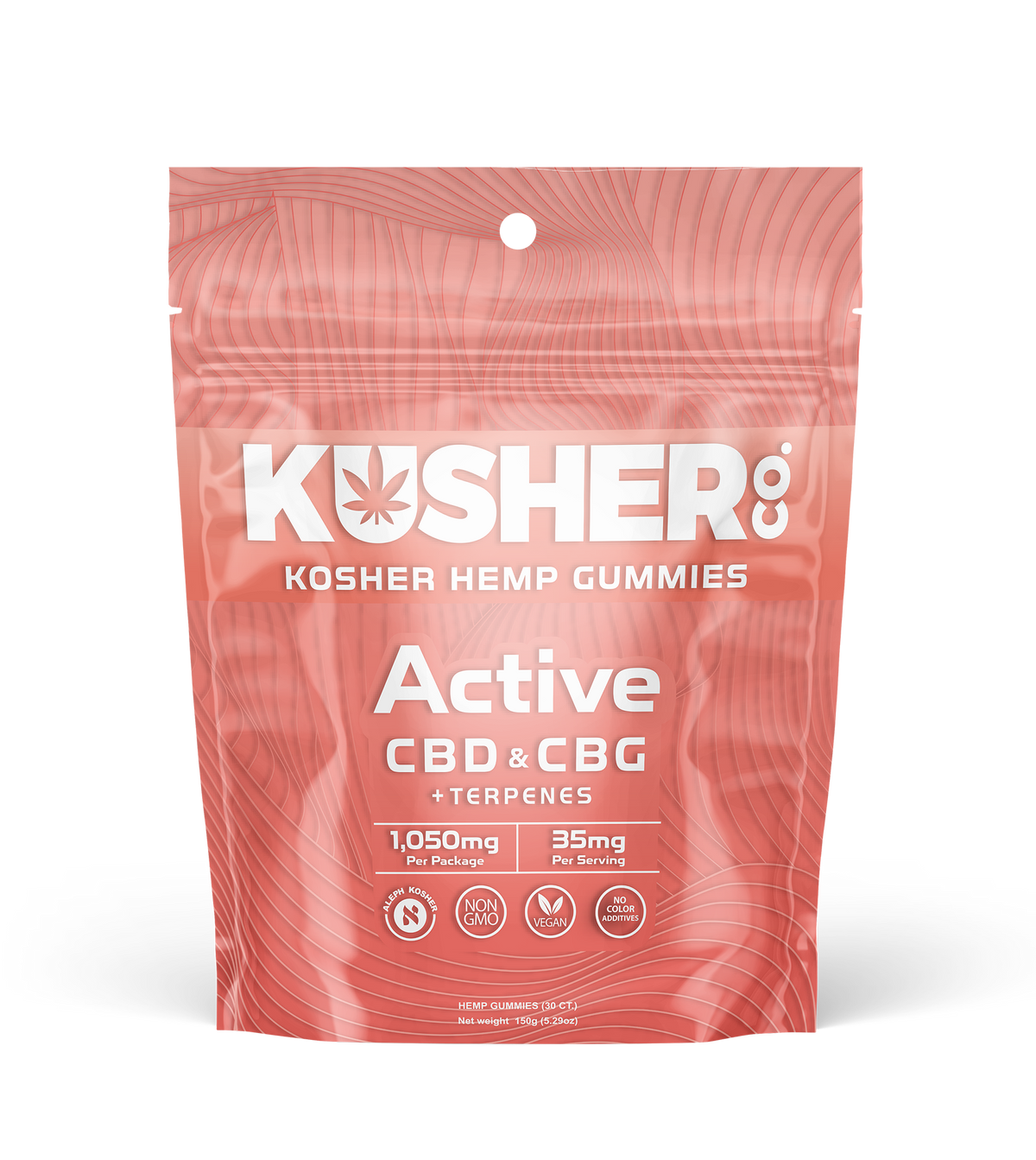
The gummies are more work. Active Kosher Hemp Gummies at $29.99 bring CBD, CBG and terpenes together in a confection format, and every part of that format is an input with a source. Happy Hour Kosher Hemp Gummies, also $29.99, combine Delta-8, Delta-9 and live resin with total THC under 0.3 percent, which means more separate elements to account for than anything else we make.
The topicals sit differently again. The Cooling Pain Relief Gel at $25.00 and the Joint and Muscle Roll on Relief at $20.00 are built on plant derived material to begin with, which shortens some conversations before they start.
The paper trail runs further upstream than most people expect
The instinct is to think of an ingredient file as a list of the things you bought. It is closer to a family tree. You bought a flavor, and the flavor was made from components, and those components came from other suppliers, and at least some of those have their own inputs behind them.
A certifying body follows that structure back until the picture resolves. How far back depends on the ingredient, but the direction of travel is always the same, which is away from your own purchase order and toward the material's actual origin. This is why a formula sheet with a dozen lines can generate a file with far more than a dozen documents behind it.
It also explains an odd effect. Two products can look equally complicated on a label while one is enormously more work than the other, purely because one of its inputs happens to be a compound ingredient with a long chain behind it and the other's are all single substances. Complexity in the file does not track complexity in the eating.
Why a person still has to walk the floor
You could imagine doing all of this on paper, and plenty of quality systems try. Certification does not, and the reason is worth understanding, because it is the same reason a lab report has limits.
A complete document set can describe a facility that does not operate the way the documents say. The cleaning procedure exists on paper and is skipped under time pressure. The scheduling rule is written down and worked around when an order is late. Nothing in the file will show you that, because the file is produced by the same people the file describes.
An inspection is what breaks that loop. Somebody who did not write the documents comes to see whether the room matches them. That is a limited check, since an inspector cannot be present for every run, but it is a fundamentally different kind of evidence from a self produced record, and combining the two is stronger than either.
What to ask a seller who uses the word kosher
The word on its own is not information. These are the questions that turn it into information, and any seller who holds real certification will not find them awkward.
- Which certifying agency, and is the certification current
- Does it cover this specific product or only some of the line
- Was the certification issued to the facility that made this batch
- Can you show a recent certificate of analysis for this batch as well
If the answers arrive quickly and specifically, that pattern of response is itself worth something. If the word is doing decorative work on a label with nothing behind it, the second question usually ends the conversation.
Bottom line
Kosher certified hemp is not tested more. It is documented more, and the documentation covers ground no test was ever designed to cover. If your question is how much CBD is in this bottle, read the lab report and ignore the certification. If your question is what went into this and what it touched on the way, the lab report cannot help you and the certification can.
Buy on both, because each one is blind exactly where the other one sees. Anyone who tells you one of them makes the other unnecessary is describing a convenience, not a standard.
Frequently Asked Questions
Does kosher certification replace a certificate of analysis?
No, and the two are not interchangeable. A certificate of analysis measures a finished batch and reports cannabinoid content plus contaminant screens. Kosher certification reviews the inputs, the suppliers behind those inputs and the equipment the product ran on. One tells you what is in the jar. The other tells you what happened to make it. Neither covers the ground the other covers, which is why we point customers to both rather than treating either as the complete picture.
Does a certifying agency visit the facility in person?
Yes. Physical inspection is part of how certification works, and it recurs rather than happening once. An inspector reviews the equipment, what else runs on that equipment, the procedures for handling shared lines and the records that show those procedures were followed. Documentation alone is not enough, and an undocumented cleaning is treated as one that did not happen. That combination of a paper file plus a person in the room is what separates a process review from a self declared claim.
Are processing aids reviewed even when they are not on the label?
They are. Labeling rules and certification rules ask different questions. A label discloses what regulations require it to disclose, while a certifying body wants to know everything that touched the product, including release agents on the equipment and aids that leave only traces. That gap between the two lists is where a process review does its real work. It is also why the ingredient file behind a certified product is usually far longer than the ingredient statement a customer reads.
Does kosher certification say anything about potency accuracy?
It does not, and we would rather say so plainly. Certification makes no statement about how many milligrams are in a serving, and it runs no test that would establish that. If you want to know whether a 1000mg tincture carries what the bottle claims, the batch lab report is the only document that answers you. Reading certification as a broad quality score is a mistake. It is a narrow claim about inputs and process, applied by an outside party who can withdraw it.
Why do certified products change their formulas so slowly?
Because every change reopens the file. Swapping a supplier for the same nominal ingredient means a new upstream chain to document. Changing the formula means the product is reviewed again. Moving production means the facility review effectively restarts. None of that is quick, and it means a certified line cannot chase an ingredient trend the way an uncertified one can. That is a real trade off we accept rather than a benefit we would try to sell you on.
What should I ask a seller who advertises kosher hemp?
Ask which certifying agency issued it and whether it is current. Ask whether it covers the specific product you are buying or only part of the line. Ask whether the certification was issued to the facility that actually made your batch. Then ask for a recent certificate of analysis alongside it. A seller holding real certification answers those quickly and specifically. When the word is doing decorative work on a label, the questions tend to end the conversation.