News · 18 August 2026
Hemp and Marijuana: The Line Is a Number, Not a Plant
Hemp and marijuana are the same plant. Not close relatives, not a family resemblance, the same species, and a botanist handed two cuttings has no test that sorts them by name. What separates the two words is a number that people chose: a plant carrying no more than 0.3 percent Delta-9 THC by dry weight gets called hemp, and a plant above that number gets called something else.
That is worth sitting with for a second, because almost every confusing thing about this category comes out of it. The line is real in the sense that it decides what a business like ours can put in a box and ship. It is not real in the sense of marking a place where the plant itself changes into something different. We sell hemp products, we are careful about that line, and we are going to explain where it sits and what it does without telling anyone what is or is not permitted where they live. That last part is not modesty. It is the honest limit of what a store can responsibly say.
Same species, two words
Cannabis sativa L. is one species with enormous internal variety, the way dogs are one species that runs from a chihuahua to a mastiff. Some varieties were bred over centuries for stalk fiber and seed. Others were bred for resin and the compounds in it. Those are genuinely different plants to grow, harvest and process, and a farmer can tell them apart on sight in a field.
But "different to grow" is not the same as "different in law," and the two categories do not line up cleanly. The words hemp and marijuana are not names for those two breeding traditions. They are names for which side of a chemical measurement a given harvest landed on.
This is why you will read that hemp and marijuana are different plants in one place and the same plant in another, and both writers think they are being accurate. They are answering different questions. Ask a grower and you get an answer about cultivars. Ask a compliance officer and you get an answer about a lab result.
What the threshold actually measures
The measurement is narrow, and the narrowness is the whole story. It looks at one compound, Delta-9 tetrahydrocannabinol, and asks what proportion of the plant material that one compound represents.
It does not measure how much total cannabinoid content the plant has. It does not measure CBD, or CBG, or CBN, or any of the other compounds the plant makes. It does not measure terpene content. A plant absolutely loaded with cannabinoids can sit under the line, because the line only ever asked about one of them.
So when a product is described as hemp derived, the claim being made is about that measurement on the source material. It is a sourcing statement. People read it as a strength statement, and those are two different things that happen to share a label.
Dry weight is doing more work than it looks
The phrase is "by dry weight," and that qualifier matters more than most people notice. Fresh plant material is mostly water. Weigh the same harvest wet and dry and you get two very different denominators for the same amount of THC, which would produce two different percentages for one identical plant.
Standardizing on dry weight removes that ambiguity. It also means the number is a ratio rather than an amount. A percentage tells you how concentrated something is inside its host material. It says nothing at all about how much material there is.
Hold that thought, because it is exactly why the same threshold behaves differently when it is applied to a plant in a field and to a finished product on a shelf. A ratio measured on raw biomass and a ratio measured on a gummy are answering the same question about two very different objects.
Why 0.3 and not 0.5 or 1
There is no biological cliff at 0.3 percent. Nothing happens to the plant at that concentration. No enzyme switches off. The number came out of an academic convention for telling cultivars apart, it was useful enough for the purpose, and it eventually got written into rules that a whole industry now organizes itself around.
We are not saying that to be cynical about it. A line has to go somewhere, and a line drawn at a specific measurable concentration is far better than a line drawn on vibes or on how a plant looks. Any threshold, anywhere, would have had the same arbitrary quality at its edge.
What is fair to say is that a chosen number carries consequences its authors did not necessarily picture. Draw a line around one molecule and you have not drawn a line around a plant. You have drawn a line around one molecule, and everything the plant makes that is not that molecule sits somewhere the line never described.
What that means for what we are allowed to put in a box
Practically, we work backward from the threshold. Our source material has to test where hemp is defined to test, our formulations are built to keep finished products consistent with that, and anything that would not hold up against the measurement does not become a product.
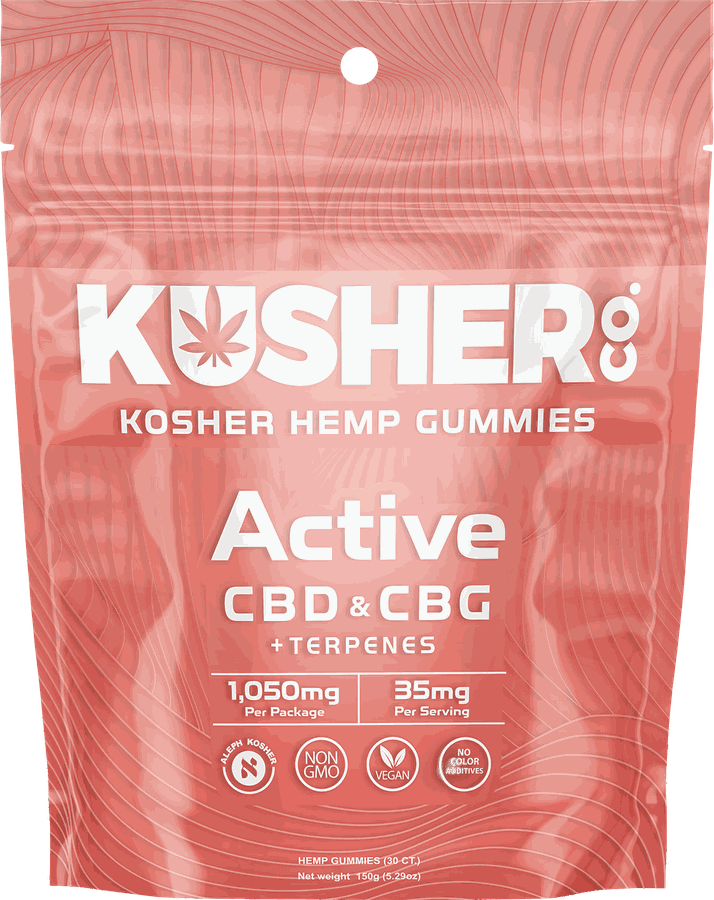
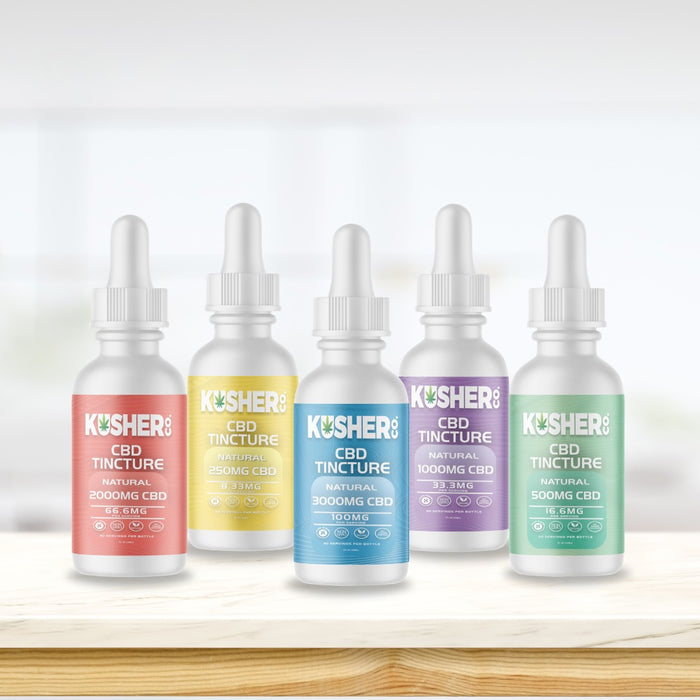
That constraint shapes the range in ways a shopper would never guess. It is one reason our gummies are built around CBD, CBG, CBN and terpenes rather than around chasing potency. It is why the Full Spectrum Kosher Hemp Extract CBD Tincture is described as full spectrum at hemp THC levels rather than as an extract with a THC figure on the front.
It also means we say no to formulation ideas fairly often. Working inside a threshold is not a marketing position we adopted. It is a boundary that decides which products exist.
Why our Happy Hour gummies say total THC under 0.3 percent
Happy Hour Kosher Hemp Gummies are $29.99 and they are the product in our range where this conversation stops being abstract. They contain Delta-8, Delta-9 and live resin, and the specification we hold them to is total THC under 0.3 percent.
Read that phrase closely, because we chose every word in it. It says total THC, not Delta-9 alone. It is a stricter thing to say than the threshold itself asks for, and we say it that way because it is the number a person actually wants when they are deciding whether to buy a jar of gummies.
It is also a statement about the product as it ships, which is the only version of it we can stand behind. A percentage on a finished gummy is a ratio of THC to the whole gummy, sugar and pectin and terpenes and all. Anyone reading that number as though it described the plant it came from is reading it wrong, and the difference is not small.
A threshold written around one molecule
Here is where the shape of the rule produces the strangest result in the whole category. The measurement names Delta-9 THC. Delta-8 THC is a different molecule. It was never the subject of that sentence.
Nobody designed that outcome. The threshold was written when the practical question was how to tell a fiber crop from a resin crop, and Delta-9 was the compound that answered that question. A definition built for one job got used for a different job later, which is how most odd rules in most industries happen.
The result is that Delta-8 occupies a genuinely different position from Delta-9 in how it is treated, discussed and regulated, and that position has been argued over continuously. We are not going to characterize the state of that argument, because it moves, it differs by place, and a store telling you where it landed would be a store giving legal advice it has no business giving.
Delta-8 and Delta-9 are not the same molecule
They are close. Both are tetrahydrocannabinol. The atoms are the same atoms. What differs is where one double bond sits in the ring structure, which is the sort of difference that sounds trivial written down and is not trivial at all to a molecule.
Shape decides behavior in chemistry. A compound with a bond in a different position is a different compound with its own properties, and treating the two as interchangeable because their names differ by a digit is the single most common mistake we see people make about this category.
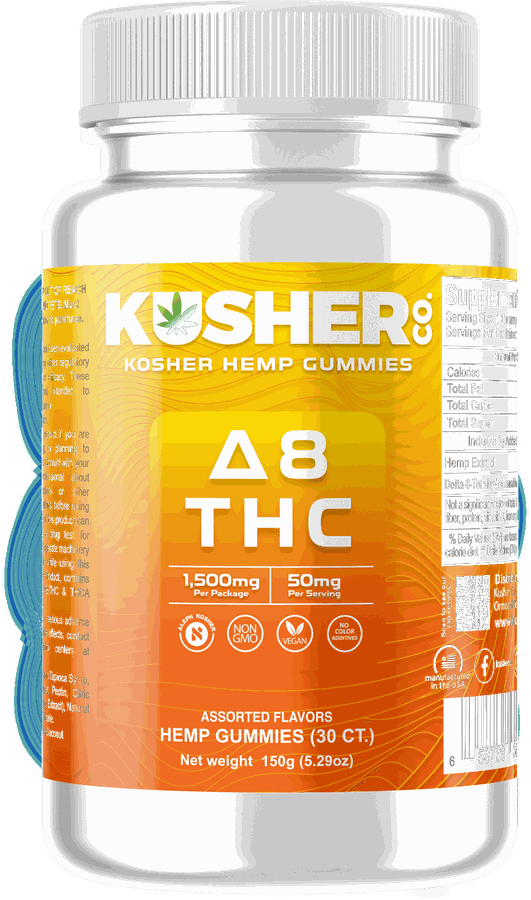
We sell both. D8 Kosher Hemp Gummies are $39.99 in a jar format and are built around Delta-8. Happy Hour is $29.99 and carries Delta-8, Delta-9 and live resin together under that total THC specification. They are separate products because they are meaningfully different formulations, and we would rather people pick between them knowing that than assume the cheaper one is a smaller version of the other.
Hemp derived is a sourcing statement
Every product we make is hemp derived, and that phrase deserves to be pinned down rather than left as a warm word on a label.
It means the plant material the extract came from was hemp by the measurement above. It tells you about the input. On its own it tells you nothing about what is in the bottle in front of you, how concentrated it is, which cannabinoids are present, or what else went into the formula.
That is why our product pages carry actual specifics. The Cooling Pain Relief Gel is $25.00 with 500mg CBD, rosemary and thyme extract, tea tree and mint. The Joint and Muscle Roll on Relief is $20.00 with 350mg CBD, menthol, tea tree and aloe. Those figures are the useful information. "Hemp derived" is the category, not the content.
What the plant was bred for is a separate question
Growers select for what they need. A crop intended for extraction is grown, harvested and handled completely differently from a crop grown for seed or fiber, and that shows up in the material an extractor receives.
None of that selection work appears in the word hemp. The word only reports which side of a measurement the harvest fell on. Two harvests can both be hemp by the number and be very different material to work with.
Which is a long way of saying that sourcing quality is a real variable that the legal category does not capture. The threshold is a floor for what may be called hemp. It was never designed as a quality grade, and reading it as one leaves you with no way to tell two compliant products apart.
Where we stop
We will explain the mechanics of a threshold all day. We will not tell you what you may buy, carry, use or ship, and we will not tell you how any of this applies where you live.
Rules differ by state, by country and by the specific compound in question, and they have changed repeatedly. A store that tells you the answer confidently is either behind or guessing, and either way you are the one carrying the consequence.
Anyone who needs a real answer about their own situation should get it from a source that is accountable for being right about it. That is a genuinely different job from ours, and we would rather say so plainly than blur the two.
Kosher certification sits on a different axis entirely
Our products are kosher certified, and people sometimes fold that in with the threshold conversation as though both were parts of one compliance story. They are not related at all.
The THC measurement is about what a plant contained. Kosher certification is about ingredients, sourcing, equipment and process, verified by an outside supervising body that inspects the facility and signs off on the ingredient list. One is a lab number about plant chemistry. The other is an audited process standard about how a product gets made.
A product can meet the threshold and have no certification of any kind. Ours meet the threshold and are certified, and those are two separate pieces of work with two separate kinds of evidence behind them.
What to actually read on a product page
If you take one practical habit from all of this, take this one. Read for specifics and treat category words as background.
- Which cannabinoids are named, not just how many milligrams appear
- Whether a THC figure refers to Delta-9 alone or to total THC
- Whether a percentage describes the source plant or the finished product
- What the format is, since a gummy, a tincture and a stick are not comparable objects
- What the other ingredients are, because they are frequently the reason a product behaves the way it does
A page that answers those five things is being straight with you. A page that leads with hemp derived and gets vague after that has told you which side of a line its raw material fell on and nothing else.
Bottom line
Hemp and marijuana are one plant separated by a number somebody picked, and that number asks about exactly one molecule. Everything odd about this category follows from those two facts, including why Delta-8 sits where it sits and why a percentage on a package needs reading twice before it means anything.
Our position is that the threshold is a boundary we build inside, not a selling point. Happy Hour states total THC under 0.3 percent because that is the stricter and more useful thing to say. What is permitted where you are is a question for someone qualified to answer it, and we will keep declining to guess on your behalf.
Frequently Asked Questions
Are hemp and marijuana different plants?
They are the same species, Cannabis sativa L. The two words do not name two plants, they name two sides of a chemical measurement. A harvest testing at or below 0.3 percent Delta-9 THC by dry weight is called hemp, and one above that is called something else. Growers do breed distinct cultivars for fiber, seed or resin, and those are genuinely different crops to work with, but those breeding traditions are not what the words hemp and marijuana refer to. The words report a lab result on a specific harvest, which is why you can read that they are the same plant in one place and different plants in another and both writers think they are being accurate.
What does 0.3 percent by dry weight actually mean?
It is a ratio, not an amount. It asks what proportion of the dried plant material one specific compound, Delta-9 THC, represents. Dry weight is specified because fresh plant material is mostly water, so weighing the same harvest wet or dry would give two different percentages for one identical plant. Because it is a ratio, it tells you about concentration and nothing about quantity. It also measures only that one compound, so it says nothing about CBD, CBG, CBN, terpenes or total cannabinoid content. A plant can be rich in cannabinoids and still sit under the line, because the line only ever asked about one of them.
Why do Happy Hour gummies say total THC under 0.3 percent?
Because total THC is the stricter and more useful thing to state. The threshold itself names Delta-9 alone. Happy Hour Kosher Hemp Gummies are $29.99 and contain Delta-8, Delta-9 and live resin, so a Delta-9 only figure would leave out part of what is in the product. We hold them to a total THC specification instead, and we state it that way on purpose. Note also that the percentage describes the finished gummy, sugar and pectin and terpenes included, rather than the plant the extract came from. Those are two different denominators and reading one as the other gets people badly confused.
Why is Delta-8 treated differently from Delta-9?
Because the threshold was written around one named molecule. The definition asks about Delta-9 tetrahydrocannabinol. Delta-8 is a different molecule, with the same atoms arranged with one double bond in a different position, and it was never the subject of that sentence. Nobody engineered that outcome. A definition built to tell a fiber crop from a resin crop got applied later to finished consumer products, and the gap showed up. The position Delta-8 occupies has been argued over continuously and differs by place, so we are not going to characterize where that argument stands. That is not a question a store should be answering for you.
Does hemp derived tell me how strong a product is?
No. Hemp derived is a sourcing statement about the plant material an extract came from. It tells you that material sat under the threshold. It tells you nothing about what is in the finished product, how concentrated it is, which cannabinoids are present or what else went into the formula. The useful information is the specifics. Our Cooling Pain Relief Gel is $25.00 with 500mg CBD, rosemary and thyme extract, tea tree and mint. Our Joint and Muscle Roll on Relief is $20.00 with 350mg CBD, menthol, tea tree and aloe. Those numbers describe a product. A category phrase describes a category.
Is kosher certification related to the THC threshold?
Not at all. They sit on completely different axes. The THC threshold is a lab measurement about plant chemistry, reported as a percentage of dry weight. Kosher certification is an audited process standard covering ingredients, sourcing, equipment and production, verified by an outside supervising body that inspects the facility and signs off on the ingredient list. One is a number, the other is a process with an inspector attached. A product can meet the threshold with no certification of any kind. Ours meet the threshold and are certified, and those are two separate pieces of work backed by two separate kinds of evidence.
Can you tell me whether these products are legal where I live?
No, and we would be doing you a disservice if we tried. Rules differ by state, by country and by the specific compound involved, and they have changed repeatedly over the past several years. A store that gives you a confident answer is either working from outdated information or guessing, and you are the one who carries the consequence of that being wrong. What we can do is be precise about what is in our products and how they are specified, so that anyone qualified to answer your actual question has accurate information to work from. Getting that answer from an accountable source is the right move.