News · 19 August 2026
Why Two Products With the Same Milligram Number Are Not the Same Product
A milligram figure is a quantity of something, and the something is almost never stated. That is the whole problem with the most compared number in this category. Two products can both say 500mg on the front and mean genuinely different things: one counts the whole container and the other counts a serving, one counts total hemp extract and the other counts CBD specifically, one counts a single cannabinoid and the other counts a combination. Same number, four different meanings, and nothing on either label resolves the ambiguity.
We are not going to pretend the number is useless. It is the only quantitative thing most labels carry and it does real work once you know what it is attached to. But comparing two milligram figures without knowing their denominators is arithmetic performed on units that do not match, and it produces confident wrong conclusions. Here is every way that number changes meaning, using our own range as the worked example.
Whole container or one serving
This is the biggest swing and the easiest to miss. A bottle labeled 1000mg might contain 1000mg across the entire bottle, or it might contain 1000mg per serving with thirty servings inside. Those two products differ by a factor of thirty and print the same number in the same font.
Look for the qualifier and treat its absence as a warning sign. Per bottle, per serving, per piece and per container are not interchangeable, and a label that gives a bare number with no unit attached has left the most consequential word off the package. When a brand omits it, the safest reading is the smaller one, because a brand with the larger number has every reason to say so.
Our tincture ladder is a per-bottle number
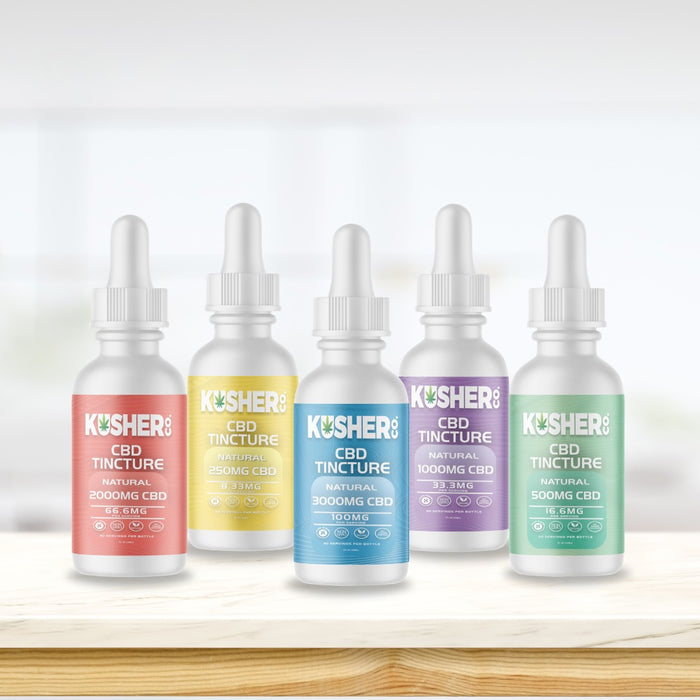
The Full Spectrum Kosher Hemp Extract CBD Tincture runs 250mg at $20.00, 500mg at $25.00, 1000mg at $30.00, 2000mg at $35.00 and 3000mg at $40.00. Those figures describe the whole bottle. The same volume of liquid holds a different total amount of extract at each step, so what changes across the ladder is concentration, not bottle size.
That is worth stating plainly because it changes how the ladder should be read. The 3000mg bottle is not a bigger bottle. It is the same bottle carrying twelve times the extract of the 250mg version, which means every drop from it is twelve times as concentrated. Anyone treating the top of the ladder as a bulk-buy discount has misread what they are buying.
The arithmetic that makes a tincture comparable
To compare any two tinctures you have to get both to the same unit, and the only unit that works is milligrams per milliliter. Divide the total milligrams by the volume of the bottle. Now the two numbers are about the same thing.
The reason this is not optional is that bottle volume varies across the category, and a larger bottle with a larger total can be less concentrated than a smaller bottle with a smaller total. The total says how much is in the container. The concentration says what is in each drop. If you are comparing anything, compare concentration, and check the volume on both labels before you start.
Gummies: per piece or per jar
The same fork appears in gummies. A jar can be labeled with the content of one piece or with the content of all the pieces added together, and the second number is much larger and much less useful.
The per-piece figure is the one that describes what you actually pick up. The per-jar figure describes inventory. Both are legitimate to print, and a label showing only the jar total is technically accurate while being close to useless for comparison unless you also know the piece count. Two jars advertising the same total with different piece counts are different products in every way that matters.
Hemp extract or CBD specifically
Now a subtler substitution. A label can count total hemp extract or it can count a named cannabinoid, and those are different quantities from the same jar.
Full spectrum extract is a mixture. It contains CBD alongside minor cannabinoids, terpenes, plant waxes and other plant material, and depending on the grade of extract, CBD may be a large majority of it or a much smaller share. So 1000mg of hemp extract contains some unstated amount of CBD, while 1000mg of CBD is a statement about CBD itself. The first number is always the larger and easier one to print. When a label says hemp extract, hemp oil or aerial parts, read it as a statement about the mixture rather than about any single compound.
One cannabinoid or a combination
A total can also be a sum across several cannabinoids, which changes what the number describes even when the arithmetic is honest.
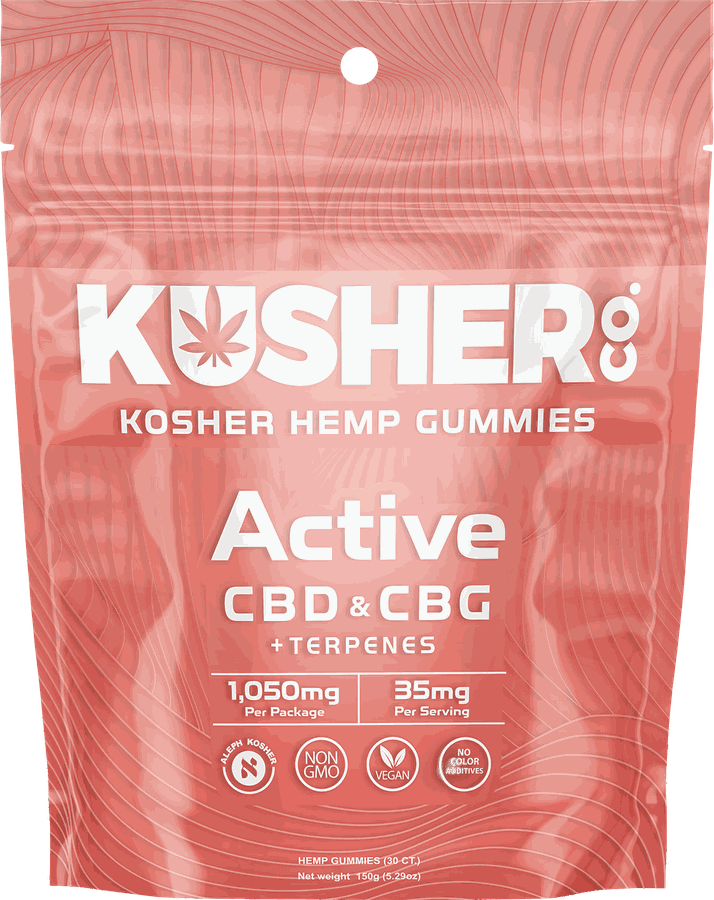
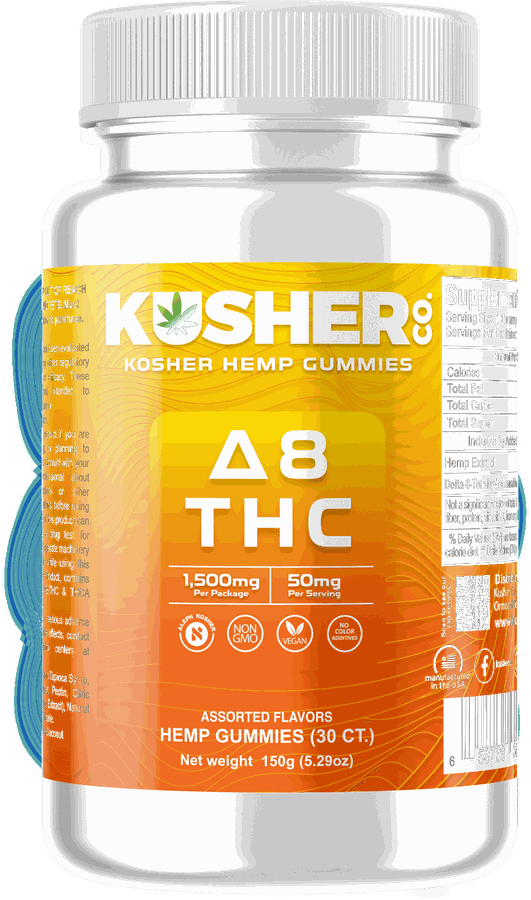
Our own range shows the spread. The Wellness Kosher Hemp Gummies carry CBD and terpenes. The Active Kosher Hemp Gummies carry CBD and CBG. The Night Time Kosher Hemp Gummies carry CBD, CBN and melatonin. The Happy Hour Kosher Hemp Gummies carry delta-8, delta-9 and live resin, with total THC under 0.3 percent. The D8 Kosher Hemp Gummies are delta-8. All five are gummies at similar prices, and a single combined milligram figure would flatten five genuinely different compositions into one indistinguishable number. Treating cannabinoids as interchangeable units of the same substance is the specific mistake a total invites.
Topicals: the number against the size of the container
Our topicals show the pattern clearly. The Cooling Pain Relief Gel at $25.00 carries 500mg of CBD. The Cooling Relief Stick and the Heating Relief Stick at $20.00 each carry 500mg. The Joint and Muscle Roll on Relief and the Pain Relief Gel Roll On at $20.00 each carry 350mg.
Read those as totals for the container, because that is what they are. Which means the comparison between 500mg and 350mg is incomplete without the net weight of each container, since 500mg in a large jar and 500mg in a small tube are different concentrations of the same total. The number tells you what went in. The container size tells you how thinly it is spread. Both labels are on the package and only one of them usually gets read.
Concentration is the number almost nobody prints
Milligrams per gram, or per milliliter, is the figure that makes any two products directly comparable, and it is the figure the category most rarely puts on a front label. It is easy to calculate and nobody does it.
Total divided by net weight or volume. That is it. Once you have that number for two products you are comparing like with like for the first time, and a lot of apparent differences either disappear or reverse. We would rather point this out than let a bigger total do work it has not earned.
What else is in the formula changes what the total means
A milligram figure describes one ingredient in isolation and says nothing about the other ingredients that share the container with it. In a topical those other ingredients are most of the formula.
The Cooling Pain Relief Gel contains rosemary and thyme extract, tea tree and mint alongside its 500mg of CBD. The relief sticks contain eucalyptus, mint, coconut oil, shea butter and tea tree. The Joint and Muscle Roll on Relief contains menthol, tea tree and aloe. Those are not filler, they are the reason each product is a different product, and none of them appear anywhere in the milligram figure. Two topicals could match exactly on cannabinoid content and share almost nothing else.
Format is part of what the number means
The same milligram figure behaves differently depending on what it is dissolved in and how the product is used. A stick, a gel and a roll on are three different delivery formats with three different application patterns, and a total is silent about all of it.
Our range makes the point without needing to argue it. The two 500mg sticks and the 500mg gel are not the same product with different packaging. The base is different, the way the product leaves the container is different, and the amount that comes out in normal use is different. The 500mg is one shared fact among many unshared ones.
Price per milligram is a tempting and bad shortcut
Dividing price by milligrams feels like a rigorous move. It produces a single number that ranks everything and it is wrong most of the time, because it assumes every milligram in the comparison is the same milligram.
Run it across our own range and it falls apart immediately. The tincture at 3000mg for $40.00 produces a far better cost per milligram than the 250mg bottle at $20.00, but they are different concentrations for different purposes rather than a good deal and a bad one. Comparing a topical against a gummy on cost per milligram is worse still, since it treats two formats as interchangeable when nothing about them is. Cost per milligram is a useful comparison only within a single format, with the same cannabinoid, at the same concentration. That is a narrow window and it is nearly always used outside it.
What the number does tell you honestly
Having spent this long on the limits, here is the fair account of what a milligram figure genuinely provides. Within one product line, it ranks strength reliably. Our tincture ladder is exactly that case, and 3000mg really is twelve times 250mg because everything else is held constant.
It also gives you a checkable claim. A number on a label can be compared against a certificate of analysis for that batch, and that comparison is one of the few verifiable things in the category. The number is not the problem. Comparing it across products whose denominators differ is the problem.
Where the number on the label comes from
One more thing the figure hides is its own origin. A label number can be a formulation target, meaning the amount the batch was built to contain, or it can be a measured result, meaning what a lab actually found in the finished goods. Those are different claims and both appear in the category.
The gap between them is real because manufacturing is not perfectly efficient. Some cannabinoid is lost to heat during processing, some sticks to equipment, and some degrades slowly in storage after the batch is finished. Formulators account for this by building in a small overage, so the batch starts slightly above the declared figure and stays at or above it through the product's expected life. None of that is visible on a label. It is visible on a certificate of analysis for that batch, which is the only place a declared number and a measured number can be put side by side.
Serving size is a decision, not a measurement
When a number is given per serving, it is worth remembering that the serving was chosen by the manufacturer. It is a unit of packaging, not a unit of chemistry. A brand can define a serving as one piece or two, one dropper or half of one, and the milligram figure follows whatever definition was picked.
This is why per-serving comparisons between two brands are the softest comparison of all. You are comparing two numbers whose denominators were each set by a different marketing department. Per container is at least a physical fact about a physical object. Per milliliter or per gram is better still, because a milliliter is a milliliter no matter who is printing the label.
How we would compare two products properly
Five steps, in order, and none of them take long.
- Find the denominator. Per container, per serving or per piece. Nothing else matters until this is settled.
- Identify what is being counted. Total hemp extract or a named cannabinoid, and if a cannabinoid, which one.
- Convert to concentration. Divide the total by net weight or volume so both products are in the same unit.
- Read the rest of the formula. Two matching totals in different bases are two different products.
- Only then look at price. Cost per milligram is meaningful within a format and misleading across formats.
Do that and you will occasionally find that the product with the smaller number is the more concentrated one. That result is common enough that it is the best argument for doing the work at all.
Bottom line
The milligram number is a real fact wearing a misleading amount of authority. It is the total of one ingredient measured against an unstated base, and until you know the base you cannot compare it to anything. Ask what the number counts, ask what it is counted against, and convert both products to concentration before you form an opinion. Our own labels illustrate the trap as well as anyone's. The 500mg on the Cooling Pain Relief Gel and the 500mg on the two relief sticks are the same number on three different formulas in three different containers, and the number is the least interesting thing they have in common.
Frequently Asked Questions
Does a higher milligram number mean a stronger product?
Only within one product line where everything else is held constant. Our tincture ladder is that case, and 3000mg really is twelve times 250mg because the bottle and the extract are the same across the range. Across different products the number can be a container total or a serving total, it can count hemp extract or a named cannabinoid, and it can be spread through containers of different sizes. Two labels can print the same figure and describe genuinely different quantities.
What is the difference between mg of hemp extract and mg of CBD?
They count different things. Full spectrum hemp extract is a mixture containing CBD along with minor cannabinoids, terpenes, plant waxes and other plant material, so a figure given for hemp extract describes the whole mixture. A figure given for CBD describes that one compound. The extract number is always the larger and easier one to print. When a label says hemp extract, hemp oil or aerial parts, read it as a statement about the mixture rather than about any single cannabinoid.
How do I compare two tinctures with different bottle sizes?
Convert both to milligrams per milliliter by dividing the total content by the bottle volume. That single step puts them in the same unit. It matters because bottle size varies across the category, so a larger bottle with a bigger total can be less concentrated than a smaller bottle with a smaller total. The total tells you how much is in the container. The concentration tells you what is in each drop, and concentration is the only figure that supports a fair comparison.
Why do the roll ons say 350mg when the gel and sticks say 500mg?
Those are container totals for different formulations. The Cooling Pain Relief Gel and both relief sticks carry 500mg of CBD. The Joint and Muscle Roll on Relief and the Pain Relief Gel Roll On carry 350mg. Comparing 500 against 350 is incomplete without the net weight of each container, because the same total spread through a larger container is a lower concentration. The formulas also differ substantially in what else is in them, and none of that appears in the milligram figure.
Is cost per milligram a good way to compare products?
It is useful within a narrow window and misleading outside it. The calculation assumes every milligram being compared is the same milligram, which holds only when you are comparing the same format, the same cannabinoid and a similar concentration. Across formats it breaks completely, since a topical and a gummy are not interchangeable in any respect. Even within our own tincture ladder the top of the range produces a better cost per milligram than the bottom, and they exist for different purposes rather than as a good deal and a bad one.
Why do combination products complicate the milligram number?
Because a single total can be the sum across several cannabinoids, which flattens compositions that are not alike. Our Wellness gummies carry CBD and terpenes, the Active gummies add CBG, the Night Time gummies carry CBD, CBN and melatonin, and the Happy Hour gummies carry delta-8, delta-9 and live resin with total THC under 0.3 percent. A single combined figure would make five different formulations look like one number in five sizes. Cannabinoids are not interchangeable units of the same substance, and a total quietly implies they are.