News · 19 August 2026
Buying Hemp Products as a Gift: What to Consider Before You Do
Buy someone a hemp product only if you already know they want one. That is the honest first rule, and everything below is detail on how to find that out before you spend the money. A hemp gift is not a candle or a nice bottle of olive oil. It carries an assumption about how a person lives and what they are willing to put in or on their body, and getting that assumption wrong turns a warm gesture into an awkward one.
We sell these products, so weigh our advice with that in mind. We would still rather you skip the purchase than hand someone a jar they quietly move to the back of a cabinet. What follows is the set of considerations that actually change the outcome, roughly in the order they matter.
Start with whether they want it at all
Most bad hemp gifts fail at this step, not at the product choice. The buyer likes the category, assumes the recipient is curious, and treats the purchase as a friendly nudge into something new. It almost never reads that way on the receiving end. Someone who has never bought a hemp product and has never mentioned wanting one is usually not being shy about it. They are simply not in the market.
The signal you are looking for is specific and it is verbal. Have they asked you about it? Have they named a product, or asked what the difference between two of them is? Have they used one in front of you without making a thing of it? Those are real signals. "They seem like the type" is not a signal, and neither is the fact that hemp came up once over dinner and nobody objected.
If you cannot point to something the person actually said, the safer reading is that this is a gift you want to give rather than one they want to receive. That is not a crime and we are not scolding anyone. It is just worth knowing which of the two you are doing before you reach for a card.
Anything containing THC is a materially different gift
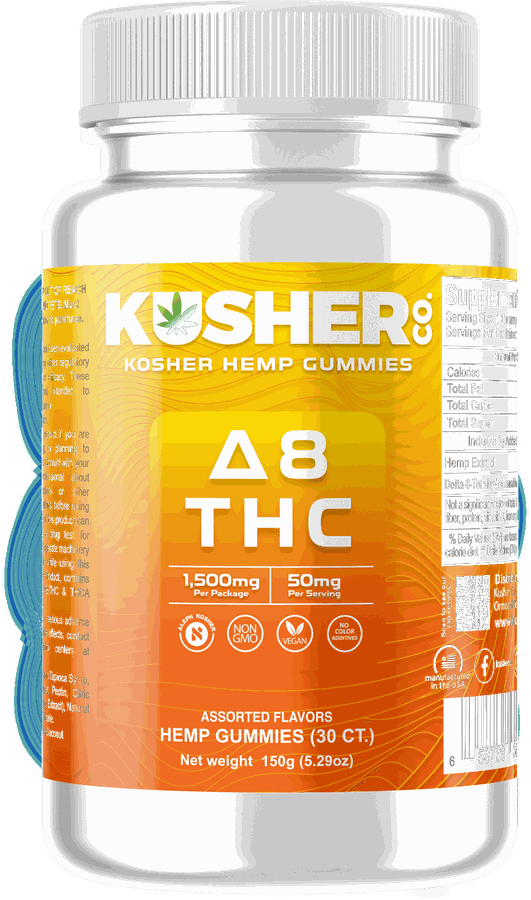
Our catalog splits cleanly at one line, and that line matters more than any other distinction in it. Most of what we sell is CBD, sometimes with CBG or CBN alongside it. Two products sit on the other side. The Happy Hour Kosher Hemp Gummies contain Delta-8, Delta-9 and live resin, with total THC under 0.3%. The D8 Kosher Hemp Gummies contain Delta-8 and come in a jar at $39.99.
To a person who already buys in this category, that split is obvious and unremarkable. To a person who does not, it is the entire question. THC is the compound most people have in mind when they picture what a hemp product is, and handing someone a THC product they did not ask for puts them in the position of either using it or explaining why they will not. Neither is a pleasant thing to hand a person at a birthday.
There is a practical layer underneath the social one. Workplace testing, personal commitments, religious observance and plain preference all give people reasons to keep THC out of their lives, and none of those reasons are things anyone owes you an explanation for. A CBD topical asks nothing of the recipient. A THC gummy asks a question, and the wrapping paper does not soften it.
Never let a THC product be the surprise
This is the piece of advice in here we feel strongest about, so we will put it flatly. If you are buying the Happy Hour gummies or the D8 jar for another person, tell them before you buy. Ask first. The surprise element is precisely the part that goes wrong, and it goes wrong in both directions.
It goes wrong for the recipient because they are now holding something with consequences attached, in a room with other people, with no time to think. It goes wrong for you because their real answer gets buried under politeness. You will get a thank you either way, and you will learn nothing about whether the gift landed.
Asking in advance costs you the theater of the reveal and buys you an accurate answer. That trade is worth making every time. If the idea of asking feels like it ruins the gift, that is useful information too, because it usually means you already suspect what the answer would be.
A topical is the lower commitment gift
If you want to give something from this category and you are not certain where the person stands, give a topical. The reason is simple and it has nothing to do with formulation. A topical does not involve swallowing anything. It goes on skin, it comes off skin, and the decision to try it is smaller and more reversible than the decision to eat something.
That difference in commitment shows up in how people actually behave. A gummy sits in a drawer while someone decides. A stick gets opened, because opening it is not a big deal. The Cooling Relief Stick and the Heating Relief Stick are both $20.00 and both carry 500mg of CBD, and the roll on formats at $20.00 with 350mg are lower still on the effort scale.
There is a second, quieter advantage. A topical is easy to hand to someone without it reading as a statement about them. Nobody interprets a $20.00 stick as a comment on their lifestyle. That is worth something when you are buying for a colleague, an in-law, or anyone whose reaction you cannot predict.
Kosher certification may matter to them in a way it does not to you
Every product we make is kosher certified, and this is the part of the catalog that most often matters more to the recipient than to the buyer. If the person you are buying for keeps kosher, an uncertified hemp product is not a slightly worse gift. It is a gift they cannot use, and they will have to say so, which puts the awkwardness on them rather than on you.
Certification in this category is not automatic and it is not common. Hemp products pass through extraction, carriers, sweeteners, flavor systems and shared equipment, and each of those steps is a place where certification either held or did not. A certified product means an outside body looked at the production line rather than at the finished label.
You do not need to understand the mechanics to use this. You need to know whether it matters to them, and if it might, buy accordingly. Someone who has been reading labels their whole life will notice the certification without being told, and will notice its absence just as fast.
A $20.00 stick beats a $40.00 tincture nobody asked for
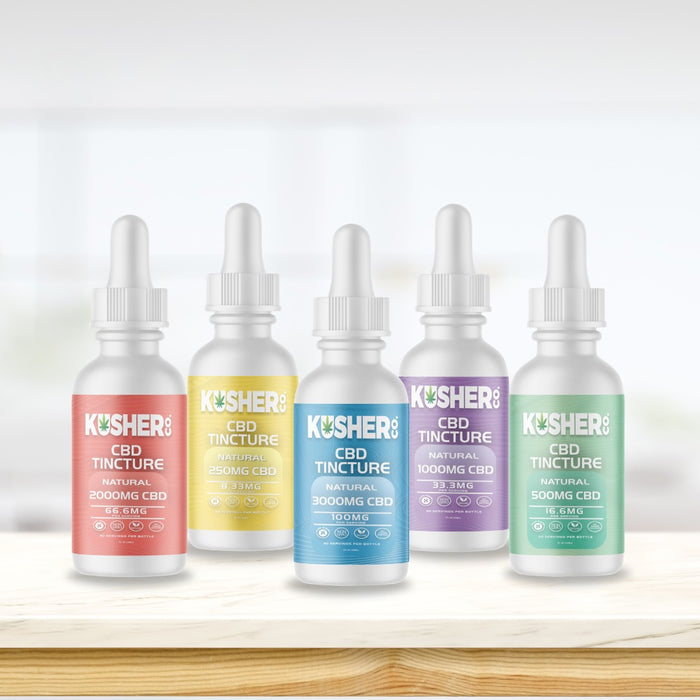
Price is where gift logic goes wrong most predictably. The instinct is to spend up, because spending more looks like caring more. In this category it usually produces the opposite result. Our Full Spectrum Kosher Hemp Extract CBD Tincture runs from $20.00 for 250mg up to $40.00 for 3000mg, and the 3000mg bottle at the top of that range is a serious purchase for someone with an established habit.
Handing that bottle to a person who has never used a tincture is a mismatch of scale. It is a large quantity of something they have not decided they want, in a format that asks them to measure a dose and hold it under their tongue. The size of the bottle becomes a small obligation rather than a pleasure.
The $20.00 Cooling Relief Stick is the better gift in almost every uncertain case, and it is not close. It costs half as much, it commits them to nothing, and if it turns out not to suit them they have lost nothing and neither have you. Spend the difference on something else they actually mentioned.
Match the format to how the person lives
Format is a lifestyle question before it is a product question. Someone who travels constantly is a different buyer from someone who is home every night. A stick goes in a bag and survives being forgotten there. A tincture bottle is glass, has a dropper, and wants a stable shelf.
Household matters too. A jar of gummies in a home with young children is a storage problem the recipient now has to solve, and they did not ask for the problem. A stick in a bathroom cabinet is not. This is not a scare point, it is a logistics point, and logistics are what determine whether a gift gets used or gets shelved.
Work is the third variable. People in safety sensitive roles, regulated professions, or jobs with testing policies have constraints that have nothing to do with what they personally think about hemp. If you do not know their constraints, the CBD topicals are the part of our catalog least likely to collide with them.
Buying for someone who already uses hemp products
This is the easy case and it deserves less agonizing than people give it. Someone with an established preference has already done the selection work. Your job is not to broaden their horizons, it is to buy them more of what they picked, or the obvious neighbor of it.
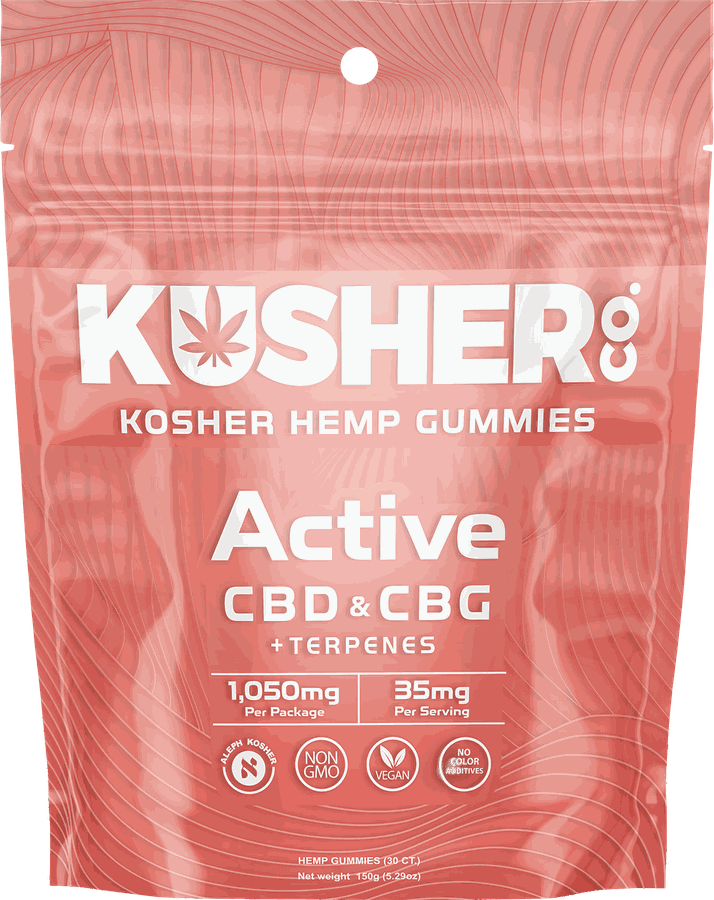
If they use a gummy, look at which one. Our Active gummies carry CBD with CBG and terpenes, the Wellness gummies are CBD with terpenes, and the Night Time gummies pair CBD with CBN and melatonin. All three are $29.99. Those are different formulas, and a person who chose one of them chose it for a reason.
If they use a tincture, the strength ladder gives you a clean move. Bumping someone from the 500mg bottle at $25.00 to the 1000mg at $30.00 is a gift that reads as attention rather than as a suggestion. You noticed what they use. That is the whole message, and it lands better than novelty does.
What to do when you genuinely cannot tell
Sometimes there is no signal either way, and you still want to buy something. The answer is not to guess harder. The answer is to buy the smallest, most reversible item in the category and let the person decide what to do with it from there.
In our catalog that is a $20.00 topical. Either roll on format, or one of the two sticks. These are the products where a wrong guess costs the least, and where the recipient can try it once, form an opinion, and move on without feeling that a large purchase is sitting unused on their behalf.
The alternative worth considering is buying nothing from this category and asking them directly, later, in a quieter moment. A question in February about what they use is a better foundation for a gift next December than a guess made in a hurry with a deadline behind it.
Say when not to give it
There are cases where the right move is to buy something else entirely, and we would rather write them down than pretend they do not exist. Do not give a hemp product to someone who has told you they do not want one, even if you think they were being polite. Do not give one as a joke gift at a group exchange where the recipient is random.
Do not give a THC product to anyone whose situation you do not know in detail, and do not give one to a person who has been clear about avoiding it. Do not buy hemp for someone who is pregnant or nursing, or for anyone under 21, and do not buy it for someone else to give onward to a person you have never met.
Do not use a gift as a way of raising a subject you have not been able to raise directly. If there is a conversation you want to have with someone about their habits or their health, a wrapped box is the worst possible opening line, and the product carries the weight of a message it was never designed to send.
Gifting into a shared household
A gift given to one person often lands in a shared space. That changes the calculation in ways buyers rarely think through at checkout. A jar on a kitchen counter is visible to everyone who lives there, including people who have opinions about it and people who should not have access to it.
If the recipient shares a home, the discreet formats are the kinder choice. A stick or a roll on looks like any other item in a bathroom cabinet. A jar of Delta-8 gummies does not, and it puts the recipient in the position of explaining a gift they did not choose to people who did not ask for it.
This is also an argument for asking first, again. The person knows their own household. You are guessing at it from the outside, and the cost of guessing wrong is borne entirely by them.
What to say when you hand it over
Keep it short and keep it factual. Say what is in it, say what it is not, and leave the decision with them. "This is CBD, there is no THC in it, it is kosher certified, and if it is not your thing just tell me" is a complete handover and it takes six seconds.
What you want to avoid is overselling. Do not describe what you imagine it will do for them. You do not know, we do not know, and a gift that arrives with a promise attached is a gift that can disappoint. Describe the object. Let them form their own view of it.
Give them the exit line explicitly. Telling someone in advance that you will not be offended if they pass it along or do not use it removes the obligation, and an obligation is the fastest way to make a small present feel heavy.
Keeping the receipt is part of the gift
Hemp products are consumables in a regulated category, and returns work differently from a sweater. Once a jar or a bottle is opened, it cannot go back into inventory. That is not a policy we invented to be difficult. It is what selling an ingestible responsibly requires.
The practical consequence for a gift buyer is that the decision has to be right at purchase, not corrected afterward. This is another reason the $20.00 topicals are the safe entry. The financial exposure is small, and nobody has to negotiate anything if the guess was wrong.
Tell the recipient where it came from, though. Knowing the source means they can look up the certification, read the ingredient list, and check what strength they are holding. A gift they can verify is a gift they are more likely to open.
Bottom line
Give a hemp product only to someone who has told you, in words, that they want one. If they have, buy what they already use or its nearest neighbor. If they have not, buy a $20.00 topical or buy nothing from this category, and do not let a $40.00 tincture stand in for a conversation you never had.
Never make a THC product a surprise. Ask about the Happy Hour gummies or the D8 jar before you buy them for anyone, every time, without exception. And if the person keeps kosher, the certification is not a bonus feature on the box. It is the difference between a gift they can use and one they cannot.
Frequently Asked Questions
Is a hemp product a good gift for someone who has never tried one?
Only if they have said they want one. The strongest predictor of a gift landing well in this category is that the person raised it first, by name or by question. If they have never mentioned it, a hemp product is usually a gift the buyer wants to give rather than one the recipient wants to receive. When you still want to buy something, pick the smallest and most reversible item in the catalog. A $20.00 topical asks almost nothing of the person holding it, and a wrong guess costs very little on either side.
Should I tell someone in advance that I am buying them a THC product?
Yes, every time. The Happy Hour Kosher Hemp Gummies contain Delta-8, Delta-9 and live resin with total THC under 0.3%, and the D8 Kosher Hemp Gummies contain Delta-8. Both are materially different gifts from a CBD product. Handing one over as a surprise puts the recipient in a room full of people with a decision they did not expect to make, and their real answer gets buried under politeness. Ask first. You lose the reveal and you gain an accurate answer, which is the better trade.
Why is a topical a safer gift than a gummy or a tincture?
Because it does not involve swallowing anything. That single difference lowers the commitment on the recipient's side, and it makes the decision to try it reversible in a way that eating something is not. A topical also reads as a smaller statement about the person. Nobody interprets a $20.00 stick as a comment on their lifestyle. Our Cooling Relief Stick and Heating Relief Stick are both $20.00 with 500mg of CBD, and the roll on formats are $20.00 with 350mg.
Does kosher certification matter if I am not buying for someone who keeps kosher?
It may matter to them even when it does not matter to you, which is the point worth remembering. If the recipient keeps kosher, an uncertified hemp product is not a slightly worse gift, it is one they cannot use, and they will have to be the one to say so. Certification is uncommon in this category because hemp products pass through extraction, carriers, sweeteners and shared equipment, and every one of those steps is a place certification either held or did not. All of our products are certified.
Is a more expensive hemp gift a better gift?
Usually not, and often the reverse. Our tincture runs from $20.00 for 250mg to $40.00 for 3000mg, and the top of that ladder is a serious purchase for someone with an established habit rather than a first gift. Giving a large bottle to a person who has never used a tincture creates an obligation, because the size of it implies they should get through it. A $20.00 Cooling Relief Stick costs half as much, commits them to nothing, and is a better guess in almost every uncertain case.
When should I not buy a hemp product as a gift at all?
Do not buy one for anyone who has said they do not want one, even if you think they were being polite. Do not buy one as a joke gift in a group exchange with a random recipient. Do not buy a THC product for anyone whose situation you do not know in detail. Do not buy hemp for someone who is pregnant or nursing, or for anyone under 21. And do not use a wrapped box to open a conversation about someone's habits that you have not been able to start directly.
What should I say when I hand the gift over?
Say what is in it, say what is not in it, and leave the decision with them. Something like this covers it: it is CBD, there is no THC, it is kosher certified, and if it is not your thing just say so. Avoid describing what you imagine it will do for them, because you do not know and a promise attached to a gift only sets up a disappointment. Giving the person an explicit exit removes the obligation, and obligation is what makes a small present feel heavy.