News · 19 August 2026
What to Do With a Hemp Product You Have Decided Is Not for You
If a hemp product is not for you, the most useful thing you can do is stop using it and work out why, because the reason determines whether a different product would suit you or whether the whole category is not your thing. Both answers are fine. What wastes money is neither deciding nor stopping, which is how a half used bottle ends up in a cabinet for two years.
We sell this stuff, and writing this costs us a sale in the short run. We would still rather you buy the right product next time than force this one, because a customer who felt handled does not come back and a customer who got straight advice usually does.
Deciding it is not for you is a real result
Not every product suits every person. That is true of coffee, of running shoes, and of everything we sell, and treating it as a failure on your part is both wrong and expensive. You tried something, you formed a view, and the view is data.
The industry has a habit of implying that a disappointing experience means you did it wrong, or did not give it long enough, or need a stronger version. Sometimes format really was the issue. Often the honest answer is simpler, which is that you tried it and did not care for it.
Once you accept that as a legitimate outcome, the decisions that follow get much easier. You are no longer trying to justify a purchase. You are just deciding what to do with an object you own and do not plan to use.
Separate the product from the format
Before you conclude anything about the category, check which of the two you actually disliked. These get conflated constantly and they point to completely different next steps.
Format complaints sound like this. You did not like swallowing something. The dropper was fussy and you never got a consistent measure. The taste was the problem. The texture of a gummy was unpleasant. The stick left a film you did not want on your hands. None of those are statements about cannabinoids at all.
Product complaints are different. You disliked the aromatic character. You wanted something lighter than a coconut oil and shea butter base. You did not want a formula with melatonin in it. Those point toward a different item, sometimes a very close neighbor of the one you have.
A topical when a gummy did not suit you, or the reverse
The most common useful switch in our catalog is across that line. If the issue was that you did not enjoy eating something, or that the taste and texture put you off, the topicals sidestep the problem completely. The Cooling Relief Stick and the Heating Relief Stick are $20.00 with 500mg of CBD, and the roll on formats are $20.00 with 350mg.
The reverse switch is just as valid. If a topical left a residue you disliked, or you found the application fiddly, an ingestible removes that entire class of complaint. Our gummies are $29.99 across the CBD range, and the tincture starts at $20.00 for 250mg.
Within the topicals there is a further move worth knowing. The gel at $25.00 sits on a lighter base than the sticks do, so a person whose objection was to a heavy coconut and shea feel has an obvious next thing to try without leaving the format.
Someone else in the household may be the right owner
An unopened or lightly used product does not have to be a loss. Adults you live with are the most sensible destination for something you have decided against, provided a few conditions hold.
They should be an adult who wants it, not an adult you are handing an obligation to. They should know exactly what it is, including which cannabinoids are in it and at what strength. And it should be something you are comfortable them knowing you bought, which is a small social point that stops a lot of these handovers from happening.
Tell them what it is by name and by number. A CBD topical with 500mg and a Delta-8 gummy are entirely different handovers, and the second one requires a real conversation rather than a shrug and a jar left on a counter.
Never pass on a THC product casually
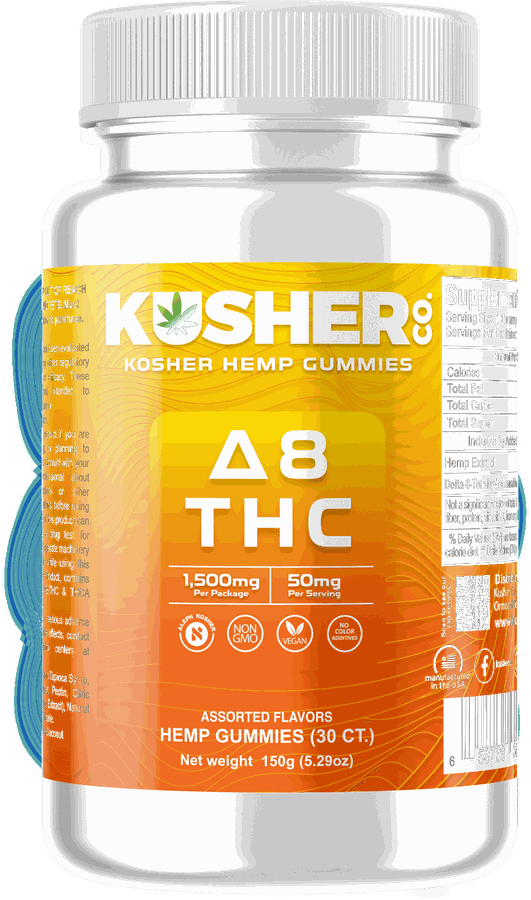
Our Happy Hour Kosher Hemp Gummies contain Delta-8, Delta-9 and live resin with total THC under 0.3%, and the D8 Kosher Hemp Gummies contain Delta-8. If you are passing either of those along, the person receiving them needs to know precisely what they are and needs to have asked for them.
Do not leave them in a shared kitchen. Do not describe them as gummies without qualification. Do not hand them to someone whose work, commitments or preferences you have not discussed, because those constraints are theirs and they are not yours to guess at.
This is the one part of the article where we would say do not improvise. If there is no adult in your life who both wants it and knows what it is, the right answer is to keep it stored properly or dispose of it, not to find a home for it out of a reluctance to waste money.
Store it properly while you decide
Plenty of people are not ready to make a call immediately, and that is reasonable. Storing something correctly for a few months keeps the option open at almost no cost, and storing it badly closes the option without you noticing.
- Keep the original container. It carries the strength, the batch code and the ingredient list, and all three become unrecoverable once you decant.
- Keep it closed and out of direct light, since light and air are the two things that change a product over time.
- Pick somewhere with a stable temperature. A cupboard away from a stove or a radiator beats a windowsill or a car.
- Keep it out of reach of children and pets, without exception, whatever the product is.
- Do not move it to a decorative jar or an unlabeled tin. An unlabeled hemp product is a product nobody in the house can identify later.
Storage is not a decision. It is what buys you time to make one.
How long is reasonable to keep something
There is no universal date, and any specific number we gave you would be invented. What we can say is what the honest signals are and how to read them.
Check the packaging first, since a best by date is the manufacturer telling you the window they stand behind. After that, use your senses. A change in appearance, texture or aroma against how it was when you opened it is a real signal, and it is more reliable than a mental note about when you bought it.
The other input is how it has been stored. Six months in a cool dark cupboard in the original container is a different situation from six months in a bathroom or a glovebox. Time alone is a poor guide when conditions varied that much.
Signs it is past the point of keeping
Some indicators mean the decision has already been made for you. Visible mold on anything, an off aroma that is clearly not the product's own aromatic profile, a separated or discolored liquid that will not recombine when you turn the bottle, or a texture that has changed dramatically from what it was.
Damaged or compromised packaging counts too. A tincture with a cracked dropper, a jar whose seal was broken in a bag, or a stick that melted and reset in a hot car have all been through something you cannot inspect after the fact.
In all of those cases, dispose of it in household waste, keep it away from children and pets on the way out, and do not pass it to anyone else. Salvaging a $25.00 product is not worth any of the alternatives.
Knowing when to simply stop
The option people find hardest is the plainest one. You can decide the category is not for you and be finished with it. No further experimenting, no third format, no next strength up.
Sunk cost is what keeps people cycling. Having spent $29.99 or $39.99 feels like a reason to keep trying, when in fact the money is gone either way and the only live question is whether spending more would be worthwhile. If two honest attempts across different formats did not land, a third is unlikely to change your view.
Say it out loud to yourself, since that is what stops the drift. Not for me, done. That sentence saves more money than any discount code we could send you.
Talk to us before you decide the whole category failed
If what you disliked was specific, tell us what it was. We can usually point at whether another item in our range differs on exactly that axis, or tell you honestly that it does not and that you should save your money.
The useful message is concrete. Which product, which format, and what specifically put you off. Taste, texture, aroma, application, strength, or the ingredient list. Vague dissatisfaction is hard to route. A named objection is easy.
We are not going to talk you into a second purchase. Sometimes the honest reply is that nothing in our catalog solves your objection, and we would rather say that than sell you a near identical product and lose you permanently.
What we will and will not do
Consumable products in a regulated category cannot be returned to inventory once opened, and we are not going to pretend otherwise or dress it up. That is a real constraint on what any seller here can offer, and buyers deserve to hear it stated rather than discovered.
What we can do is answer questions honestly before a second purchase, tell you which of our products differ from the one you disliked and how, and tell you when the answer is that none of them do. If a package arrived damaged or is not what the label says, that is a different situation and we want to hear about it.
Where we draw the line is talking someone into a repeat purchase after a bad first experience without a specific reason to think the second would be different. There has to be a real difference in format, base or formulation, and we should be able to name it.
An unopened product is a different situation
Sealed and unopened is the easiest version of this problem, and it deserves separating out because the options are wider. Nothing has been exposed to air, the batch code is intact, the strength is printed, and the contents are exactly what left our facility.
That means the storage window is longer, the handover to another adult is cleaner, and the decision is genuinely reversible in the sense that you can change your mind in six months and still be holding the product you bought. An opened container has already started its clock. A sealed one has not.
The practical advice for a sealed item you are unsure about is to put it somewhere sensible and set a date to decide rather than deciding now. Two months in a cool cupboard costs you nothing and often makes the answer obvious, because a product you have not thought about once in that time has answered the question for you.
Buy smaller next time, and use the ladder to do it
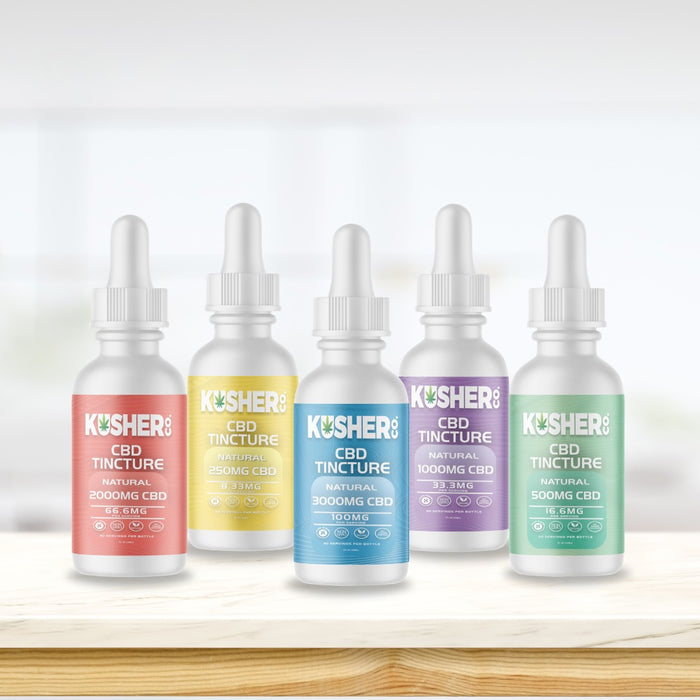
The best protection against this whole situation is buying in a size that matches how sure you are. Our tincture ladder exists partly for that reason. The 250mg bottle at $20.00 is a real product rather than a sample, and it is the sensible first rung for anyone who has not settled on the format.
The same logic runs through the rest of the catalog. A $29.99 pack is a smaller commitment than a $39.99 jar. A $20.00 stick is a smaller commitment than either. Matching purchase size to confidence is unglamorous and it is the single habit that stops unused product accumulating.
Climb the ladder only after the format has proven itself for you. Moving from 250mg at $20.00 to 1000mg at $30.00 improves your cost per milligram substantially, and that saving is only real once you know you will get through the bottle. Buy the certainty first and the volume second.
Why we would rather publish this than another product page
Every store in this category has product pages. Very few have a page about what to do when the purchase did not work out, because it reads as an admission that some purchases do not.
Some do. Ours included. A category built on the assumption that every customer will be delighted every time produces exactly the marketing we dislike, which is the kind with no mechanism behind it and no acknowledgment that people differ.
We would rather be the store that told you when to stop. That is a slower business to build, and it is a more durable one, because the people who stay came in with accurate expectations rather than borrowed ones.
Bottom line
Work out whether it was the format or the product, because that single distinction decides everything that follows. A format objection points at a different shelf in the same catalog, often a topical instead of a gummy or the reverse. A product objection points at a near neighbor, or at nothing.
Store it properly in its original container while you decide, hand it on only to an adult who knows exactly what it is and asked for it, and never do that casually with anything containing THC. And if the answer is that this category is not for you, stop. We would rather you buy nothing else from us than buy the wrong thing twice.
Frequently Asked Questions
How do I tell whether the format or the product was the problem?
Listen to how your own complaint is phrased. Format objections sound like this: you did not like swallowing something, the dropper was fussy and you never got a consistent measure, the taste put you off, a gummy texture was unpleasant, or a stick left a film on your hands. None of those are statements about cannabinoids. Product objections sound different: you disliked the aromatic character, you wanted a lighter base than coconut oil and shea butter, or you did not want melatonin in the formula. The first points at a different shelf, the second at a near neighbor.
Can I switch from a gummy to a topical if eating one did not suit me?
Yes, and it is the most common useful switch in our range. If the objection was taste, texture or the act of swallowing something, the topicals remove that entire class of complaint. The Cooling Relief Stick and the Heating Relief Stick are $20.00 with 500mg of CBD, and the roll on formats are $20.00 with 350mg. The reverse move works too. If a topical left residue or felt fiddly to apply, an ingestible sidesteps it, with gummies at $29.99 and the tincture starting at $20.00 for 250mg.
Is it fine to give an unused hemp product to someone else in my home?
It can be, with conditions. The person should be an adult who actually wants it rather than someone being handed an obligation. They should know exactly what it is, including which cannabinoids are in it and at what strength. Name the product and the number rather than calling it gummies and leaving it on a counter. And it should be something you are comfortable having them know you bought, which is a small social point that quietly stops many of these handovers from happening at all.
What if the product I do not want contains THC?
Then do not improvise. Our Happy Hour Kosher Hemp Gummies contain Delta-8, Delta-9 and live resin with total THC under 0.3%, and the D8 Kosher Hemp Gummies contain Delta-8. Anyone receiving either needs to know precisely what they are and needs to have asked for them. Do not leave them in a shared kitchen, do not describe them as gummies without qualification, and do not hand them to someone whose work commitments or preferences you have not discussed. If no adult in your life both wants it and knows what it is, store it properly or dispose of it.
How should I store something while I decide what to do with it?
Keep the original container, because it carries the strength, the batch code and the ingredient list, and all three become unrecoverable once you decant. Keep it closed and out of direct light. Choose somewhere with a stable temperature, such as a cupboard away from a stove or radiator rather than a windowsill or a car. Keep it out of reach of children and pets without exception. And never move it to a decorative jar or unlabeled tin, since an unlabeled hemp product is one nobody in the house can identify later.
How do I know when something is past keeping?
Check the packaging first, since a best by date is the manufacturer naming the window they stand behind. After that, use your senses and compare against how it was when you opened it. Visible mold, an off aroma that is clearly not the product's own profile, a separated or discolored liquid that will not recombine, or a texture that has changed dramatically are all decisive. Compromised packaging counts too, such as a cracked dropper or a stick that melted and reset in a hot car. Dispose of those rather than passing them on.
Is it reasonable to just stop buying hemp products entirely?
Completely reasonable, and it is the option people find hardest to take. Sunk cost is what keeps buyers cycling, because having spent $29.99 or $39.99 feels like a reason to keep experimenting. The money is gone either way, and the only live question is whether spending more would be worthwhile. If two honest attempts across different formats did not land, a third rarely changes anyone's view. Saying it plainly to yourself, that it is not for you and you are done, saves more than any discount code.
Will you take an opened product back?
No, and we would rather state that than let you discover it. Consumables in a regulated category cannot go back into inventory once opened, which is a constraint on every seller here rather than a policy we invented. What we will do is answer questions honestly before any second purchase, tell you which of our products actually differ from the one you disliked and in what way, and tell you when none of them do. If a package arrived damaged or does not match its label, that is a separate matter and we want to hear about it.