News · 19 August 2026
Reading a Hemp Ingredient List From the Top Down
An ingredient list runs in descending order by quantity, which means the order tells you as much as the contents do. The first item is the largest single component by weight. The last item is the smallest. Once you know that, a label stops being a wall of names and turns into a rough map of what the product is mostly made of.
Most shoppers read these lists looking for one word, usually the cannabinoid, and stop when they find it. That is the wrong read. Position is the information, and a formula where the interesting ingredient sits near the bottom is a different product from one where it sits near the top, even when both labels contain identical words.
Descending order is the rule that makes the list readable
The convention is straightforward. Ingredients are listed heaviest first, and each one that follows is present in a smaller amount than the one before it. There is no ranking by importance, no ordering by how good an ingredient sounds, and no alphabetical arrangement. It is quantity, top to bottom.
The practical effect is that you can read the first three names and know roughly what you are buying. In a topical, those first names are almost always the base: the material that gives the product its body, its spread and its feel on skin. Everything after that is added into that base.
The rule has a limit worth knowing. Below a certain point the amounts get small enough that the gaps between neighbors stop being meaningful. Ingredient eleven and ingredient twelve may be present in nearly identical quantities. The ordering near the top is informative. Near the bottom it is directional.
What normally sits at the top of a topical
Water, oils, butters and thickeners occupy the first positions in most skin products, hemp or otherwise. They have to, because they are what fills the tube. A gel needs a gelling system and a water phase. A solid stick needs fats that hold shape at room temperature and soften with contact.
Seeing a carrier oil near the top of a hemp topical is not a red flag and it does not mean the product is diluted. It means the product is a topical. A cream made entirely of active ingredient would not spread, would not absorb, and would be unusable.
What the top of the list does tell you is the character of the product. Coconut oil and shea butter at the front of a stick predict a rich, waxy application. A water and gel system at the front predicts something lighter that flashes off faster. That is a real difference in the experience and it is legible before you buy.
Where the cannabinoid usually lands, and why
CBD almost always appears low on a topical ingredient list, and that is expected rather than suspicious. Our Cooling Pain Relief Gel contains 500mg of CBD in a $25.00 tube. Measured against the total weight of the product, 500mg is a small fraction, so by the descending order rule it belongs well below the base materials.
This is where position alone will mislead you if you read it in isolation. A cannabinoid at position eight tells you it is present in a smaller quantity than the seven things above it. It does not tell you whether 500mg is a lot or a little for a product of that size, because the list does not carry amounts.
So the cannabinoid is the one ingredient where you stop reading position and start reading the milligram figure printed elsewhere on the package. Position handles the rest of the formula. The active needs its own number, and a product that does not print one has left out the only piece of information position cannot supply.
Worked example: the Cooling Pain Relief Gel
This one is $25.00 with 500mg of CBD, plus rosemary and thyme extract, tea tree and mint. Read it as a structure rather than as a list and you get a gel base at the top, a cannabinoid at a known 500mg somewhere in the middle of the tail, and a botanical group clustered below that.
The botanical group is worth reading as a group rather than as four separate names. Rosemary extract, thyme extract, tea tree and mint appearing together, all low on the list, describes an aromatic system. Each one is present in a small amount, and they were selected to work as a set rather than individually.
That structure tells you the product is a gel first, a 500mg CBD product second, and an aromatic formula third. If you wanted a product where the botanicals dominated, this list would tell you to look elsewhere, and it would tell you before you opened the cap.
Worked example: the two relief sticks
The Cooling Relief Stick and the Heating Relief Stick are both $20.00 with 500mg of CBD, built on coconut oil and shea butter, with mint, eucalyptus and tea tree. The base is the story here, and it is a genuinely different base from the gel.
Coconut oil and shea butter are solid or semi solid at room temperature, which is what allows a stick to exist as a stick. They also carry oil soluble ingredients well, and they leave a film on skin rather than evaporating. A shopper who dislikes that feel now knows to buy the gel instead, purely from reading two words at the top of the list.
The two sticks share nearly the same list and differ in their warming character. That is a useful thing to notice, because it shows how much a small change low in a formula can alter the product while the top of the list stays constant. Same base, same 500mg, same price, different sensation.
Worked example: the Joint and Muscle Roll on
The Joint and Muscle Roll on Relief is $20.00 with 350mg of CBD, menthol, tea tree and aloe. Two things stand out against the products above it. The cannabinoid figure is lower, at 350mg rather than 500mg, and the supporting cast is shorter.
A shorter list is not a lesser formula. It is a more focused one. Four named components in a roll on describes a product built to do one narrow thing in a specific application format, rather than a broader formula meant to cover more ground.
Aloe near the base position predicts a lighter, wetter application than the coconut and shea sticks. Menthol is the ingredient most people will notice on contact. Put those together and the list has told you the format, the feel and the character before you spend $20.00.
A formula built around an active versus an active added to a base
This is the distinction that makes the whole exercise worth doing. Some products are built around their active ingredient, with the rest of the formula chosen to carry and stabilize it. Others are an existing base with a small amount of an active added late, largely so the name can appear on the front.
The tell is not a single position. It is coherence. In a formula built around an active, the supporting ingredients make sense together and there are not many of them. In a base with an active bolted on, you tend to see a long generic list that could belong to any product in the aisle, with the interesting ingredient appearing once, near the end, and nothing else in the formula acknowledging it.
Milligrams settle the argument. A product that prints a cannabinoid figure has committed to a number that can be checked against a certificate of analysis. A product that lists the cannabinoid without a figure has told you it is present in some amount, which is not information.
What a long tail of botanicals means
A list with fifteen plant extracts at the bottom is describing an aromatic and sensory system, not fifteen meaningful contributions. By the time you are that far down the descending order, the individual quantities are very small.
That is not a criticism. Aromatic ingredients belong in small quantities and a product would be unpleasant if they were not. The mistake is reading a long botanical tail as evidence of a densely loaded formula, when what it usually reflects is a scent and sensory profile assembled from many small pieces.
Our topicals keep those tails short on purpose. Rosemary, thyme, tea tree and mint in the gel, or menthol, tea tree and aloe in the roll on, is a small named set rather than a long one. We would rather explain four ingredients than list twenty and explain none.
Carriers are not filler
Calling the top of an ingredient list filler is a common shortcut and it gets the chemistry backwards. Carrier oils and butters determine whether a formula stays stable, how it spreads, how it absorbs, and how oil soluble ingredients stay distributed rather than separating in the tube.
Coconut oil and shea butter were chosen for the sticks because they hold a solid form and carry the rest of the formula. Swap them for something thinner and you no longer have a stick. The carrier is a design decision with visible consequences, not dead weight taking up space where an active should be.
The judgment worth making is whether the base fits the format and the use. A heavy base in a stick is correct. The same base in something meant to disappear quickly would not be.
Gummy lists read differently
An ingestible ingredient list has a different shape because the base is doing a different job. Sweeteners, pectin or gelatin systems, acids and flavor components dominate the top of a gummy list, because that is what a gummy is made of by weight.
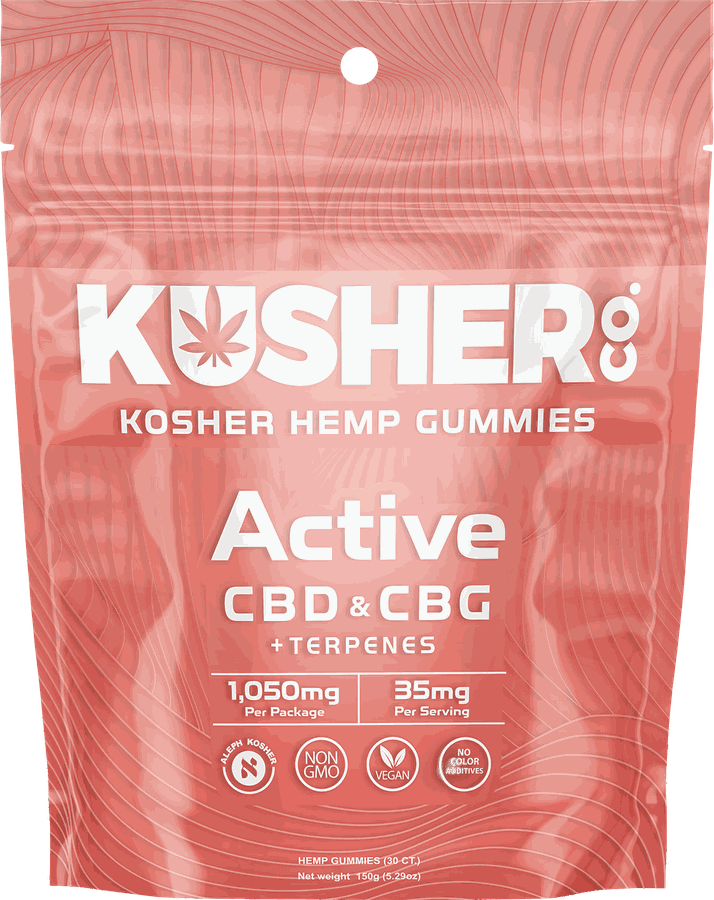
The cannabinoids in our gummies are a small fraction of each piece by weight and will sit low on the list accordingly. What differentiates our four gummies is not their position on a label but which cannabinoids are named. The Active gummies carry CBD with CBG and terpenes. The Wellness gummies are CBD with terpenes. The Night Time gummies pair CBD with CBN and melatonin. The Happy Hour gummies contain Delta-8 and Delta-9 with live resin, at total THC under 0.3%.
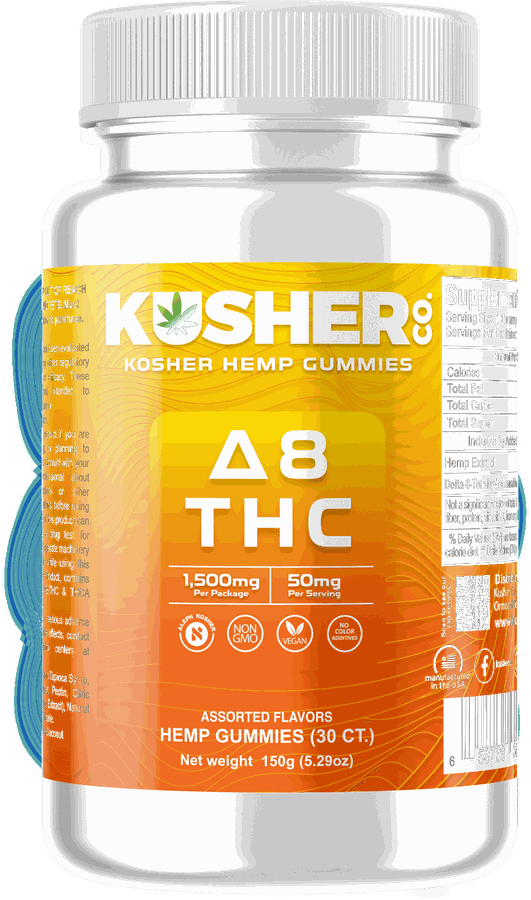
All four are $29.99 except the D8 Kosher Hemp Gummies, which are $39.99 in a jar. Reading those lists is less about order and more about which named compounds appear at all, since the base ingredients are broadly similar across the range.
What the list cannot tell you
Order gives you proportion and nothing else. It does not tell you the quality of an ingredient, where it came from, how it was processed, or whether the batch in your hand matches the batch that was tested. Two products with identical lists can differ substantially on every one of those.
It also cannot confirm what is absent. A short list is not proof of a clean process, because the list describes intentional ingredients rather than everything present. That is the job of a certificate of analysis from an outside laboratory, and it is a separate document answering a separate question.
Certification is a third layer again. Our products are kosher certified, which means an outside body reviewed inputs and production rather than reading the finished label. Three different documents, three different questions, and no one of them substitutes for the others.
A two minute method for any hemp label
You can get most of the value out of an ingredient list in about two minutes, and the sequence matters more than the speed.
- Read the first three ingredients and name the base out loud. Water gel, oil and butter, or sweetener system.
- Find the cannabinoid and note its position, then stop using position for that one item.
- Find the milligram figure printed on the package. If there is none, the formula is unquantified.
- Read the bottom third as a group and ask what job that group is doing.
- Check whether the base fits the format. A heavy base in a stick is correct, a heavy base in something meant to vanish is not.
Run that on any two products side by side and the differences show up quickly. It is a more reliable comparison than reading front of package language, because the list is constrained by rules and the front of the package is not.
Bottom line
Read the list as a shape rather than a search. The top three names are the product. The bottom third is a system doing one job. The cannabinoid is the single item where you leave the list and go find a milligram figure, because position cannot tell you whether 500mg or 350mg is what you are getting.
Judge a formula by coherence. A short, deliberate ingredient set with a printed cannabinoid figure is a formula somebody designed. A long generic base with an interesting name appearing once near the end is a base with a label on it, and the order of the list is what gives that away.
Frequently Asked Questions
Are hemp ingredient lists really in order of quantity?
Yes. The convention is descending order by weight, heaviest first, with each name present in a smaller amount than the one above it. There is no ranking by importance, no alphabetical arrangement and no ordering by how appealing an ingredient sounds. That single rule is what makes a label readable, because reading the first three names tells you roughly what the product is made of. The rule loses precision near the bottom, where quantities get small enough that neighboring items may be present in nearly identical amounts.
Why is CBD listed so low on a topical ingredient list?
Because 500mg is a small fraction of the total weight of a tube or a stick, and the list is ordered by weight. Our Cooling Pain Relief Gel carries 500mg of CBD at $25.00, and by the descending order rule that quantity belongs below the gel base and the water phase. A low position is expected rather than suspicious. It also means position alone is useless for the cannabinoid, which is why the milligram figure printed on the package is the number to read instead.
Does a carrier oil near the top mean the product is diluted?
No. It means the product is a topical. Carrier oils and butters are what fills the tube, and they determine whether a formula stays stable, how it spreads and whether oil soluble ingredients stay distributed instead of separating. A cream made mostly of active would not spread or absorb. What the top of the list does tell you is character. Coconut oil and shea butter at the front of our relief sticks predict a rich application that leaves a film, while a water and gel system predicts something lighter.
How can I tell a formula built around an active from a base with an active added?
Look for coherence rather than a single position. A formula built around an active has a short supporting cast that makes sense together, and it prints a cannabinoid figure you can check against a certificate of analysis. A base with an active bolted on tends to show a long generic list that could belong to any product in the aisle, with the interesting ingredient appearing once near the end and nothing else in the formula acknowledging it. A missing milligram number settles it.
What does a long list of botanical extracts at the bottom mean?
It usually describes an aromatic and sensory system assembled from many small pieces, not fifteen meaningful contributions. By the time you are that far down a descending order list, individual quantities are very small. That is normal and correct, since aromatic ingredients belong in small amounts. The mistake is reading a long tail as evidence of a densely loaded formula. Our topicals keep those groups short on purpose, such as rosemary, thyme, tea tree and mint in the gel, or menthol, tea tree and aloe in the roll on.
What can an ingredient list not tell me?
Order gives you proportion and nothing else. It cannot tell you the quality of an ingredient, where it came from, how it was processed, or whether the batch in your hand matches the one that was tested. It also cannot confirm what is absent, because the list describes intentional ingredients rather than everything present. That is what a certificate of analysis from an outside laboratory is for. Kosher certification answers a third question again, since it covers inputs and production rather than the finished label.
What is the fastest useful way to read a hemp label?
Read the first three ingredients and name the base out loud, whether that is a water gel, an oil and butter system, or a sweetener system in a gummy. Find the cannabinoid, note its position, then stop using position for that one item and go find the milligram figure on the package. Read the bottom third as a group and ask what job the group is doing. Last, check that the base fits the format. Two minutes gets you most of the value.