News · 18 August 2026
Why Certification Changes the CBD Conversation: What Most Hemp Brands Never Have to Prove
Almost every claim that matters in the CBD category is invisible to the person paying for it. You cannot see where the plant grew, what solvent pulled the extract, what the line ran before your batch, or whether the number on the front of the label matches what is inside. So the useful question is not what a company says about any of that. It is who checked, and whether the person who checked can take the claim away.
That is the whole shift certification introduces, and it is a smaller shift than the marketing around it usually suggests. It does not make a product better. It moves one specific claim out of the seller's own mouth and into the hands of an outside body with the authority to withdraw it. In a category built almost entirely on self declaration, moving even one claim is unusual.
What a shopper can actually observe
Stand in front of any hemp product anywhere and inventory what is genuinely available to you. A jar. A label. A price. A website written by the seller. Possibly a document the seller chose to publish, presented in the way the seller chose to present it.
Everything that determines whether the product is what it claims to be happened before the jar was sealed, in facilities you will never visit, involving suppliers you will never hear named. The finished object carries almost none of that information forward. This is not a complaint about our category specifically. It is the ordinary condition of buying any manufactured consumable, and it is why verification systems exist at all.
Self declaration is the default, and defaults are invisible
Most claims on most hemp products are the seller's own word. Not fraudulent, not necessarily even inaccurate, just unverified by anyone with a reason to be skeptical. The company says the extract is clean. The company says the sourcing is careful. The company published the lab result it chose to publish.
None of that is unusual and most of it is probably true. The problem is structural rather than moral. A self declared claim carries no information about whether it is true, because a company that meant it and a company that did not would produce identical marketing. When every product in a category makes the same statement, the statement stops distinguishing anything.
Buyers sense this, which is why the category has such a strange relationship with trust. People end up choosing on packaging, on price, or on which website felt more competent, because there is often nothing more solid to choose on.
Outside verification changes the shape of the claim
An outside certification does something specific. Somebody with no stake in whether you buy reviewed the inputs, the suppliers behind those inputs and the process, against a standard they did not invent for this occasion, and issued an approval they can revoke.
The revocation part is the real content. A claim that can be withdrawn behaves differently from a claim that cannot, because the seller now has something to lose that is not simply their own credibility. Certification also recurs. It is inspected again, it reopens when a formula or supplier changes, and it is tied to specific products at specific facilities rather than to a brand in the abstract.
Why this category ended up so dependent on self declaration
Some of it is age. The market is young, it grew quickly, and it grew inside a legal environment that was unsettled for years. Supply chains were improvised because they had to be, and record keeping was not what anyone was competing on.
Some of it is that standards vary enormously with no common frame. One seller's careful is another seller's minimum. There is no shared vocabulary that lets a buyer tell those apart, so the words used in marketing converge while the practices behind them stay wildly different. That divergence between converging language and diverging practice is the actual market failure here.
Certification is a narrow claim and we will not stretch it
Here is where we would rather undersell than overreach. Kosher certification does not measure potency. It does not screen for heavy metals, pesticides or residual solvents. It makes no statement about what any product does in a body, and reading it as any kind of health or safety score is a misreading of what it is for.
It covers provenance and process. Inputs, suppliers, equipment, records. That is a genuinely useful thing to have verified and it is a small slice of what you might want to know. A certified product should still show you a current batch lab report, and if a seller offers certification as a reason not to need one, that substitution is the thing to be suspicious of.
Why so few products in the category carry it
Cost is part of it and constraint is more of it. Certification means a narrower supplier list, documentation obligations that extend several steps upstream, physical inspection, and a review that reopens every time anything changes. It means some ingredients are simply unavailable and some formats are much harder to build.
For most manufacturers that arithmetic does not work. The certification is expensive, it slows the product line down, and the majority of buyers are not asking for it. We understand why the calculation goes the way it usually goes. We landed on the other side of it, and the reason it functions as a differentiator at all is precisely because it is inconvenient.
What it costs us, stated plainly
We cannot move quickly. When a supplier for a minor input changes hands, we reopen a file rather than shipping through the change. When an ingredient trend appears, we are late to it or absent from it. When an input goes short, the obvious substitution is not available to us on the timeline the situation wants.
Those are real costs and they land on customers as a slower, smaller line than we would otherwise run. We would rather name them than present the constraint as though it were purely a benefit. A standard that never costs you anything is not a standard.
The gap between what a buyer wants to know and what they can find out
Write out the things a thoughtful shopper actually wants settled before spending money on a hemp product. Whether the milligram figure is accurate. Whether anything unwanted came along with the extract. Where the raw material was grown and under what conditions. What the equipment ran before this batch. Whether the company behind it will still exist next year.
Now write out what is available at the point of sale, and the second list is much shorter than the first. That gap is the defining feature of the category, and every mechanism worth anything, whether it is a lab report or an outside certification, is an attempt to move one item from the first list to the second.
Understanding the problem that way stops you expecting any single document to solve it. Nothing closes the gap completely. Some things close a piece of it in a way you can check, and those are worth more than anything that promises to close all of it in a way you cannot.
Price is a poor proxy for care
People reach for price as a shortcut when nothing else is legible, and it is one of the weaker signals available. A high price can reflect careful sourcing, or packaging, or advertising spend, or simply what the market will bear. A low price can reflect efficiency, thin margin, or genuine corner cutting. The number alone does not distinguish those cases.
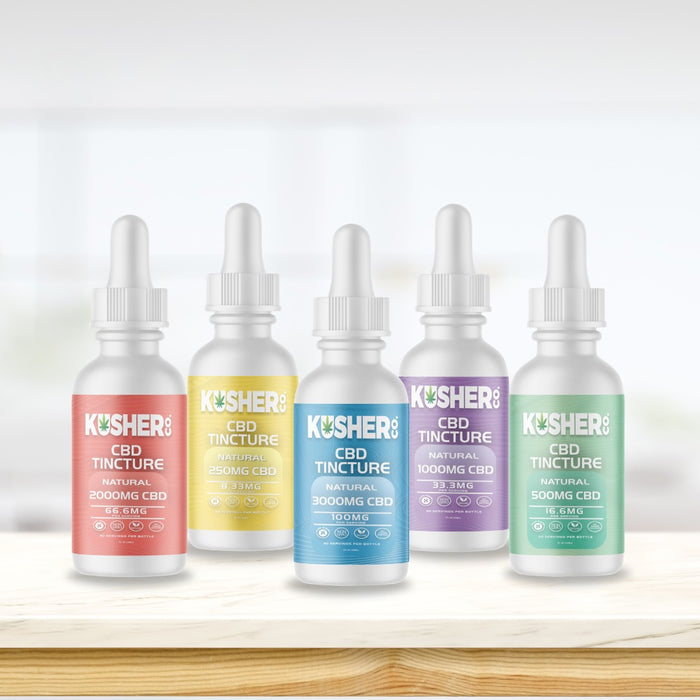
Our own shelf runs from $20.00 to $39.99, and the spread does not track how carefully anything was made, because everything went through the same process. It tracks format, quantity and what is in the product. The 3000mg tincture costs more than the 250mg because there is more in it. That is the entire explanation, and we would rather give you that than let a price ladder imply a quality ladder that does not exist.
What an outside standard does inside a company
There is an internal effect that shoppers never see and that we think is the most underrated part of this. Once an outside body reviews your inputs and can withdraw its approval, certain shortcuts stop being available as decisions.
A supplier goes short and the tempting substitution is now a review rather than a phone call, so it does not happen quietly on a Tuesday. A formula tweak that would have been made casually now goes through a process. The standard does not just describe the company to the outside. It changes what the inside can do under pressure, and pressure is exactly when quality systems usually fail.
That is why we treat it as an operating constraint rather than a badge. The badge is the least useful part of it.
Where certification could mislead you
A fair argument names the ways it could be misused, so here are ours. Someone could hold certification on part of a line and let the reputation extend across all of it. Someone could present a process claim in a way that implies a safety claim it does not make. Someone could let a certification lapse and leave the artwork on the packaging.
The defense against all three is the same and it is not complicated. Ask whether the certification covers the specific product in front of you, whether it is current, and what it actually covers. Any seller holding it properly answers those in a sentence each.
How to read any claim in this category
Whatever you buy and wherever you buy it, these three questions sort most of it out, and none of them require you to know any chemistry.
- Who checked. The seller alone, or somebody outside the sale.
- Can it be taken away. A claim with no revocation mechanism carries less information than one that can be withdrawn.
- Is it about this batch or about the process. Those are different claims and they cover different ground.
Run those against a certificate of analysis and it holds up on the first and third, and covers one batch. Run them against a process certification and it holds up on the first and second, and covers the history. Run them against a sentence on a website and usually nothing holds up, which is itself the answer.
The claims nobody ever has to prove
Think about how much of the language in this category has no verification path at all. Premium. Small batch. Carefully sourced. Highest quality. Rigorously selected. None of those terms has an agreed meaning, so none of them can be checked, so nobody can be caught out on one.
That is not a small thing. It means the words most likely to persuade a shopper are exactly the words that carry the least information, and the words carrying real information tend to be dull and specific. Total THC under 0.3 percent is a checkable statement. Premium is not. We try to write in the first register and it makes for less exciting copy.
What this looks like across our own shelf
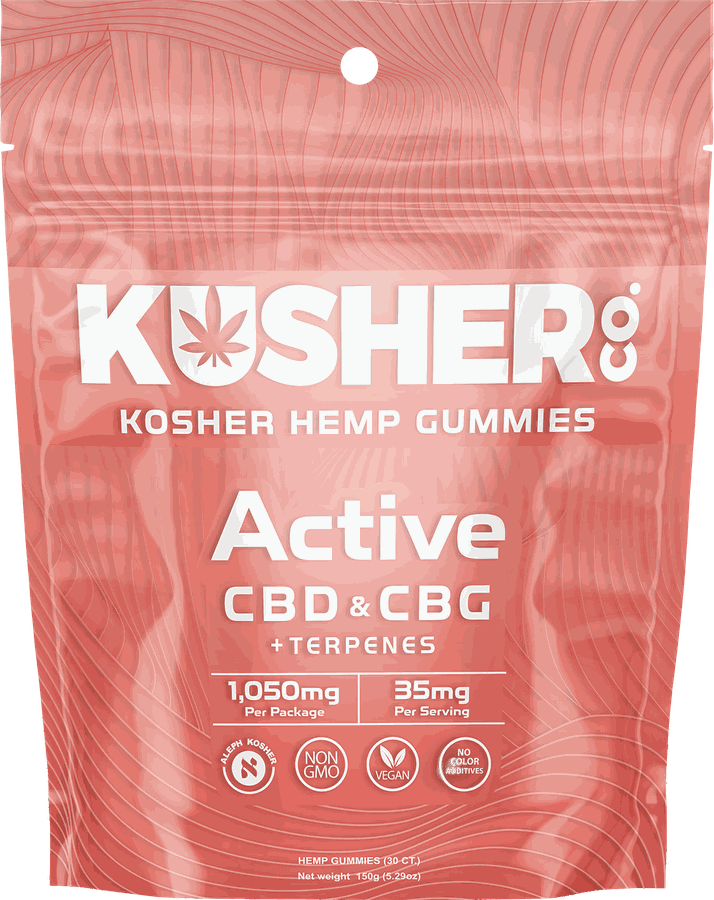
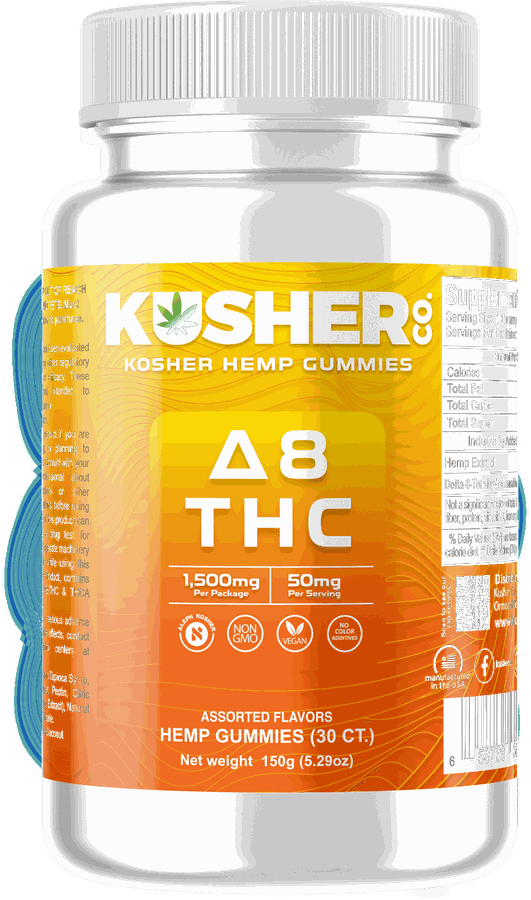
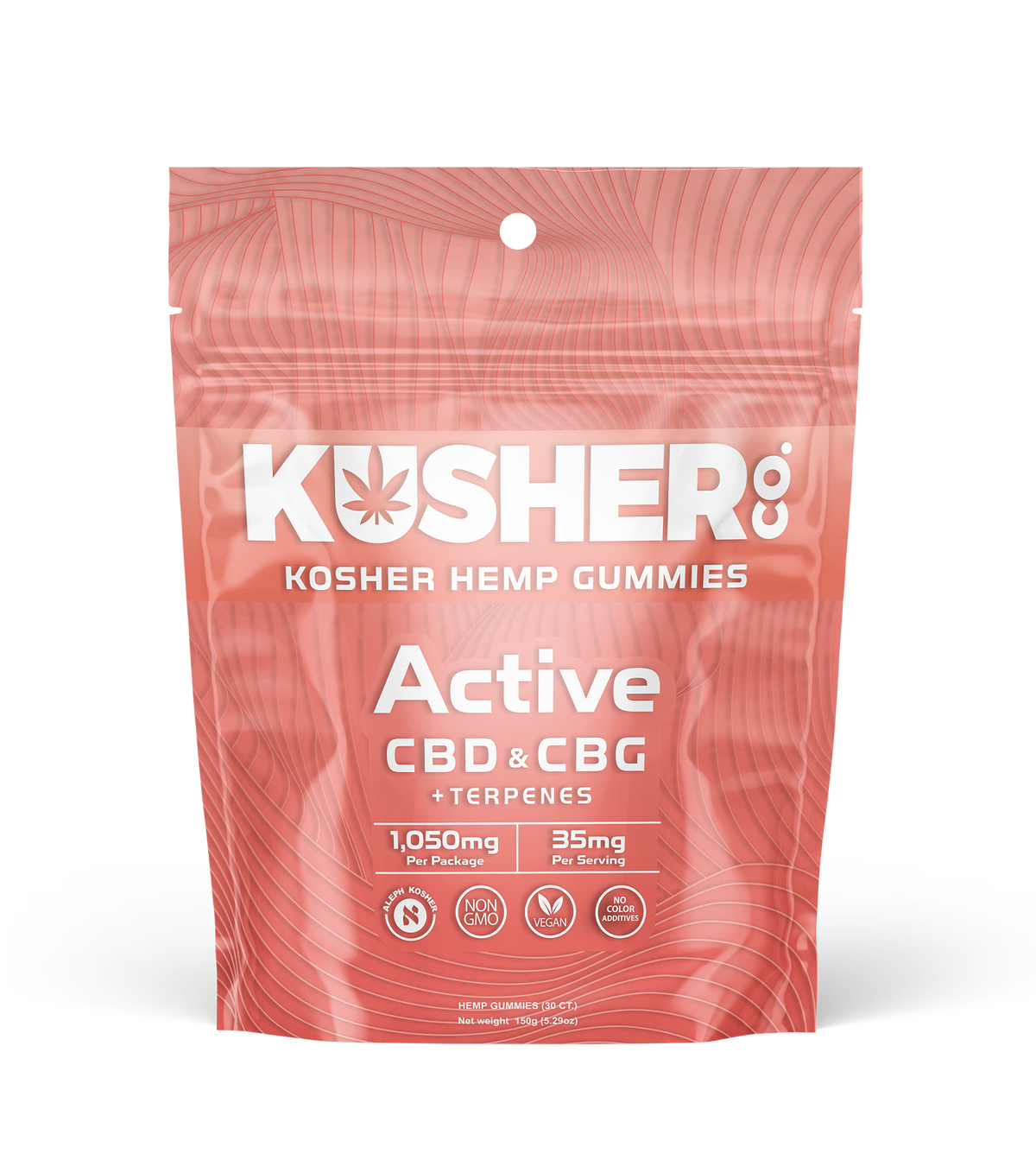
The certification applies across the line rather than to a flagship. The Joint and Muscle Roll on Relief at $20.00 with 350mg of CBD went through the same framework as the D8 Kosher Hemp Gummies at $39.99. The Wellness Kosher Hemp Gummies at $29.99 and the tincture starting at $20.00 for the 250mg sit inside the same process.
That consistency is deliberate, because a certification that covered only the expensive items would be a marketing decision rather than a standard. Applying it to a twenty dollar roll on is where it stops being a selling point and starts being how the company works.
What we are not claiming
We are not saying an uncertified product is bad. Plenty of careful manufacturers make good products without ever pursuing outside certification, and we have no way of assessing anyone else's operation and no interest in guessing at it.
The argument is narrower than that. When you cannot see any of the things that matter, an outside check on some of them is worth more than a longer paragraph of assurance about all of them. That holds regardless of who is doing the assuring, including us.
Bottom line
Certification does not change what CBD is or what any product does. It changes who is standing behind one particular claim and whether that claim can be taken away. In a category where nearly everything meaningful is invisible at the point of sale, that difference between a checked claim and a stated one is most of what a buyer has to work with.
Ask who checked. Ask whether it can be revoked. Then read the batch report for everything certification does not cover, which is a great deal. That is a better method than trusting any brand, and we would rather you applied it to us than took our word for anything.
Frequently Asked Questions
What is the difference between a verified claim and a stated one?
A stated claim is the seller's own word, and a company that meant it and a company that did not would produce identical marketing. That is why self declaration carries so little information. A verified claim has been reviewed by somebody outside the sale, against a standard they did not invent for the occasion, and the approval can be withdrawn. The revocation mechanism is the real content. A claim that can be taken away behaves differently from one that can only be repeated.
Why do so few hemp products carry kosher certification?
Cost is part of it and constraint is more of it. Certification narrows the supplier list, extends documentation obligations several steps upstream, adds physical inspection, and reopens the review every time a formula or supplier changes. Some ingredients become unavailable and some formats get much harder to build. For most manufacturers that arithmetic does not work, especially since most buyers are not asking for it. The fact that it functions as a differentiator at all is because it is inconvenient.
Should a certified product still publish lab results?
Yes, and if a seller offers certification as a reason you do not need one, that substitution is the thing to be suspicious of. Certification covers provenance and process, meaning inputs, suppliers, equipment and records. It does not measure potency and it does not screen for heavy metals, pesticides or residual solvents. Those are contamination and accuracy questions that only a laboratory answers, batch by batch. The two documents cover different ground and neither one makes the other unnecessary.
How do I judge a hemp claim when I cannot verify anything myself?
Three questions handle most of it without any chemistry. Who checked, the seller alone or somebody outside the sale. Can the claim be taken away, since one with no revocation mechanism carries little information. Is it about this batch or about the process, because those cover different ground. A certificate of analysis holds up on the first and third for one batch. A process certification holds up on the first and second. A sentence on a website usually holds up on none.
Why do words like premium and small batch mean so little?
Because none of them has an agreed definition, so none can be checked, so nobody can be caught out on one. That produces an odd result. The words most likely to persuade a shopper are exactly the ones carrying the least information, while the statements carrying real information tend to be dull and specific. Total THC under 0.3 percent is checkable. Highest quality is not. We try to write in the first register, and it makes for less exciting copy than the alternative.
Does an uncertified product mean the maker is careless?
No, and we are not going to argue that. Plenty of careful manufacturers make good products without pursuing outside certification, and we have no way to assess anyone else's operation and no interest in guessing at it. Our argument is narrower. When you cannot see the things that matter, an outside check on some of them is worth more than a longer paragraph of assurance about all of them. That applies to every seller in the category, ourselves included.