News · 18 August 2026
Cooling vs Heating: How to Choose Between the Two Relief Sticks
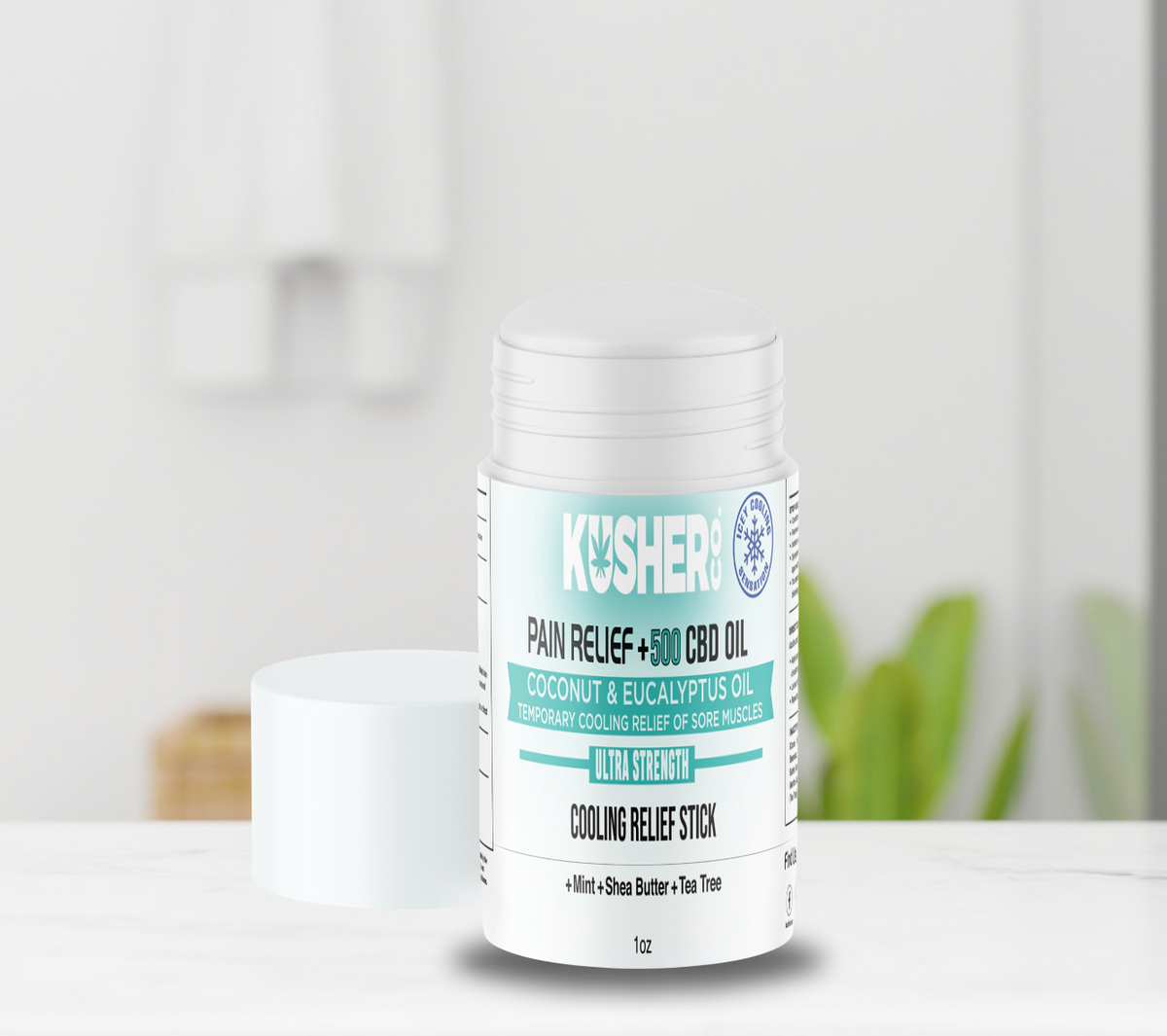
Choose the Cooling Relief Stick when an area feels hot and worked, and the Heating Relief Stick when an area feels stiff and has been still. Both are $20.00, both carry 500mg of CBD, and both are built on the same base of coconut oil and shea butter with mint, eucalyptus and tea tree. The difference between them is the sensation they produce, and that sensation is not decoration. It is the reason to own one rather than the other.
People treat this as a flavor preference, the way you might pick between two scents. It is closer to a situation question, and once you frame it that way the answer usually becomes obvious within a sentence or two.
What a cooling sensation actually is
Cooling ingredients do not lower the temperature of your skin. Nothing in a topical stick is capable of that in any meaningful way. What they do is act on the nerve endings that report temperature, so those nerves send a cold signal to the brain even though the tissue underneath has not changed temperature at all.
Menthol is the best known example of this, and mint and eucalyptus work in the same territory. The result is a genuine sensation produced by a real mechanism. It is not imaginary and it is not the product working in some vague way. It is a specific, well understood interaction between a compound and a receptor.
Understanding that changes how you use it. Because the sensation is a signal rather than a temperature change, it comes on within a short time, sits for a while, and fades. It does not accumulate. Applying twice as much does not make the area twice as cold, it makes the signal stronger for a while and can tip over into uncomfortable.
What a warming sensation actually is
Warming works the same way in reverse. Certain compounds act on receptors that report heat, so the brain receives a warm signal from tissue whose temperature has not risen.
Our Heating Relief Stick produces a gentle warming character rather than an aggressive one, and the base does part of that work. Coconut oil and shea butter are conditioning ingredients that sit on and in the skin, and a formula built on them carries a different quality from a thin gel that flashes cold and disappears.
The practical difference between the two sticks is therefore not just direction but pace. Cooling tends to arrive quickly and announce itself. Warming tends to build more gradually and stay longer. Neither of those is better. They suit different moments.
When people reach for cooling
Almost always, immediately after effort.
The shoulder after a heavy session. The legs after a long run. The forearm after a day of repetitive work. In each of those cases the area feels hot and used, and a cold signal is what the body is asking for. The sensation lines up with what you want to feel, which is a large part of why it registers as relief.
Our Cooling Relief Stick at $20.00 is built for exactly this window, and the eucalyptus and mint in it are the reason it reads as sharp and immediate. If you train and you are buying one stick, this is almost certainly the one, because the moment right after training is the moment you will actually reach for something.
There is a second case people forget. Anywhere that feels irritated at the surface rather than deep. A cooling formula sits at the surface by nature, which is where that kind of complaint lives.
When people reach for warming
Almost always, before movement rather than after it.
The back that has been in a chair for four hours. The neck first thing in the morning. The knee that objects to the first flight of stairs of the day but settles once it has moved a bit. In each of those cases the area is not hot and worked, it is cold and stiff, and a cooling product applied to it feels wrong in a way people find hard to articulate.
Our Heating Relief Stick at $20.00 is the one for that window. The warming character suits an area you are about to ask to do something, and the conditioning base means it does not feel like it evaporates the moment it goes on.
Older stiffness, the kind that arrives with weather or with sitting still, tends to fall on this side too. If your complaint is worse when you have not moved and better once you have, warming is the direction to try first.
The 500mg they share, and what it does and does not tell you
Both sticks carry 500mg of CBD. That figure describes the whole stick, not a single application, and it is the same in both, which is deliberate. We did not make one of them stronger and the other milder, because the choice between them is not meant to be a choice about strength.
What that means practically is that if you have used one and want to try the other, you are not stepping up or down. You are changing one variable, the sensory direction, while everything else stays put. That is a genuinely useful property, because it lets you find out whether cooling or warming suits your particular complaint without also changing the amount of CBD, the base or the supporting ingredients.
It also means the comparison between them is fair in a way most product comparisons are not. Two products that differ in one dimension tell you something. Two products that differ in five tell you almost nothing.
Why the shared base matters more than people think
Coconut oil and shea butter are not filler. They are the reason a stick behaves like a stick rather than like a gel.
A formula built on those two spreads under pressure, stays where it is put, and conditions the skin it sits on. That is why our sticks apply cleanly without running, and why they can go in a bag and be used without a production. The tea tree in both adds to the character of the formula at the surface.
Compare that with a thin gel, which spreads easily, absorbs fast and disappears. Neither behavior is superior. A gel covering a large area quickly is doing something a stick would be slow at, and a stick staying precisely on one spot is doing something a gel would not.
So when you choose between our two sticks you are choosing sensation, and the physical behavior of the product is held constant. That is a smaller decision than it first appears, which is good news if you have been agonizing over it.
Owning both, which is what a lot of people end up doing
The same person often has both situations inside a single week, and there is nothing indulgent about owning both at $20.00 each.
A useful pattern we see: warming in the morning on whatever is stiff from sleeping, cooling in the evening on whatever got worked during the day. That is not a rule and we are not going to pretend it suits everyone. It is a starting shape that matches how the two sensations line up with how a body actually feels at those two ends of a day.
If you are buying both, buy them at the same time rather than sequentially. Trying one for three weeks and then the other means comparing across different weeks with different sleep and different activity, which tells you far less than you would hope. Having both available lets you pick per occasion, which is how you actually learn which suits which situation.
How to apply either one so it does what it can
Clean, dry skin first. A stick applied over sweat or lotion is partly applying to whatever is already there rather than to you.
Apply to the area rather than around it, and give it a moment before covering it with clothing. Both sensations need a little time to come up, and judging the product in the first thirty seconds is judging it before it has started.
Wash your hands afterward, and keep both well away from eyes. Menthol and eucalyptus are enthusiastic compounds and they do not distinguish between the shoulder you meant and the eye you did not.
Do not layer the two. Applying cooling on top of warming in the same place gives you two competing signals from the same patch of skin, and the result is confusing rather than doubled. Pick a direction per occasion.
What neither stick is for
Being clear about the edges of a product is part of selling it honestly, so here is where our sticks are the wrong tool.
They are not for broken skin. A stick is pressed directly onto the surface, and anything grazed, cracked or open should not have a mint and eucalyptus formulation pushed into it. That is true of the whole topical category and it is worth saying plainly rather than assuming it is obvious.
They are not for covering a large region efficiently. A stick is precise and controlled, which is exactly what makes it slow across a whole back or a full leg. Our Cooling Pain Relief Gel at $25.00 exists for that job because a gel spreads in a way a solid stick cannot.
And they are not a systemic product. Whatever you apply acts where you apply it. If you want something general rather than local, a stick is the wrong shape of answer entirely and you want a gummy or the tincture instead.
How the sticks sit alongside the rest of what we make
People often ask whether using a stick means they should stop taking something else, and the answer is no, because the two are not doing the same job in the same place.
A topical stays local. Our Wellness gummies at $29.99 and our tincture from $20.00 are systemic, which means they distribute through the body rather than acting at one site. Someone with a daily routine built on the tincture who also uses a stick on a shoulder after training is not doubling anything in any meaningful sense. Those are two different jobs.
The one thing we would say is to add them one at a time. If you start a tincture and a stick in the same week and something changes, you will have no way of knowing which was responsible, and you will end up with a routine you cannot reason about. Add the second one after you know what the first does.
A word on skin, since this is a product you put on it
Everyone's skin behaves differently, and a formulation carrying mint, eucalyptus and tea tree is an active one rather than a bland moisturizer.
Try a small amount on a small area first, especially if your skin tends to react to things. That is unexciting advice and it takes one evening, and it is a great deal better than discovering an issue after covering a whole shoulder.
The coconut oil and shea butter base helps here, because those two are conditioning ingredients rather than stripping ones, and a stick built on them tends to sit more comfortably than a thin alcohol heavy preparation would. That is part of why we build the sticks the way we do rather than only for the sensation.
Bottom line
Both sticks are $20.00, both carry 500mg, and both use the same coconut oil and shea butter base with mint, eucalyptus and tea tree. The only variable is the sensation. Cooling suits an area that feels hot and worked, which in practice means immediately after effort. Warming suits an area that feels stiff and still, which in practice means before movement rather than after it. If you train and you are buying one, buy cooling. If your complaint is worse when you have been sitting and better once you get going, buy warming. If both descriptions sound like your week, buy both and choose per occasion rather than trying to settle it in the abstract.
Frequently Asked Questions
Is one of the two sticks stronger than the other?
No. Both carry 500mg of CBD and both use the same coconut oil and shea butter base with mint, eucalyptus and tea tree. That is deliberate, because the choice between them is meant to be about sensory direction rather than strength. Moving from one to the other changes exactly one variable, which makes it a fair comparison and lets you find out which direction suits your complaint without changing anything else.
Does a cooling stick actually cool the skin?
Not in terms of temperature. Cooling ingredients act on the nerve endings that report temperature, so those nerves send a cold signal even though the tissue underneath has not changed. The sensation is real and it comes from a well understood mechanism, it simply is not a change in temperature. Warming works the same way in reverse, acting on receptors that report heat.
Can I use both on the same area?
We would not. Applying cooling over warming on the same patch of skin gives you two competing signals from the same place, and the result is muddled rather than doubled. Pick one direction per occasion. Using one in the morning on something stiff and the other in the evening on something worked is a sensible pattern, because those are different situations rather than the same one twice.
Which should I buy if I only want one?
Ask when you expect to reach for it. If the answer is straight after training or effort, buy the Cooling Relief Stick, because a cold signal is what an area that feels hot and used is asking for. If the answer is before moving something that has been still, buy the Heating Relief Stick. Most people who train regularly land on cooling, and most people whose complaint is worse after sitting land on warming.
How long does the sensation last?
It comes up within a short time, sits for a while and then fades. It does not accumulate, which is worth knowing because applying more does not extend it proportionally. A stronger signal for a period is what you get, and past a point it stops being pleasant. Reapplying later is a better approach than applying a large amount at once.
What are the coconut oil and shea butter doing?
They are the reason a stick behaves like a stick. A formula built on them spreads under pressure, stays where you put it rather than running, and conditions the skin it sits on. That is what makes the format clean to apply and easy to carry. A thinner gel spreads and absorbs faster, which suits covering a larger area, so the two formats are doing genuinely different jobs.