News · 18 August 2026
What Does Kosher-Certified CBD Actually Mean — and Why It's Harder to Get Than You'd Think
Kosher-certified CBD means every ingredient, process, and piece of equipment in the production chain, from the hemp source to the gummy binder to the melatonin in a sleep formula, has been individually audited and approved by a certifying body. It is harder to obtain than standard third-party CBD testing because kosher certification is not a single lab result but a layered, ingredient-by-ingredient review: a D8+D9 live resin gummy, for example, carries at least four separate certification burdens, the hemp source, the cannabinoid synthesis, the live resin solvent process, and the gummy's gelatin or pectin base, any one of which can fail independently and void the entire product's status. That is not a technicality. That is the whole story.
The fitness CBD market treats 'kosher' as a label. It is actually a stress-test of ingredient traceability, and it exposes exactly the corners most fitness brands cut. The complexity scales with every cannabinoid or co-ingredient you add, which is why a simple CBD wellness gummy is the easiest kosher SKU to certify and a CBN+melatonin sleep gummy or a D8+D9 live resin gummy is among the hardest in the entire hemp category. Understanding that spectrum is the most useful thing we can give you before you buy.
The Certification Ladder: From Easiest to Hardest SKU in Our Lineup
Not all kosher CBD products are equally demanding to certify. The number of ingredients and the nature of each processing step are what drive difficulty. Here is how our own product line stacks up, from the least complex certification to the most.
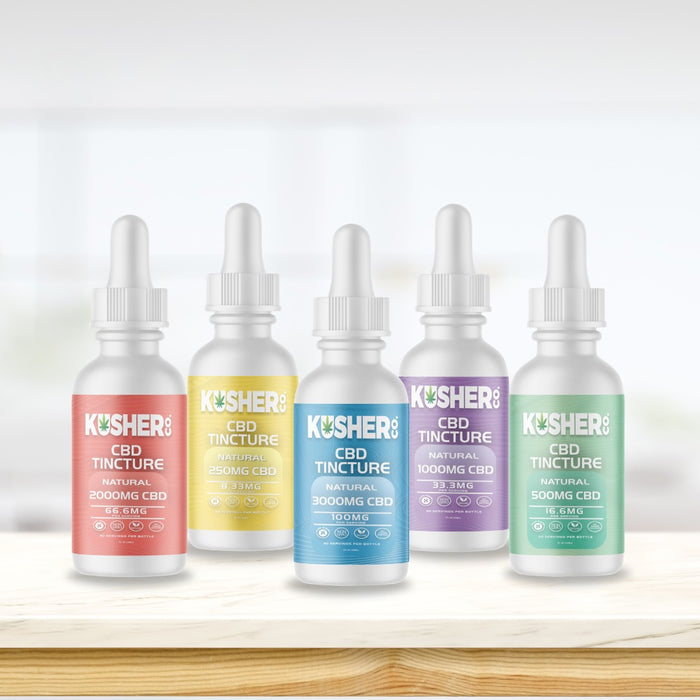
The Full Spectrum Kosher Hemp Extract CBD Tincture at $20 is the entry point. Tinctures avoid the gelatin and pectin compliance questions that gummies face. They also skip the flavor system and binding agent sourcing that add review layers to any chewable format. Most brands that pursue kosher certification start here, and some stop here, because going further into gummy formats costs substantially more in both time and certifier review. We did not stop there.
Next up is the Wellness Kosher Hemp Gummy (CBD only, $29.99). A single-cannabinoid gummy still carries real certification weight. The hemp source has to be verified. The gummy's binder, gelatin sourced from animals or pectin sourced from plants, must meet kosher standards for that specific derivative. Gelatin from non-kosher animal sources fails immediately and takes the whole product with it. Most fitness CBD brands moving into gummy format overlook this entirely, which is why their products never make it through a real certifier review. There is also the question of equipment: any shared manufacturing line that has processed non-kosher animal products requires full kosherization before it can be used, and that adds a facility-level audit burden on top of the ingredient-level one.
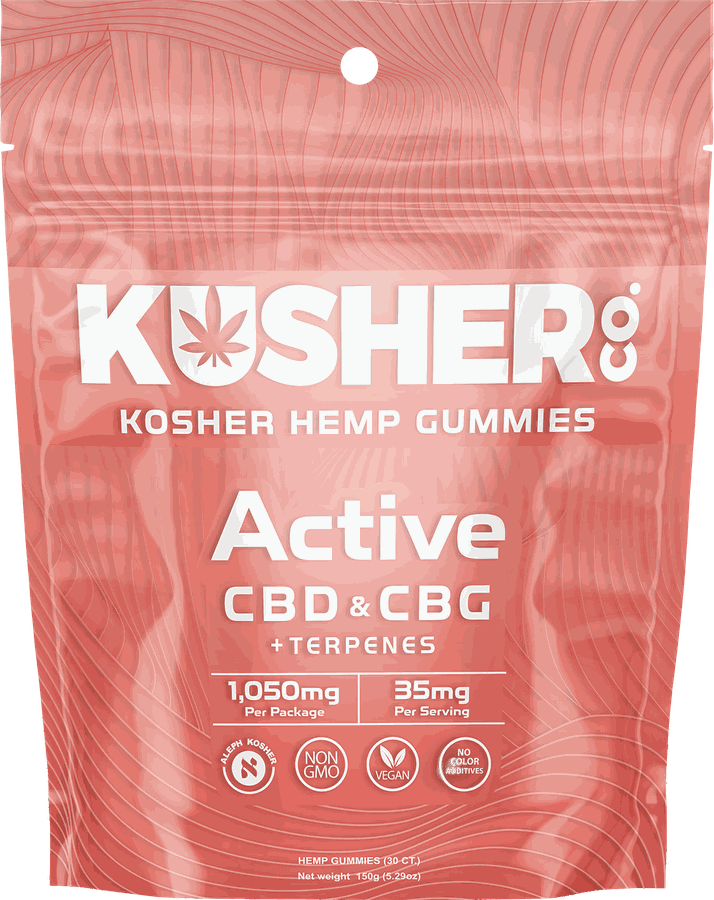
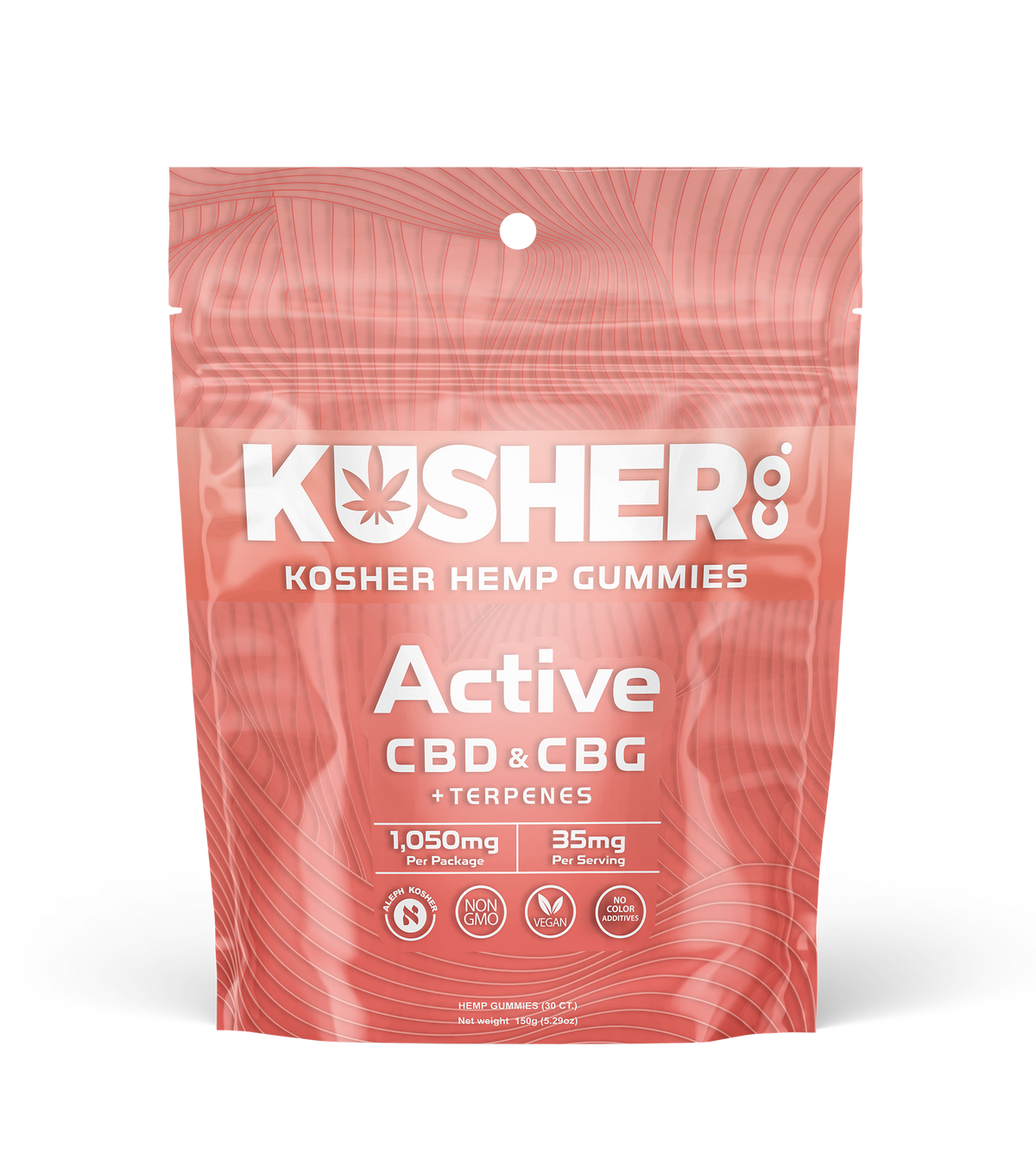
The Active Kosher Hemp Gummies (CBD+CBG & Terpenes, $29.99) add a layer. CBG is a distinct cannabinoid compound, and each compound in a co-formulation requires its own ingredient validation. The hemp source might be approved for CBD extraction but that approval does not automatically extend to a CBG fraction from the same plant. The certifier treats them as separate line items. Terpenes included in the formula create their own review point because their extraction process and carrier are both evaluated independently.
The Night Time Kosher Hemp Gummies (CBD+CBN & Melatonin, $29.99) are harder still. CBN adds another cannabinoid validation burden on top of CBD. But the real complexity driver here is melatonin. Melatonin is a sleep aid and a distinct ingredient category, and it requires its own separate kosher approval before it can be included in the final formula. That single co-ingredient extends certification timelines significantly. The result is a product that takes meaningfully longer to get through review than a CBD-only or even a CBD+CBG gummy, which is exactly why most brands do not bother.
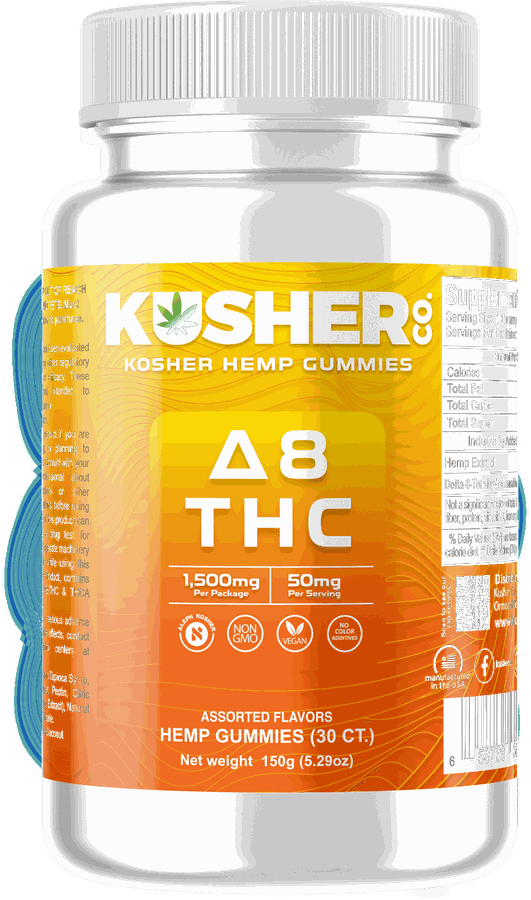
The D8 Kosher Hemp Gummies ($39.99) introduce cannabinoid synthesis into the equation. Delta-8 THC is not simply extracted from hemp the way CBD is. It goes through a synthesis pathway, typically an acid-catalyzed isomerization of CBD, and that pathway has to be audited as its own process step. The reagents used in the reaction, the equipment they contact, and the post-synthesis purification all enter the certifier's review. The hemp source gets reviewed. The synthesis gets reviewed. The gummy base gets reviewed. Three major review points before you have even considered flavor or finish. The price reflects that overhead directly. D8 Kosher Hemp Gummies are priced higher than CBD-only gummies at $29.99 because the certification work behind them is genuinely greater.
At the top of the ladder sit the Happy Hour Kosher Hemp Gummies (D8+D9 & Live Resin, $29.99). This is among the most demanding kosher SKUs in the hemp category. It carries a dual cannabinoid certification burden: both the D8 synthesis pathway and the D9 source require separate certifier review. Live resin extraction adds a third layer. Live resin preserves the full terpene profile of the hemp plant in a way that standard CO2 extraction does not, which is part of what makes these gummies distinct from anything else in the lineup. But that extraction method uses solvents, and the solvent process gets its own audit. A certifier reviewing this product is not running one review. They are running several in sequence, any one of which, if it fails, returns the entire product to the beginning of the process. These are age-restricted to 21 and up, and we carry them because the demand for full-spectrum, live-resin kosher gummies is real among experienced users.
When the Usual Advice Does Not Hold
The standard guidance you will read elsewhere is that kosher certification is a straightforward quality proxy: if a product has it, the brand is serious, and if it does not, the brand cut corners. That is mostly true. But there is a specific case where it breaks down, and it is worth naming.
A brand can hold legitimate kosher certification on one SKU, often the simplest tincture in their lineup, and use that certification as implied cover for their entire catalog. The certification is real. The product that holds it is genuinely compliant. But the multi-cannabinoid gummies, the sleep formulas, the topicals, none of those are certified, and a casual shopper reading the brand's homepage would never know the difference. The kosher logo appears in the header, the brand talks about their "kosher standards," and the uncertified products benefit from an association they have not earned.
The tell is specificity. A brand with real kosher certification across a product line can name which certifying agency reviewed which SKU. They can tell you whether the D8 synthesis was reviewed or just the hemp source. If that level of detail is not available, the certification footprint is probably narrower than it looks. This is not a hypothetical problem in the fitness CBD space. It is common enough that it is worth asking about before you buy.
Why Topicals Are a Different Kind of Hard
Kosher certification for topicals does not follow the same logic as gummies or tinctures, and the difference is worth understanding if you are shopping our pain relief line.
With a gummy, the certification challenges are mostly about what you are consuming: cannabinoid synthesis, binding agents, co-formulation ingredients. With a topical, the cannabinoid itself is often the simpler part. What complicates topical certification is every botanical co-ingredient alongside the CBD.
Take the Cooling Pain Relief Gel at $25. The formula includes rosemary extract, thyme extract, tea tree, and mint alongside 500mg of CBD oil. Each of those botanical ingredients is a separate line item in a kosher review. Rosemary extract is not automatically kosher. Thyme extract is not automatically kosher. The extraction solvent used to produce those botanicals, the equipment that processed them, the facility that handled them, all of it enters the conversation. The CBD is not the obstacle. The herb matrix around it is.
The Heating Relief Stick at $20 runs into the same dynamic. It carries 500mg of CBD oil alongside coconut oil, shea butter, mint, eucalyptus, and tea tree oil. Shea butter has its own sourcing and processing questions in a kosher context. Eucalyptus and tea tree oil require individual botanical verification. The Cooling Relief Stick at $20 has a similar botanical profile. The Joint and Muscle Roll-On at $20 adds menthol to the mix, and menthol, whether naturally derived or synthetic, requires its own verification pass.
The reason most fitness CBD brands do not carry kosher-certified topicals is that the per-ingredient audit load is high relative to a product category where margins are already tighter. Getting a botanical-rich topical through kosher certification means walking every herb, every extraction process, and every carrier through review individually. It is time-consuming and expensive. We carry these topicals as part of the lineup, though they are not listed among our kosher-certified products, which is the honest distinction to make. The kosher certification we carry sits on the gummies and the tincture. We are telling you that plainly because it matters, and because you deserve to know exactly what you are buying.
What This Actually Means for a Fitness Buyer
Here is the practical translation for someone managing muscle soreness, joint aches, or sleep problems and trying to figure out whether kosher certification matters to them personally.
Kosher certification is not primarily an ethical or religious signal in this context, though it is that too for the people who need it. For a fitness buyer, the more relevant thing is what the certification process forces a brand to do operationally. Every ingredient gets traced. Every processing step gets reviewed. Every supplier gets validated. The mistake most people make is assuming that a brand's third-party lab result for cannabinoid content tells the same story. It does not. A COA tells you what ended up in the product. A kosher certification tells you where every input came from and how it was handled before it got there. Those are different questions, and only one of them requires a brand to have actually built a traceable supply chain.
For most active people, that traceability is what matters at a practical level. Formulation consistency. Meaning the product you buy this month is built from the same verified inputs as the one you bought last month. Depends on supply chain discipline, not just testing. A brand that has gone through kosher certification on a D8+D9 live resin gummy has, by definition, had its sourcing and processing scrutinized at every step. That is not a guarantee of a particular effect. But it is a meaningful signal about whether the brand is operating with that level of rigor across the board.
If you need a kosher product for religious reasons, the certified line is the answer and you can buy with confidence. If you are a fitness buyer who wants the supply-chain signal without the dietary requirements being relevant to you, the same products apply. The Full Spectrum Kosher Hemp Extract CBD Tincture at $20 is where to start if you want the simplest on-ramp. The Wellness Kosher Hemp Gummies at $29.99 are the next step if you prefer a chewable format. From there, the complexity and the co-formulation ingredients scale in ways this article has laid out, and you can match the product to what you actually need.
One honest note on the topicals: they are effective products with real formulations, but they are not in the kosher-certified tier. If kosher certification matters to your purchase decision, stick to the gummy and tincture line. If you want targeted topical relief and the certification piece is not your priority, the roll-ons and gels are solid options for what they are. Both things can be true at once.
The bottom line is this: kosher-certified CBD at the gummy level is genuinely hard to do, and most brands do not do it. We built a lineup that spans the full range from tincture to live resin gummy because the demand is real and the rigor is the point. The label means the work was done. That is worth something, and we think it is worth being specific about why.
Still have questions about which product fits your situation? These are the ones that come up most often before people place their first order.
Frequently Asked Questions
Does kosher certification mean a CBD product is stronger or more effective?
No, kosher certification does not directly affect potency or the effect profile of a CBD product. What it does is verify the sourcing and processing of every ingredient in the formula. The practical benefit for a fitness buyer is supply-chain traceability and formulation consistency. Meaning the inputs are validated at every step, not just tested at the end. A COA tells you what ended up in the bottle. Kosher certification tells you where everything came from and how it was handled to get there. Those are related but distinct quality signals.
Why are the D8 Kosher Hemp Gummies priced higher than the CBD-only Wellness Gummies?
The D8 Kosher Hemp Gummies are $39.99 compared to $29.99 for the CBD-only Wellness Gummies, and that difference reflects real certification overhead. Delta-8 THC goes through a synthesis pathway rather than simple extraction, and that synthesis process requires its own certifier audit on top of the hemp source review and the gummy base review. Three major review stages instead of one or two adds cost and time that is built into the final price. You are paying for the additional certification work, not just the cannabinoid itself.
What makes the Happy Hour D8+D9 Live Resin Gummies the hardest product in the lineup to certify?
The Happy Hour Gummies carry four distinct certification burdens: the hemp source, the D8 synthesis pathway, the D9 source, and the live resin extraction process with its associated solvent audit. Standard CO2 extraction does not trigger a solvent review, but live resin extraction does. Each of those review stages can fail independently and return the entire product to the beginning of the process. That layered complexity is why D8+D9 live resin is among the most demanding kosher SKUs in the hemp category. These products are also age-restricted to 21 and up.
Why does melatonin make the Night Time Gummies harder to certify than a plain CBD+CBN gummy would be?
Melatonin is a distinct ingredient category, a sleep aid, not a cannabinoid or botanical extract, and it requires its own separate kosher approval before it can be included in a final formula. The certifier does not extend the hemp source approval or the cannabinoid validation to cover melatonin. It goes through its own review as an independent ingredient. That added approval step extends the overall certification timeline significantly, which is why most brands that attempt kosher CBD gummies skip the co-formulation complexity of a CBD+CBN+melatonin product entirely.
Are the topical pain relief products, the gels and roll-ons, also kosher-certified?
No. The Cooling Pain Relief Gel, Heating Relief Stick, Cooling Relief Stick, and the roll-on products are not in the kosher-certified tier. Kosher certification in our lineup covers the gummy products and the Full Spectrum Kosher Hemp Extract CBD Tincture. The topicals carry real formulations, 500mg of CBD oil with botanical co-ingredients like rosemary, thyme, menthol, eucalyptus. But each of those botanical ingredients would require its own individual kosher review, and those products have not been put through that process. If kosher certification is a purchasing requirement for you, stay with the gummies and the tincture.
If I don't keep kosher, does kosher certification on a CBD product still mean anything for me?
Yes, practically speaking. Kosher certification forces a brand to trace every ingredient through its sourcing and processing chain, which is more demanding than a standard third-party lab test. A lab result tells you the cannabinoid content in the finished product. Kosher certification tells you that every input, the hemp source, the synthesis process, the binder, any co-formulation ingredient. Was reviewed and approved at each step. For a fitness buyer who cares about formulation consistency from batch to batch, that supply-chain discipline is the relevant signal, regardless of the dietary dimension of the certification.
Which kosher CBD product should I start with if I've never tried this category before?
The Full Spectrum Kosher Hemp Extract CBD Tincture at $20 is the most straightforward starting point. It avoids the gummy-specific complexity of binders and flavoring, keeps the ingredient list simple, and gives you a full-spectrum hemp extract with the kosher certification intact. If you prefer a chewable format, the Wellness Kosher Hemp Gummies (CBD only, $29.99) are the next simplest option. Both let you get a baseline sense of how your body responds before moving into the multi-cannabinoid or co-formulation products like the CBG blend, the CBN+melatonin gummy, or the live resin options.
Ready to pick one? Browse Kosher Hemp Gummies.