News · 18 August 2026
What Active Really Means in Kosher Hemp Gummies and Who They Are For
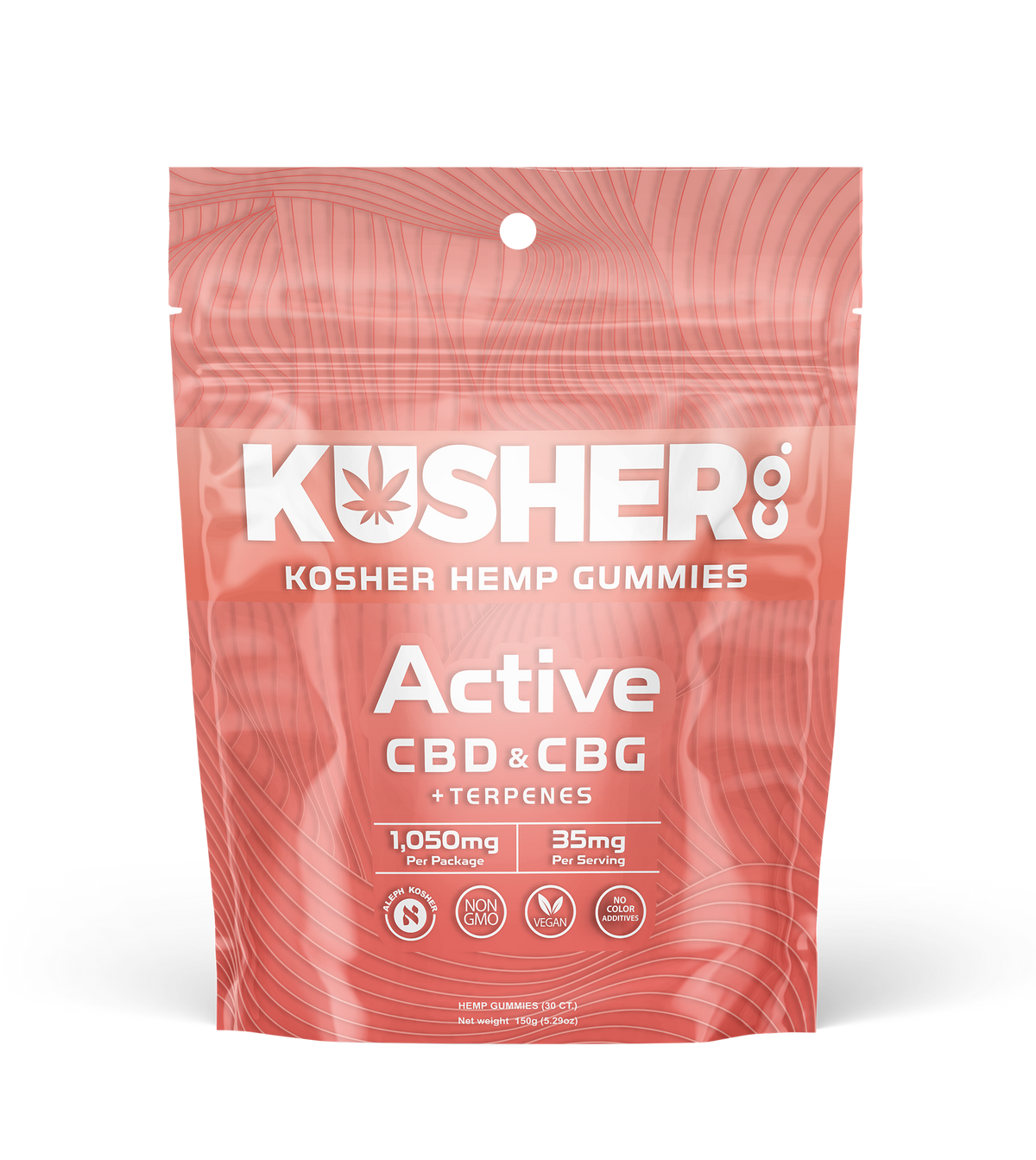
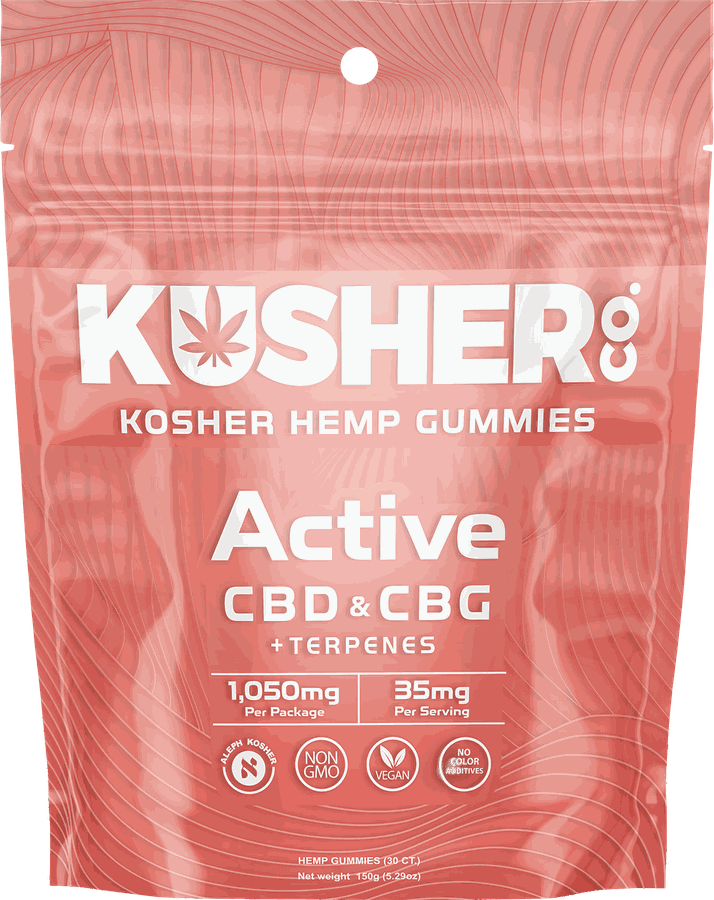
Active is the name of a formula, not a description of what the gummies do to you. Active Kosher Hemp Gummies at $29.99 carry CBD plus CBG plus terpenes, and the word on the front tells you where the product sits in our range rather than making a promise about performance. We would rather explain the formula than the marketing.
What actually distinguishes it is CBG, which is a separate cannabinoid with a genuinely unusual place in hemp chemistry. Understanding where it comes from explains why it appears in fewer products, why it costs more to put in one, and who tends to go looking for it.
What the name is doing
Product names in this category are positioning, and treating them as anything more is how people end up disappointed.
We sell three gummy formulas at the same $29.99. Wellness, Active and Night Time. Those words describe how the range is organized, so a shopper can tell at a glance that three different formulas exist and roughly where each one is meant to slot into a day. They are labels on shelves, not statements about outcomes.
The honest reading of Active is the middle line of the range, built on the same CBD base as Wellness with a second cannabinoid added. That is a formula description, it is verifiable from the ingredients, and it does not require you to trust us about anything.
CBG is its own cannabinoid
The letters cause the same confusion here as everywhere else in this category, so it is worth being precise.
CBG is cannabigerol. CBD is cannabidiol. They share a chemical family and the CB prefix that marks it, and that is where the relationship ends. They are different molecules, produced along different routes, isolated by different means, and priced very differently as ingredients.
So Active is not Wellness with more of the same thing in it. It is Wellness with a second, different thing added. That distinction sounds pedantic until you notice that most of the confusion in this category comes from people treating all cannabinoids as strengths of one substance.
Why CBG is scarce, which is the interesting part
CBG has a place in the plant that none of the others share, and it explains most of what is odd about it commercially.
The plant does not build cannabinoids independently. It starts from a common precursor acid, CBGA, and enzymes convert that precursor into the acids that become the other cannabinoids as the plant matures. CBGA is the starting material, which is why it is sometimes described as the mother compound of the group.
The consequence is counterintuitive. A mature hemp plant has already converted most of its CBGA into other things, so very little is left over. The compound that everything else came from is the one that is hardest to find at the end. Producers who want meaningful amounts have to work with plants harvested at particular points, or with cultivars bred to leave more of it unconverted, or isolate it as a dedicated ingredient.
All three of those routes cost more than simply taking what the extract already contains. That is why CBG appears in fewer products, and why when it does appear, it was a decision rather than a happy accident.
Terpenes, and what they actually are
Terpenes are the aromatic compounds that give a plant its smell, and they are nothing like as exotic as hemp marketing makes them sound.
They are everywhere. The sharpness of a citrus peel, the smell of pine, the character of black pepper or lavender are all terpenes. They are not unique to hemp and they are not cannabinoids. They are volatile aromatic molecules, they exist across most of the plant kingdom, and hemp happens to produce a distinctive mixture of them.
What they contribute to a formula is the plant's character. A product built from an isolated cannabinoid with no terpenes in it has no particular smell or taste of its own. A product carrying the terpene fraction smells and tastes of the plant it came from, and that difference is immediate and obvious the moment you open the container.
The claim about terpenes we are not going to make
You will read elsewhere that terpenes work together with cannabinoids to change what the whole extract does, usually under the name entourage effect.
That is a hypothesis. It has a plausible mechanism behind it and some laboratory work pointing in its direction, and it is not established as fact. We include terpenes in both Wellness and Active because they carry the character of the plant and because a full extract keeps what the plant made rather than stripping it down to one isolated compound. That is a formulation position we can defend on its own terms.
Presenting an open question as a settled finding is exactly the thing that makes this category hard to trust. If the evidence firms up, the honest thing is to say so then rather than to say so now and be retroactively right.
Why Active is not the stronger option
The most common misreading of this range is that Active is Wellness turned up, and it is worth killing that idea directly.
Adding a second cannabinoid does not increase the first one. Active is not more CBD than Wellness. It is CBD alongside CBG, which is a different formula rather than a bigger dose of the same one. Somebody who wants more of the base is not solved by moving up a formula.
The price makes this clearer than any explanation. Both are $29.99. If Active were simply a stronger version of Wellness, it would cost more, because more of an expensive ingredient costs more to put in. Identical pricing across the range is a signal that these are alternatives rather than tiers.
Who actually reaches for it
Watching what people buy and what they ask before buying, a pattern shows up.
The people who choose Active are usually not new to the category. They have generally used a plain CBD product already, formed a view about it, and gone looking for something with a second component in it. The question they arrive with is almost always some version of what else is available, rather than what should I start with.
The second group is people who read ingredient lists for their own sake. CBG is uncommon enough that it attracts attention from anybody who tracks what is in what, and a certified product carrying it narrows the field a great deal.
The group that does not tend to choose it is people buying their first hemp product. Starting with a two cannabinoid formula means you have no baseline, and no way of telling which component you are responding to. That is not a rule, it is just an awkward place to start.
What certification covers in this formula
Kosher certification is our genuine differentiator and it is worth explaining what it actually means for a product like this one.
It covers every input rather than the headline ingredient alone. The hemp extract, the CBG, the terpene fraction, the gelling system, the sweetener, the coloring and the processing aids that never reach a front label. It has to hold across batches rather than being a one time audit, which means supplier relationships and paperwork that persist.
Almost nobody in this category has done that work, and the reason is not conspiracy. Certification is expensive, it constrains which suppliers you can use, and retrofitting it onto an existing formula is harder than building it in from the start. For a shopper who needs it, that reduces the available field to very few products, which is the whole point of it.
Format, and what a gummy does to this formula
The delivery format shapes the experience as much as the ingredient list does.
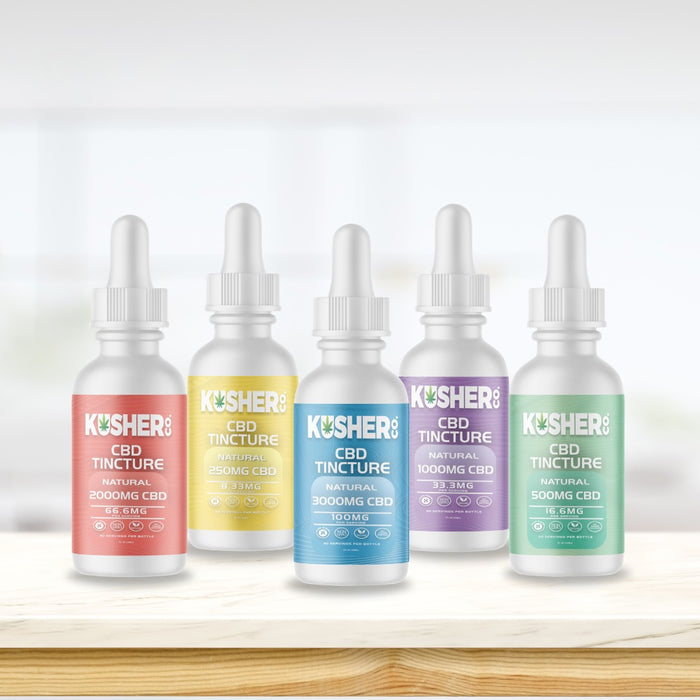
A gummy is swallowed, so everything in it goes through digestion. That is slower than a route like our Full Spectrum Kosher Hemp Extract CBD Tincture, which runs from $20.00 to $40.00 across five strengths and is measured by drops. The tincture gives you adjustment. The gummy gives you a fixed unit and nothing to measure.
Taste is the other half of it. Terpenes are aromatic by definition, so a formula that keeps them has a character you will notice. Whether you enjoy that character is personal, and it is the reason some people prefer a capsule format that hides everything and others specifically want to taste the plant.
Where it sits against the rest of the range
Every gummy formula we make is $29.99, which removes budget from the decision entirely.
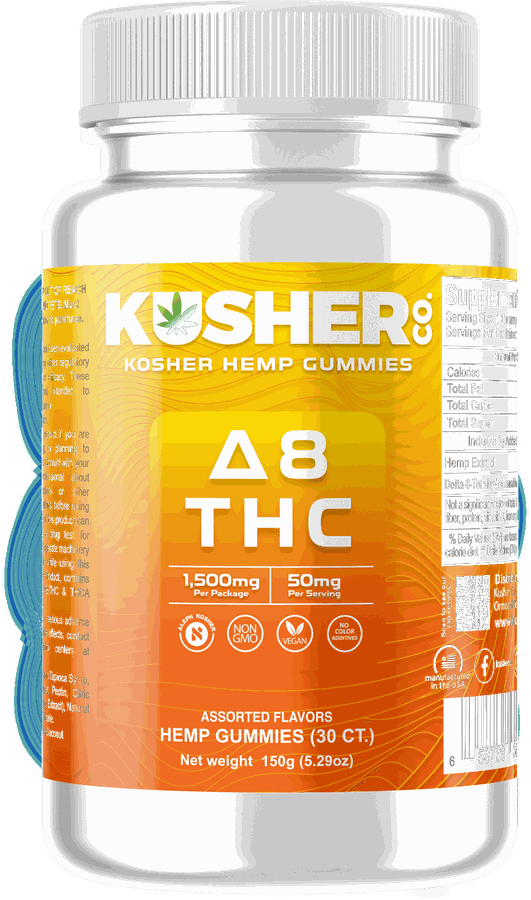
Wellness is CBD with terpenes. Active is that plus CBG. Night Time is CBD with CBN and melatonin, which is a different combination again rather than a further step up the same ladder. Happy Hour is built on Delta 8 and Delta 9 with live resin and total THC under 0.3 percent, which is different chemistry rather than a different level. D8 Kosher Hemp Gummies at $39.99 come in a jar format.
Read as a set, these are five answers to five different questions rather than a good, better, best ordering. The naming invites the ladder reading, and the pricing quietly contradicts it.
Why we do not sell a CBG only product
A fair question from anybody who has read this far is why the interesting ingredient is not sold on its own.
Part of it is cost. CBG is the expensive component in this formula by a wide margin, and a product built entirely from it would be priced well away from the $29.99 the rest of the gummy range sits at. Part of it is that we do not have evidence to offer about what an isolated cannabinoid would be like on its own, and we are not going to build a product around a question mark and let the price imply an answer.
The formulation position we do hold is that a full extract keeps what the plant made. Isolating one compound and discarding the rest moves in the opposite direction from that, which is a strange thing to do while also including the terpene fraction specifically because it preserves the plant's character.
How CBG shows up on labels in this category
There is a difference between an ingredient being present and an ingredient being an ingredient, and label reading in this category depends on spotting it.
A broad hemp extract may contain small amounts of several minor cannabinoids simply because they were in the plant. That is not the same as a product where a named cannabinoid was bought as a separate input and added at a known quantity. The first is whatever the harvest gave you. The second is a formulation decision that somebody paid for.
When CBG appears as its own line item alongside CBD rather than being folded into a phrase about a full spectrum extract, that is the signal it was added deliberately. Given how little of it a mature plant retains, trace amounts riding along in an extract and a deliberate addition are not remotely the same thing, even though a label can make them look similar at a glance.
Who should skip Active
If CBG means nothing to you and you have no particular interest in acquiring a second cannabinoid, Wellness at the same price is the more sensible purchase.
There is no penalty for buying the simpler formula. It is not the entry level version of a better product, it is the version without the extra ingredient, and if you did not want the extra ingredient then it is simply the correct one. Paying $29.99 for a component you have no view about is money spent on curiosity rather than on formula.
Equally, if what you want is an evening formula, neither of these is it. That is Night Time, and it is built around entirely different additions.
Bottom line
Active Kosher Hemp Gummies at $29.99 are CBD, CBG and terpenes, and the word Active describes where the formula sits in our range rather than what it will do for you. The reason to buy it is CBG, a genuinely separate cannabinoid that is scarce because the plant converts its precursor into everything else as it matures, which makes it a deliberate and costly ingredient wherever it appears. Terpenes carry the plant's character and we are not going to tell you they do more than that until somebody proves it. If CBG is not something you specifically want, buy Wellness at the same price and keep the difference in ingredients rather than in cost.
Frequently Asked Questions
Does Active mean these gummies do something energizing?
No. Active is the name of a formula and a position in our range, not a description of an effect. We sell three gummy formulas at the same $29.99 and the names tell a shopper that three different combinations exist, roughly where each one is meant to slot in. What the word actually signals here is CBD plus CBG plus terpenes, which is a verifiable fact about the ingredients rather than a promise about what happens after you take one.
What is CBG and how is it different from CBD?
CBG is cannabigerol and CBD is cannabidiol. They share a chemical family and the CB prefix that marks it, and that is the extent of the relationship. They are different molecules produced along different routes inside the plant, isolated by different means and priced very differently as ingredients. Active is not Wellness with more of the same thing in it. It is the same CBD base with a second, distinct cannabinoid added alongside it.
Why is CBG less common in hemp products?
Because the plant converts it away as it matures. Hemp starts from a common precursor acid, CBGA, and enzymes turn that precursor into the acids that become the other cannabinoids. By harvest, a mature plant has converted most of it, so very little remains. Producers who want meaningful amounts have to harvest at particular points, use cultivars bred to leave more unconverted, or buy it as a dedicated isolated ingredient. All three cost more than using what the extract already contains.
What are terpenes?
They are the aromatic compounds that give a plant its smell, and they are common across the plant kingdom rather than special to hemp. The sharpness of citrus peel, the smell of pine and the character of black pepper are all terpenes. They are not cannabinoids. In a formula they carry the character of the plant, which is why a product with the terpene fraction intact smells and tastes of hemp while one built from an isolated compound has almost no character of its own.
Is Active stronger than Wellness?
It is not stronger, it is different. Adding a second cannabinoid does not increase the amount of the first one, so Active is not more CBD than Wellness. The price is the clearest evidence of this. Both are $29.99, and if one were simply a bigger dose of the other it would cost more to make and would be priced accordingly. Identical pricing across the range means these are alternatives rather than tiers on a ladder.
Should I start with Active if it is my first hemp product?
Usually not, though this is advice rather than a rule. Starting with a two cannabinoid formula leaves you with no baseline, so if you form a view about it you have no way of telling which component you are responding to. Most people who choose Active have already used a plain CBD product, formed an opinion, and gone looking for something with a second ingredient in it. Starting simpler and adding a variable later gives you information that starting complicated does not.
Does the kosher certification cover the CBG and the terpenes too?
Yes. Certification looks at every input rather than the headline ingredient alone, so it covers the hemp extract, the CBG, the terpene fraction, the gelling system, the sweetener, the coloring and the processing aids that never appear on a front label. It also has to hold across batches rather than being a single audit. That is a demanding and expensive standard to maintain, which is why very few products in this category carry it at all.