News · 18 August 2026
Night Time Gummies vs Plain Melatonin: What the Hemp Formula Adds
If plain melatonin on its own already suits you, buy plain melatonin. A single ingredient supplement will cost less than our Night Time Kosher Hemp Gummies at $29.99, it comes in a wider spread of strengths, and you will not be paying for two components you did not ask for. We would rather say that first than bury it under a paragraph about our own product.
The real question is not which of these is better, because they are not the same kind of product. One is a commodity ingredient sold on its own. The other is a three part formula where melatonin happens to be one of the parts. Comparing them is comparing a single tool with a set, and the right answer depends entirely on whether you want the rest of the set.
What a plain melatonin supplement actually is
A single ingredient product is exactly what it says. One compound, a binder or a capsule shell to hold it, and nothing else in the formula doing any work.
Melatonin itself is a commodity. It is widely produced, it is inexpensive at the ingredient level, and it has been sold as a standalone supplement for a long time. That maturity is a genuine advantage. You can find it in a spread of strengths, in tablets, capsules, liquids and gummies, and the market is competitive enough that the price stays low.
What you get from that is precision and simplicity. One variable, adjustable, cheap, and if it does not suit you there is nothing else in the product to confuse the picture.
What ours is instead
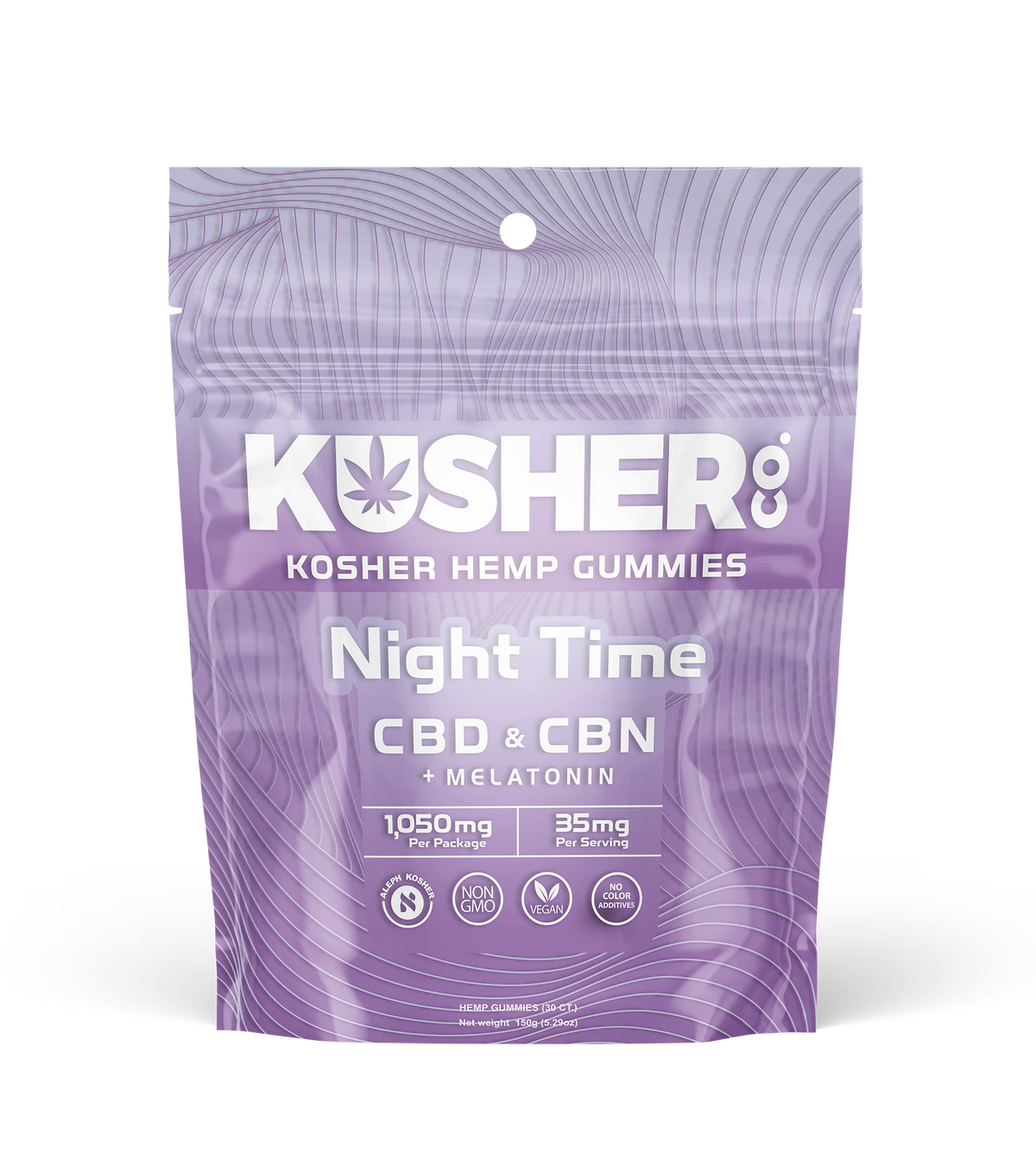
Night Time Kosher Hemp Gummies are CBD plus CBN plus melatonin at $29.99, and melatonin is one third of the story rather than the whole of it.
The other two are cannabinoids from the hemp plant. CBD is the base that runs through every gummy formula we make. CBN is a separate cannabinoid, added deliberately as its own ingredient. Neither is a filler, and neither is there to make the melatonin work harder. They are components in their own right that somebody has to buy, certify and put in.
So the fair comparison is not one ingredient against a better version of that ingredient. It is one ingredient against three, and the entire decision comes down to whether the other two are worth anything to you.
The honest case against buying ours
There is a real case here and we are not going to pretend otherwise.
If melatonin alone is what you want, a combination product is more than you need and it costs more. You are paying for hemp ingredients you did not want, in a formula that will not let you adjust them out. Every dollar of that goes toward something that is beside the point for you.
A single ingredient product is also easier to reason about. When there is one variable, you know what changed. When there are three, working out which one matters to you is guesswork, and you cannot separate them without buying different products anyway.
And the strength picture is different. Standalone melatonin exists across a range of strengths, so somebody who wants a smaller or larger amount can find it. A combination gummy fixes the proportion at the point of manufacture, and your only lever is how many you take.
The honest case for buying ours
The case rests on one thing, and it is not the melatonin.
If you want CBD and CBN in your evening routine as well, then the comparison stops being one product against another and becomes one purchase against three. Buying three separate items means three products, three costs, three sets of sourcing questions and a routine with three steps in it. Routines with three steps in them fall apart in a busy week. Routines with one step in them tend to survive.
The second half of the case is ratio. A single gummy delivers all three components in the same proportion every time. Assembling the same combination yourself from three products means re creating that relationship on every occasion, and getting it slightly different each time without noticing.
The third is certification, and this is the part that genuinely changes the comparison rather than just adding to it.
Where the kosher question actually bites
Kosher certification is the reason this comparison is not as lopsided as it first looks.
Certifying a combination product means every single input clears the bar, not only the headline ingredient. In our case that covers the hemp extract, the CBN, the melatonin, the gelling system, the sweetener and the processing aids that never appear on a front label. It has to hold batch after batch, not once.
If certification matters to you, then assembling your own combination from separate products means solving that problem three times over, with three suppliers, on three different sets of paperwork. That is a materially harder job than solving it once. For anybody who does not care about certification, this section is irrelevant and the case against a combination product stands unchallenged.
Price, and how to think about it properly
Ours is $29.99. A standalone melatonin supplement will generally cost less than that, and anybody telling you otherwise is not describing the market accurately.
Comparing those two numbers directly is the wrong calculation though. The right one is to compare $29.99 against the total of a melatonin product plus a CBD product plus a CBN product, all three of them certified, if that is the combination you actually want. Against that total, one product looks different.
Against a single melatonin tablet, one product looks expensive, and it is. Both of those statements are true at once, and which one applies to you depends on what you were going to buy in the first place.
The stacking question
Some people already own a CBD product and are wondering whether to add a plain melatonin to it rather than switching to a combination.
That is a reasonable position and it has a real advantage. You keep the dials. You can change the melatonin amount without touching the CBD, and change the CBD without touching the melatonin, which a fixed ratio gummy cannot do at all.
What it does not get you is CBN, which is the third ingredient and the one nobody stumbles into by accident. It also does not get you the convenience of a single item or a single certification. Stacking is the right answer for people who want control and are willing to manage more items to have it.
Format differences that are easy to overlook
A tablet and a gummy are not the same experience even when the ingredient inside them is identical.
Tablets are cheap to make, easy to split for a smaller amount, and taste of nothing. Gummies cost more to produce, cannot be halved with any accuracy, and carry taste, which is not a trivial detail. A hemp extract has a strong character of its own, and part of what a gummy does is make that character pleasant enough to repeat willingly.
Splitting is the one that catches people out. If your plan involves adjusting downward, a tablet supports that and a gummy does not.
How to work out which one you need
There is a sensible order to this, and it is not the order most people follow.
- Start with the cheapest thing that could answer your question. If that is plain melatonin, start there.
- Give it long enough to form an opinion rather than swapping after two days.
- If it suits you, stop. There is no argument for adding ingredients to something that is already doing what you wanted.
- If you find yourself separately wanting a hemp product alongside it, that is the moment the combination becomes the cheaper and simpler option rather than the more expensive one.
- Change one thing at a time. Adding two new products in the same week means you learn nothing about either.
Why three part formulas are rarer than they look
There is a production reason behind the price gap that has nothing to do with margin.
A single ingredient tablet is close to the simplest product a supplement maker can produce. One input, one supplier, one specification to hold. Adding a second and third ingredient does not add cost in a straight line, because each one brings its own supplier, its own testing, its own consistency problem and its own way of interacting with the base the product is made from.
Gummies compound that further. A gummy has to hold its shape, hold its ingredients evenly through the batch, survive shipping in warm weather and taste of something people will accept. Every ingredient you add is another thing that has to behave inside that system.
None of that makes a combination better. It explains why the two products sit at different prices, and why the correct comparison is against the whole set of things you would otherwise buy rather than against the cheapest single item on the list.
The variable nobody counts, which is whether you keep it up
Adherence decides more outcomes than formulation does, and almost nobody factors it into a purchase.
A routine with one item survives travel, a busy week and a disrupted evening. A routine with three items survives none of those reliably, because each one is an opportunity to skip a step, run out without noticing or leave part of it behind in another bag.
That is the quiet argument for a combination product, and it is a behavioral argument rather than a chemical one. If you were genuinely going to take three separate things every day without fail, the separate purchases are better on cost and much better on control. If you know yourself well enough to doubt that, one item that contains all three is more likely to actually be used.
We would rather make that argument honestly than pretend the ingredients interact in ways nobody has established.
Where the tincture fits into this comparison
There is a third option that people considering this pair rarely think about.
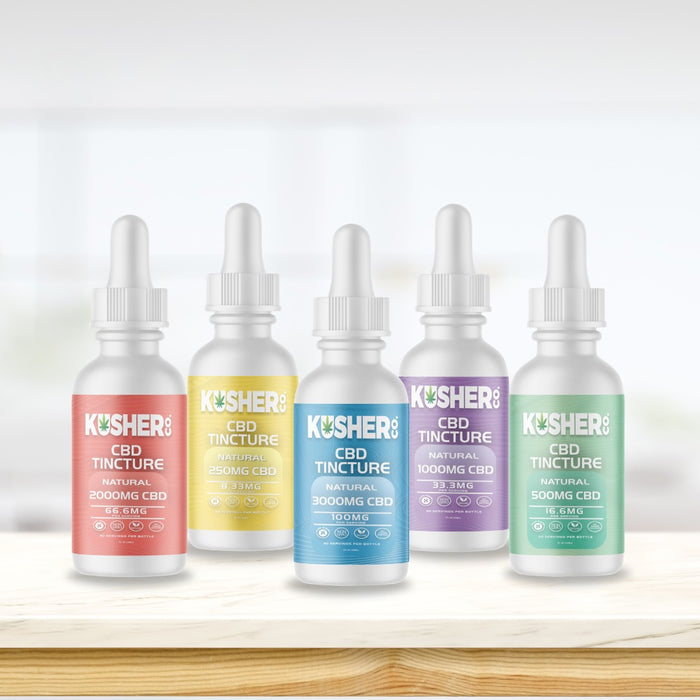
Our Full Spectrum Kosher Hemp Extract CBD Tincture runs from $20.00 for 250mg to $40.00 for 3000mg across five strengths, and it is measured by drops rather than by fixed unit. Somebody who wants a plain melatonin for the melatonin and a hemp product with adjustable amounts alongside it can build that combination from two items and keep both dials.
What that route does not include is CBN, which exists in our range only in the Night Time formula. So the three way choice is genuinely three different shapes. Fixed ratio and all three ingredients in one item. Two items with full control and no CBN. Or one cheap item with one ingredient and nothing else at all.
What neither product is being claimed to do
Nothing above says what melatonin does, or what CBD or CBN do, and that is on purpose.
Claims about treating, preventing or fixing anything belong to a regulated category that a hemp gummy is not in, and they require evidence a supplement company does not have. Plenty of copy in this category implies those claims with careful wording that stops just short of stating them. We think that is worse than silence, because it presents a guess with the confidence of a finding.
What is left when you strip the claims out is still a real basis for choosing. Ingredients, origins, certification, format, ratio, price. That is enough to make a decision on, and it has the advantage of being true.
Who each one is for
Plain melatonin is for the person who wants one ingredient, wants to adjust it, wants to spend as little as possible, and has no interest in hemp.
Our Night Time Kosher Hemp Gummies are for the person who wants CBD and CBN as well, wants them in a fixed proportion they do not have to think about, wants one item in the routine rather than three, and cares that the certification covers all of it rather than part of it.
Between those two descriptions, most people can tell which sentence is about them. If you read the first one and nodded, the answer is the cheaper product and we are content with that.
Bottom line
Buy plain melatonin if melatonin alone is what you are after. It costs less, it comes in more strengths, it can be split, and a combination product would be selling you two ingredients you have no use for. Buy our Night Time Kosher Hemp Gummies at $29.99 if you want CBD and CBN in the picture too, because at that point one certified product with a fixed ratio beats three separate purchases on cost, on effort and on how likely you are to keep it up. The deciding question is not which product is better. It is whether you want the other two ingredients, and only you know that.
Frequently Asked Questions
Is a plain melatonin supplement cheaper than the Night Time gummies?
Generally yes, and we are not going to pretend otherwise. Melatonin is a commodity ingredient with a mature and competitive market behind it, so a single ingredient product is inexpensive to make and sells accordingly. Ours is $29.99 and carries three components rather than one, along with certification covering every input. The comparison only turns in our favor when you were going to buy hemp products alongside the melatonin anyway, at which point one item beats three on total cost.
What do the other two ingredients add?
CBD and CBN are both cannabinoids from hemp, and they are separate ingredients rather than support for the melatonin. CBD is the base that runs through all our gummy formulas. CBN is its own distinct cannabinoid, added deliberately as a line item rather than appearing by accident in an extract. What they add is not a stronger melatonin product. It is two more components, which is only worth paying for if you wanted those components.
Can I just take a plain melatonin alongside a CBD product?
You can, and it has a genuine advantage over a combination gummy. Keeping them separate means you keep the dials, so you can change one amount without touching the other. A fixed ratio product cannot do that at all. What stacking does not give you is CBN, which is a third ingredient rather than a stronger version of the first two, and it does not give you one certification covering everything or the simplicity of a single item in your routine.
Why does the kosher certification matter for this comparison?
Because it is the part that gets harder rather than easier when you split a combination into separate purchases. Certification covers every input in a product, not only the headline ingredient, and it has to hold batch after batch. Assembling your own three part combination from separate certified products means solving that sourcing problem three times with three suppliers. Solving it once is materially simpler. If certification is not something you care about, this consideration does not apply to you.
Can I take half a gummy to get less melatonin?
Not with any accuracy, and this is a real advantage tablets have over gummies. A tablet can often be split cleanly, which supports adjusting downward. A gummy cannot be divided reliably, and cutting one does not divide the three ingredients evenly either. If your plan involves fine adjustment, a single ingredient product in a splittable format supports that better than any combination gummy will, including ours.
How long should I try one before deciding?
Long enough to form an opinion rather than a first impression, and without changing anything else at the same time. The most common mistake we see is adding two new products in the same week, which leaves you unable to attribute anything to either one. Start with the cheapest product that could answer your question, keep everything else steady, and only add a second variable once you have a settled view on the first.
If melatonin alone works for me, is there any reason to switch?
No, and we would rather say that plainly. There is no argument for adding ingredients to something that is already doing what you wanted from it. The only situation where switching makes sense is if you separately find yourself wanting hemp ingredients in the same routine. At that point a combination product becomes the simpler and often cheaper option compared with buying and managing several items, which is a different reason from the one you started with.