News · 18 August 2026
Wellness Gummies vs Active Gummies: Same CBD Base, Different Formulas
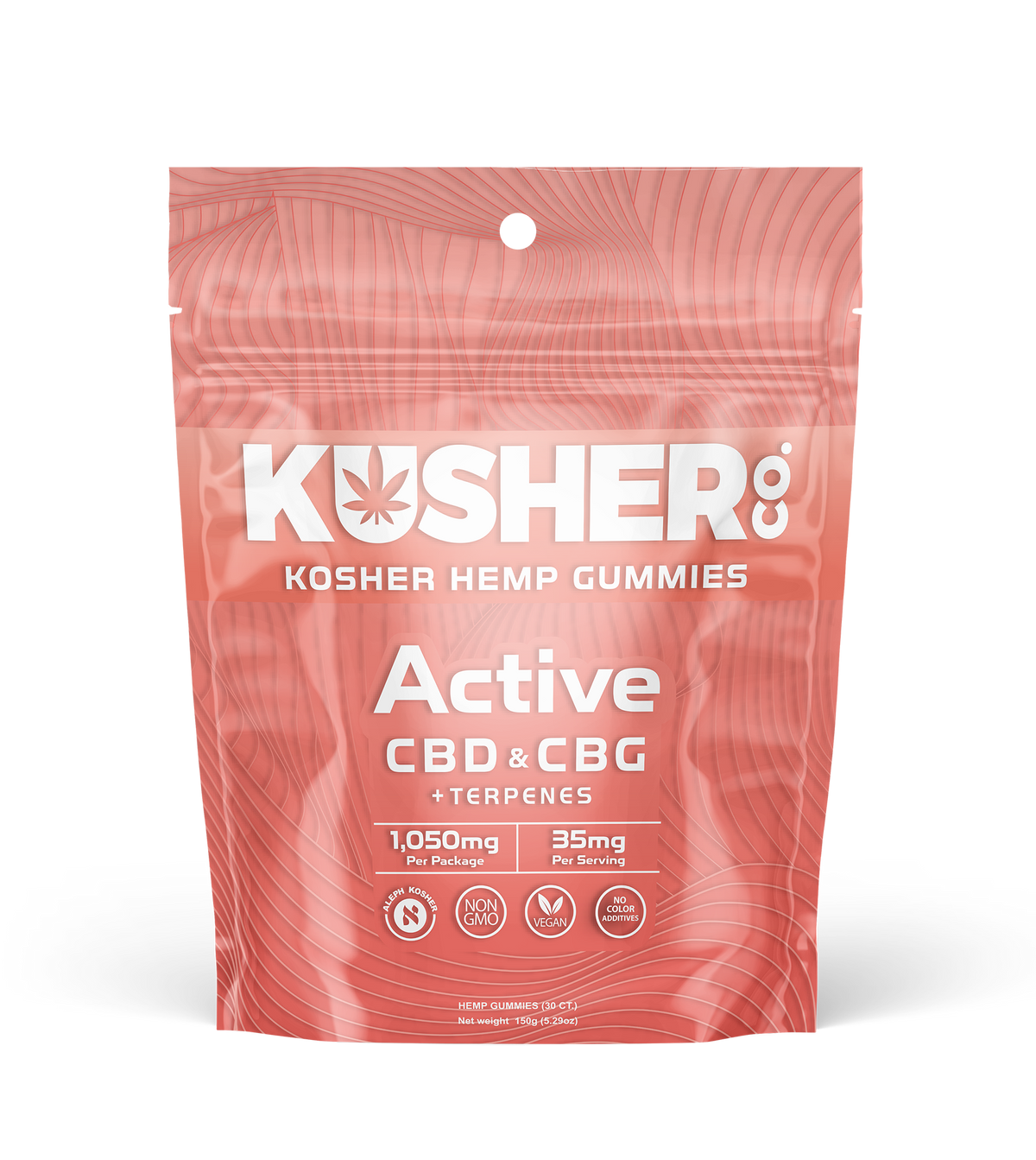
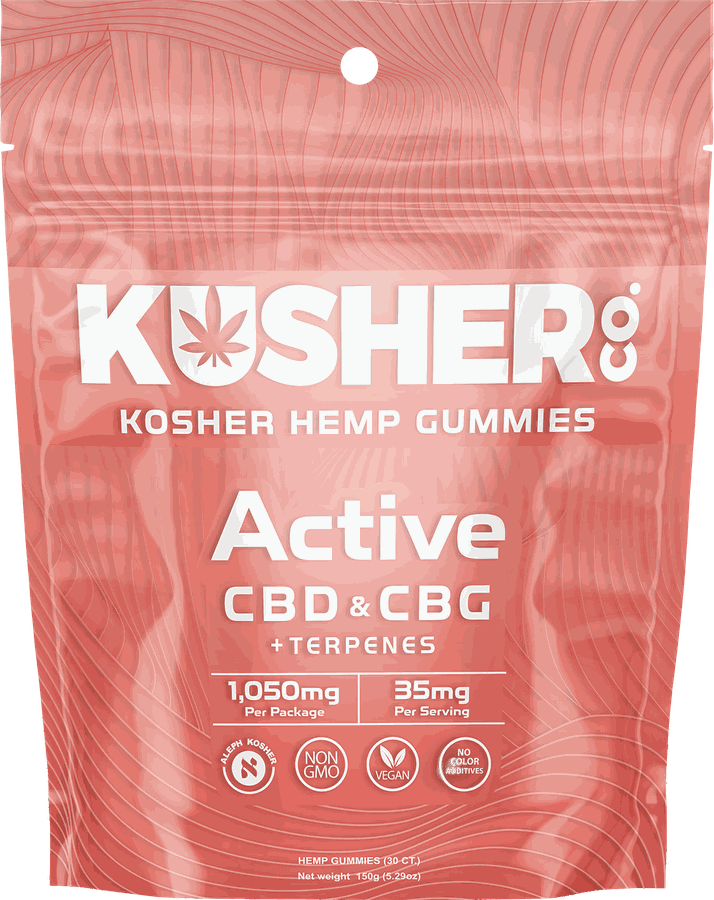
One ingredient separates Wellness Kosher Hemp Gummies from Active Kosher Hemp Gummies, and that ingredient is CBG. Both are $29.99, both are kosher certified, both are gummies built on the same CBD base with terpenes. Active adds a second cannabinoid. Everything else stays put.
That makes this the cleanest comparison in our range and the only one where you can genuinely learn something about yourself from the outcome. When two products differ in one variable and match on price, format and certification, choosing between them is a real test rather than a coin toss dressed up as a decision.
What is identical, which is nearly everything
Start with the overlap, because the overlap is what makes the comparison worth running.
Same price at $29.99. Same format, a gummy that is swallowed and passes through digestion rather than being held under the tongue. Same kosher certification, covering every input rather than the headline ingredient. Same CBD base. Same terpene fraction carrying the character of the plant.
Five points of agreement is unusual between two products in any category. Most comparisons on a store shelf move three or four things at once, which is why they teach you so little. Here, four of the five variables are pinned.
What actually differs
CBG. That is the entire list.
Wellness is CBD with terpenes. Active is CBD with CBG and terpenes. The second product is the first product with one additional cannabinoid in it, and nothing has been removed or reduced to make room.
CBG is not a stronger form of CBD or a variant of it. It is cannabigerol, a distinct molecule, and it is uncommon because hemp converts most of its precursor into other cannabinoids as the plant matures. Wherever it turns up as a line item, somebody chose to buy it and add it.
Why a single variable is worth so much
Most product comparisons are useless because too much moves at once.
Change the price, the format and the formula together and any conclusion you draw is unattributable. You preferred one, but you cannot say whether that was the ingredient, the taste, the routine it fit into or the fact that it cost more and you expected it to be better.
Here, if you use one and then the other and notice a difference, the list of things that could have caused it is short. That is as close to a controlled comparison as anybody shopping can realistically get, and it is worth taking advantage of rather than buying both at once and blending them into a single impression.
How to run the comparison properly
The comparison only pays off if you do not sabotage it, and most people sabotage it in the same few ways.
- One at a time. Running both in the same week produces one blended impression and no information.
- Long enough to form a settled view rather than a first reaction. Swapping after two days tells you about novelty.
- Same time of day, same relationship to meals, same rough circumstances. Every one of those is a variable you control for free by keeping it steady.
- Do not add anything else new at the same time. A second new product in the same period makes the whole exercise unattributable.
- Finish the first before starting the second, so you are comparing settled impressions rather than a settled one against a fresh one.
None of that is complicated. It is just the discipline of changing one thing, which almost nobody applies to what they buy.
Why the matched price changes the decision
Identical pricing is not an accident and it takes an entire category of reasoning off the table.
When two products differ in price, most people resolve the choice on budget and then explain it to themselves as a formula preference afterward. At $29.99 either way, that route is closed. Nobody is choosing Wellness because it is the affordable one or Active because the premium must mean something.
Matched pricing also tells you something about the products. Active is not positioned as the upgrade. If it were a stronger version of the same formula it would cost more, because more expensive ingredient means higher cost of goods. Same price across both means these are alternatives, not tiers.
What adding CBG does not mean
Three misreadings come up often enough to be worth naming.
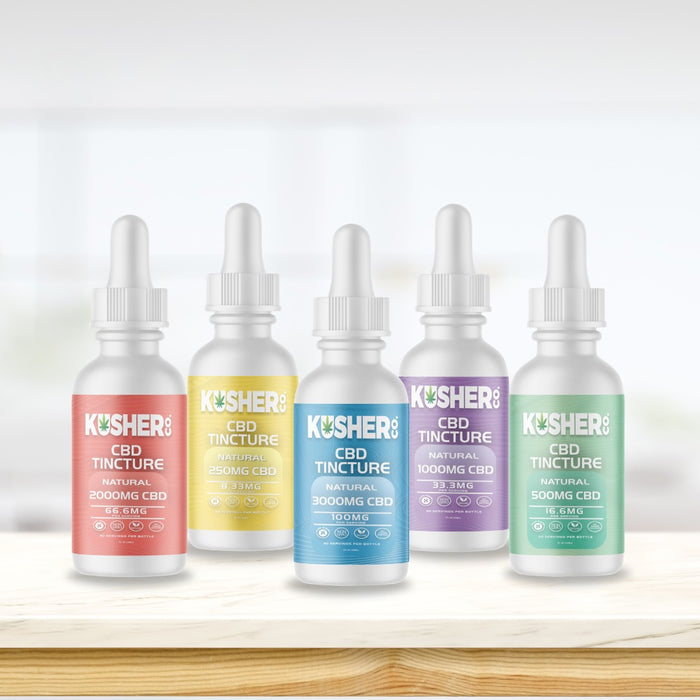
It does not mean more CBD. The base is not increased by the addition of a second cannabinoid, so somebody who wants a larger amount of the base ingredient is not helped by moving formulas. That is a different question with a different answer, likely involving the tincture and its five strengths from $20.00 to $40.00.
It does not mean fewer terpenes. Both formulas carry the terpene fraction. Nothing was displaced to make room for the CBG.
And it does not mean a broader product. Active is not a full spectrum version of Wellness. It is a formula with one named additional cannabinoid in it, which is a specific and narrow difference rather than a general upgrade in completeness.
Which one to buy first, and we do have an opinion
Start with Wellness unless you have a specific reason not to.
The argument is about information rather than product quality. Wellness is the simpler formula, so it gives you a baseline. Once you have a settled view of the CBD and terpene base on its own, moving to Active adds exactly one variable and any difference you notice has one obvious candidate behind it. Do it the other way round and your first experience contains two ingredients you cannot separate.
The counterargument is real and we will not hide it. If you are already familiar with plain CBD products from elsewhere in your life, that baseline exists and repeating it is spending $29.99 to learn something you already know. In that situation, going straight to Active is the reasonable move.
When to start with Active instead
Two situations justify skipping the baseline.
The first is prior experience. Someone who has used plain CBD products for a while and formed a settled view already has the control condition. What they lack is the CBG comparison, and that is exactly what Active provides.
The second is curiosity about the ingredient itself. CBG is uncommon and a certified product containing it is rarer still. If the reason you are here is that you read the ingredient list and CBG is the thing that caught your eye, then buy the product with the thing you came for. Buying the other one first to be methodical is methodology for its own sake.
What the format contributes, equally to both
Both are gummies, so the format is another pinned variable rather than something to weigh.
A gummy is swallowed, which means everything in it goes through digestion before it goes anywhere. That is slower than a route held under the tongue, and it is why our Full Spectrum Kosher Hemp Extract CBD Tincture exists as a separate option at $20.00 to $40.00 across five strengths for people who want to measure by drops instead.
What the gummy format gives you in return is a fixed unit and nothing to measure, plus taste. Terpenes are aromatic by definition, so both of these formulas carry a character you will notice. Some people specifically want to taste the plant and others would rather a format that hides it entirely. That preference applies to both products identically, so it is not a reason to pick one over the other.
Terpenes are in both, so stop weighing them
The terpene fraction appears in both formulas, which means it cannot be the deciding factor between them.
This is worth saying because terpenes get heavy treatment in hemp marketing, and somebody reading two ingredient lists might reasonably try to weigh them. Here they are a constant. They give both products the character of the plant, which you will notice in the smell and the taste, and they are not the variable under test.
What we will not tell you is that terpenes and cannabinoids work together to change what the extract does. That idea exists, it has a plausible mechanism, and it is not established. We keep the terpene fraction because a full extract retains what the plant made rather than stripping it to a single isolated compound, and that is a formulation choice we can defend without leaning on an unsettled hypothesis.
What can wreck your comparison without you noticing
A few things quietly corrupt the test, and knowing them in advance is most of the defense.
Expectation is the largest one. If you paid attention to the names, Active carries an implication that Wellness does not, and that implication colors what you notice. The names describe positions in our range rather than outcomes, and it is worth reminding yourself of that before you start.
Timing is the second. Comparing one product used on quiet evenings against another used during a chaotic week compares the weeks, not the products. Try to run both under similar conditions or accept that the result is noisy.
Order is the third and it is unavoidable. Whichever you use second arrives with the first one as context, and novelty attaches to whatever is new. You cannot eliminate that, but you can know it is there when you read your own conclusion.
Certification is a constant here too
Both formulas carry the same kosher certification, which is worth saying explicitly because it is another variable that does not move.
Certification covers every input rather than the headline ingredient. In Active that includes the CBG, and in both it includes the hemp extract, the terpene fraction, the gelling system, the sweetener, the coloring and the processing aids that never appear on a front label. It has to hold across batches, which means ongoing supplier relationships rather than a one time audit.
For a shopper who needs certification, this pair is a rare situation. Two certified products, one variable between them, matched on price. In most of this category, needing certification narrows the field so hard that comparison is not available at all and you take whatever qualifies.
What this comparison cannot tell you
The test is clean on the variable and silent on outcomes, and that limit is worth naming before you run it.
We are not telling you what CBD does, what CBG does, or what either formula will be like for you. Claims about treating, preventing or improving anything belong to a regulated category these products are not in, and they require evidence a hemp gummy does not have. A great deal of copy in this category implies those claims through careful wording that never quite states them, which we think is worse than saying nothing at all.
So what the comparison actually establishes is a preference. You will find out which formula you would rather buy again, and whether the presence of a second cannabinoid registers with you at all. That is a genuinely useful thing to know before you commit to buying something repeatedly, and it is a smaller claim than the one most product comparisons pretend to settle.
Neither of these is the evening formula
People sometimes arrive at this comparison when the product they actually want is a third one.
Wellness and Active are both built on the same base and differ by one cannabinoid. Night Time Kosher Hemp Gummies at the same $29.99 are a different construction entirely, carrying CBN and melatonin rather than CBG, with melatonin not being a cannabinoid or a hemp ingredient at all.
If your question is about an evening product, comparing these two will not answer it, because the ingredient that distinguishes the evening formula is not present in either. Choosing between Wellness and Active is a question about the daytime end of the range, and the fact that all three sit at the same price makes it easy to mistake a formula difference for a position on a ladder.
Why we advise against alternating
Some people buy both at $29.99 each and alternate, on the theory that they will get the benefit of each.
For a decision, that is the worst option available. Alternating destroys attribution completely. You end up with one impression of a hybrid routine and no basis for saying anything about either formula. It also costs $59.98 to learn less than $29.99 would have taught you.
Once you have run the comparison properly and formed a view, owning both is a perfectly reasonable outcome. Do it after the test rather than instead of it.
Bottom line
Wellness and Active are the same product with one difference, and that difference is CBG. Same $29.99, same kosher certification covering every input, same gummy format, same CBD base, same terpenes. Buy Wellness first if you want a baseline, because the simpler formula tells you what the base is like on its own and makes the next step interpretable. Buy Active first if you already know plain CBD from elsewhere, or if CBG is the specific thing that brought you here. Do not buy both and alternate, because that spends $59.98 to learn nothing. One variable, matched price, real test. Use it.
Frequently Asked Questions
What is the actual difference between Wellness and Active gummies?
CBG, and that is the whole list. Wellness Kosher Hemp Gummies are CBD with terpenes. Active Kosher Hemp Gummies are CBD with CBG and terpenes. Nothing was removed or reduced to make room for the addition. Both are $29.99, both are kosher certified across every input, both are the same gummy format built on the same CBD base. Four of the five variables you would normally weigh are pinned, which is unusual between two products on any shelf.
Is Active worth more than Wellness since it has an extra ingredient?
They are the same price at $29.99, which is the clearest signal that these are alternatives rather than tiers. If Active were simply a stronger version of Wellness it would cost more to make and would be priced accordingly. Matched pricing means the decision is purely about which formula you want rather than about budget, and it removes the temptation to read a premium as evidence of quality or a lower price as a compromise.
Which one should I buy first?
Wellness, unless you have a specific reason not to. The simpler formula gives you a baseline, so when you later move to Active you are adding exactly one variable and any difference has one obvious candidate behind it. The exception is real though. If you already know plain CBD products from elsewhere, that baseline exists and repeating it spends $29.99 to learn what you already know. In that case go straight to Active, which is the comparison you actually lack.
Does Active have more CBD in it than Wellness?
No. Adding a second cannabinoid does not increase the amount of the first one. Active is the same base with CBG alongside it rather than a larger dose of the base. If what you want is more of the CBD itself, changing formulas will not get you there, and the tincture is the product built for that question since it comes in five strengths from $20.00 for 250mg up to $40.00 for 3000mg and is measured by drops.
Do both formulas contain terpenes?
Both do, which means terpenes cannot be the deciding factor between them. They are the aromatic compounds that carry the character of the plant, and you will notice them in the smell and taste of either product. Since they are a constant across both, weighing them when choosing is wasted effort. The only variable that actually moves between these two products is CBG, and that is where the decision should sit.
Can I take both at once to get the benefit of each?
You can, but if you are trying to decide between them it is the worst option available. Alternating or combining destroys attribution completely, leaving you with a single impression of a blended routine and no basis for saying anything about either formula. It also costs $59.98 to learn less than $29.99 would have taught you. Run the comparison one at a time first, and if you end up wanting both after that, buy both then.
How long should I use one before switching to the other?
Long enough to form a settled view rather than a first reaction, and ideally finish the first before starting the second. Swapping after a couple of days measures novelty rather than formula. Keep the time of day, the relationship to meals and the general circumstances steady across both, and do not introduce any other new product during the period. Whichever you use second will carry the first one as context, which you cannot eliminate but should keep in mind.